
SpinQ and Hubei University Joint Quantum Algorithm Research Published in Quantum Information Processing
2026.05.26 · Press Release quantum computersuperconducting quantum computer
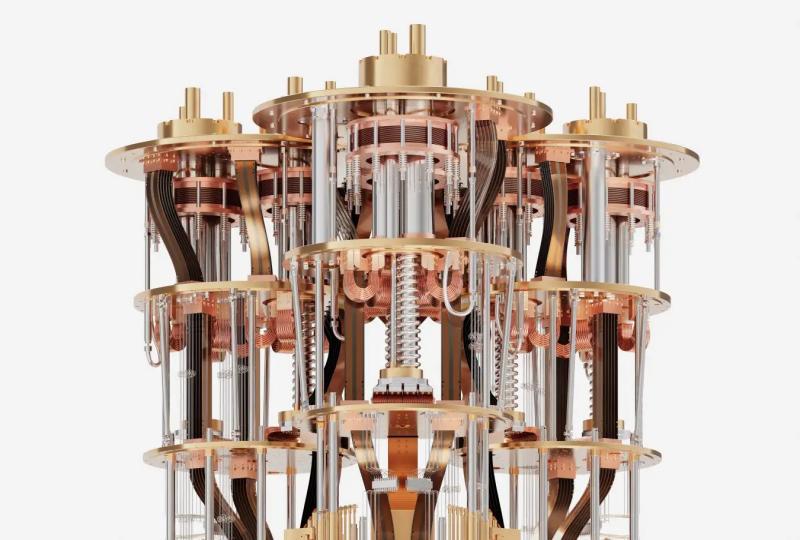
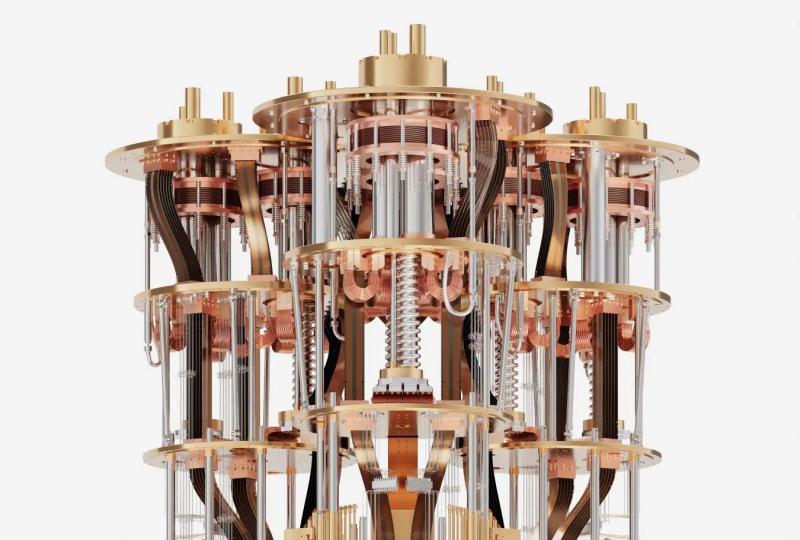
SpinQ Technology Inc., a leading provider of full-stack quantum computing solutions, today announced that a landmark research paper in collaboration with Hubei University has been published in Quantum Information Processing, a leading peer-reviewed journal in the field of quantum information science. The paper introduces a novel noise-resistant quantum algorithm and validates its effectiveness on SpinQ hardware, marking a significant step forward in technological innovation and industry-academia collaboration between the two companies.
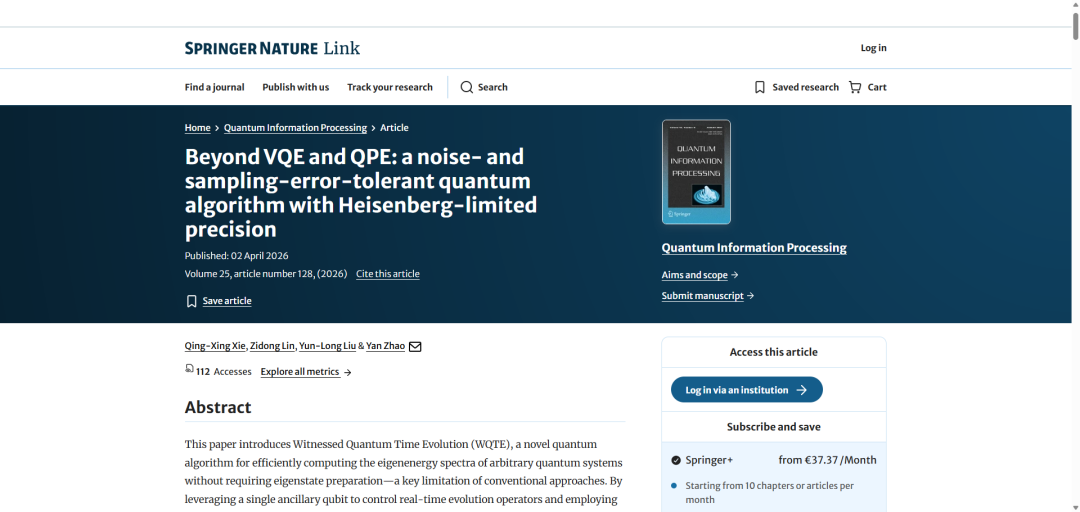
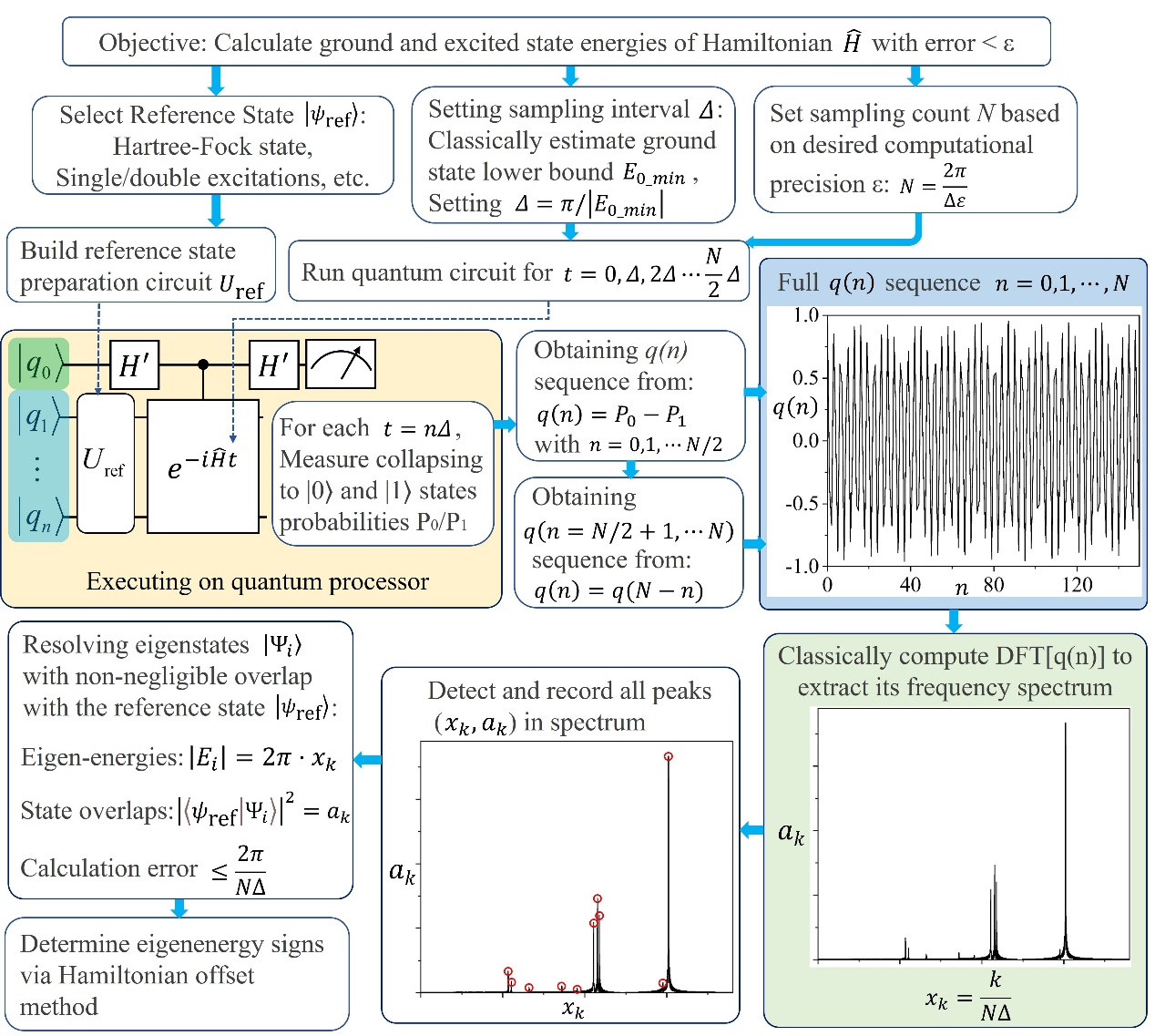
The paper, titled “Beyond VQE and QPE: A Noise-Resistant and Sampling Error-Resistant Quantum Algorithm with Heisenberg Limiting Accuracy,” introduces an algorithm called “Witnessing Quantum Time Evolution” (WQTE). Developed in collaboration between SpinQ and Professor Zhongbing Huang’s team at Hubei University, this algorithm aims to address key limitations of mainstream non-uniform system quantum computing (NISQ) methods, such as Variable Quantum Feature Solver (VQE) and Quantum Phase Estimation (QPE). WQTE requires only one auxiliary qubit, eliminates the need for complex eigenstate preparation, achieves Heisenberg-limiting precision, and exhibits excellent robustness to quantum noise and sampling errors. This research has been validated on SpinQ's proprietary nuclear magnetic resonance (NMR) quantum computer, experimentally demonstrating stable and accurate performance under real-world noise conditions (including H₄ molecular chains and the Heisenberg spin model).
This paper is the result of a long-term strategic collaboration between SpinQ and Hubei University, aiming to connect academic research with quantum innovation practices. Since formally establishing their partnership in December 2024, the two universities have built a complete ecosystem for quantum talent cultivation, including a joint teaching laboratory equipped with SpinQ desktop quantum computers. This platform enables students and researchers to seamlessly integrate theoretical learning with practical applications, breaking down the common problem of "theory and practice disconnect" in quantum education.
This collaboration has yielded significant results: 2024 undergraduate graduates from Hubei University contributed core work as third authors to this research, including numerical simulations and data analysis. SpinQ engineers also played a key role in hardware verification and technical problem-solving, establishing a collaborative model between industry, academia, and research. With funding from the National Natural Science Foundation of China and the Hubei Provincial Natural Science Foundation, the WQTE algorithm provides a new framework for the practical application of quantum computing in quantum chemistry, materials simulation, and related fields. Looking ahead, SpinQ will continue to deepen its cooperation with Hubei University and other academic partners, advance core technology research, jointly develop innovation platforms, and cultivate high-level quantum talent to promote the high-quality development of the global quantum computing industry.
Paper link: https://doi.org/10.1007/s11128-026-05154-9
Featured Content