
Practical Quantum Computing Use Cases Today
2026.06.24 · Blog quantum computing use
Practical Quantum Computing Use Cases Today
From our perspective as a superconducting quantum computer provider, quantum computing is already useful today in targeted scenarios, especially in research, education, and algorithm development. At the same time, we are steadily moving toward broader industrial applications in optimization, simulation, and secure communications.
To understand how quantum computing is used in practice, it helps to think in layers: fundamental research and algorithm design, domain‑specific applications, and educational and ecosystem use. Our products and collaborations cover all three layers, from providing superconducting hardware for advanced experiments to enabling universities to teach quantum principles with real devices.
Research and Algorithm Development
One of the most important current uses of quantum computing is in advancing fundamental quantum algorithms and validating them on real hardware. Superconducting quantum processors make it possible to implement and test algorithms that explore quantum chaos, interference, and simulation of complex systems, including molecular structures and materials. Recent work has shown how carefully designed quantum algorithms can enhance techniques such as nuclear magnetic resonance, opening new pathways for molecular geometry analysis.
We support research teams by providing access to superconducting quantum chips and full systems capable of running these advanced algorithms. Our hardware is designed for high fidelity and stability, enabling experiments that probe the edge of quantum behavior and benchmark quantum advantage in carefully chosen tasks. This research usage accelerates the discovery of new algorithms and helps refine existing ones for more practical scenarios.
Quantum Simulation for Chemistry and Materials
Quantum simulation is widely regarded as one of the most promising application areas. Quantum computers can, in principle, represent and manipulate quantum states that are extremely hard to simulate on classical machines. In chemistry and materials science, this means more accurate modeling of molecules, reactions, and condensed‑matter systems. Recent demonstrations have shown that quantum algorithms can help extract richer structural information from physical measurements, hinting at future tools for drug discovery and materials design.
Our superconducting quantum systems are particularly suitable for early‑stage quantum simulation tasks involving small to mid‑scale systems. We collaborate with partners in chemistry and materials research to map real problems onto quantum circuits that can be executed on existing hardware. While full‑scale quantum simulation of complex molecules remains a long‑term goal, the progress we see today is already reshaping how researchers think about computational methods in these fields.
Optimization and Machine Learning
Another key “quantum computing use” area is optimization, where many industries face challenging combinatorial problems. Quantum algorithms and quantum‑inspired approaches can tackle tasks such as routing, scheduling, and portfolio selection from fresh angles. Although large‑scale, fault‑tolerant implementations are still in development, NISQ‑era devices can already be used to experiment with quantum optimization routines and hybrid quantum‑classical workflows.
We work with partners to identify optimization problems that align with current hardware capabilities. For instance, smaller instances of logistics or network optimization tasks can be encoded into quantum circuits and used to evaluate algorithm behavior. This provides practical insight into how quantum optimization might eventually integrate into larger industrial workflows and helps organizations build internal expertise early.
Secure Communication and Cryptography Research
Quantum computing also influences the security landscape. On the one hand, powerful future quantum computers will impact traditional public‑key cryptography. On the other hand, controlled quantum systems and quantum communication techniques can enable new security primitives. Today, much of this activity remains research‑oriented, but it is a critical part of the broader “quantum computing use” picture.
Our role in this area is to provide reliable superconducting hardware and measurement systems that researchers can use to explore quantum information protocols and test implementations of quantum‑resistant schemes. By giving cryptography and security researchers stable access to quantum processors, we help them assess realistic timelines and technical constraints, rather than relying only on abstract models.
Education and Talent Development
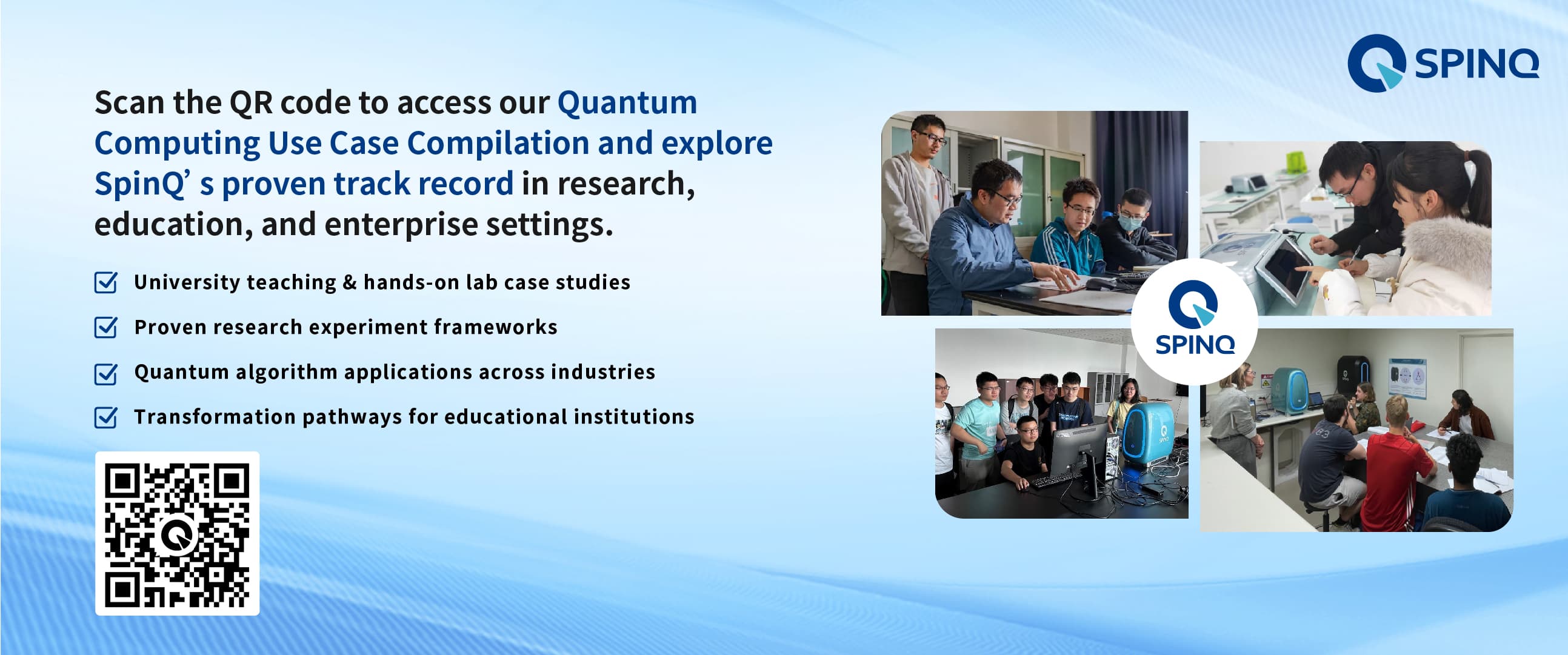
One of the most immediate and impactful uses of quantum computing is education. Universities and training providers around the world are introducing quantum computing courses that combine theory with hands‑on experimentation. Providing students and educators with access to real quantum devices dramatically improves understanding and engagement compared to purely theoretical instruction.
We have long treated educational deployments as a strategic mission. By supplying quantum hardware that is suitable for teaching, along with course support and training resources, we help institutions raise the next generation of quantum engineers and scientists. This educational use of quantum computing builds a skilled workforce and accelerates the translation of research into applications in every region where we operate.
How SpinQ Enables Real‑World Quantum Use
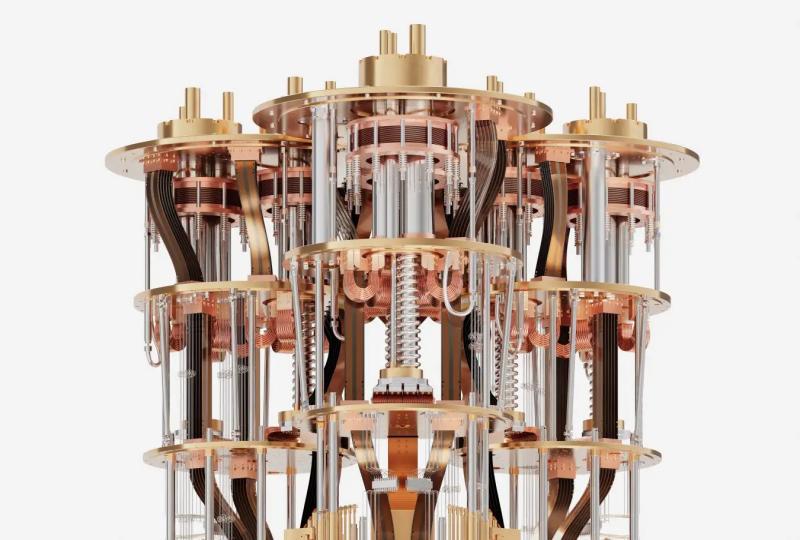
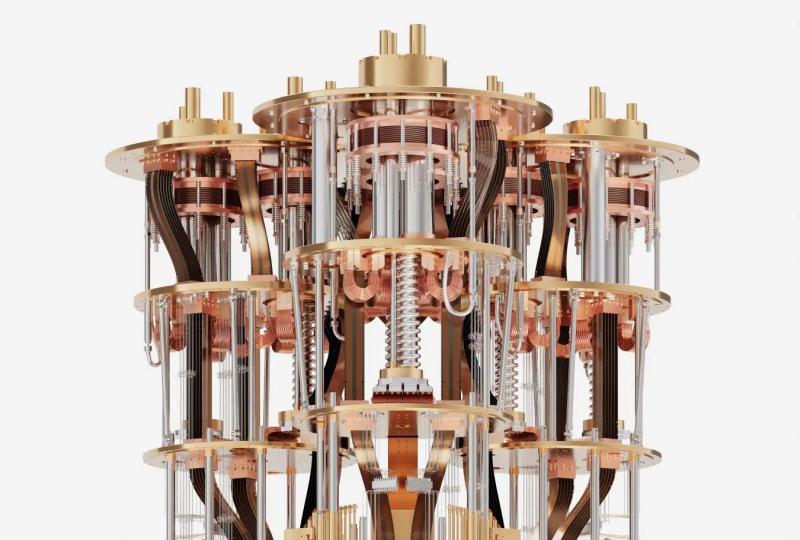
Our superconducting quantum computing portfolio is built specifically to support the uses described above. We provide superconducting quantum chips for advanced experiments, quantum control and measurement systems for precise manipulation, cryogenic deployment solutions for stable operation, and full superconducting quantum computers for institutions ready for integrated systems.
By combining hardware delivery with ongoing technical support, joint research, and education partnerships, we ensure that our customers do not just own quantum devices, but actually use them productively. Whether your focus is research, application exploration, or talent development, we work with you to design a quantum computing use strategy that fits your current stage and future ambitions.
Featured Content