
Quantum Computing System: Powering Scalable AI
2026.07.16 · Blog Quantum Computing System
Quantum Computing Systems Will Make AI Better
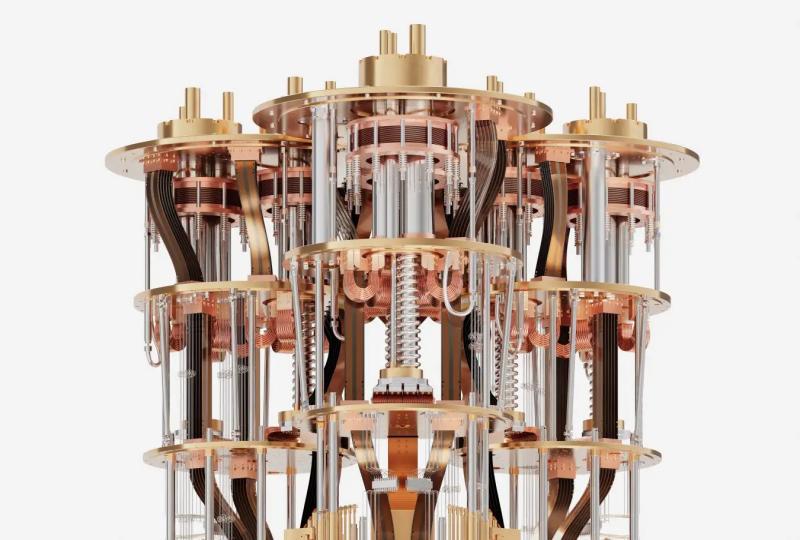
Quantum computing systems are redefining what is possible for artificial intelligence, especially for large-scale machine learning and natural language processing. Instead of endlessly scaling classical GPU clusters, a well-designed quantum computing system offers a new way forward: higher accuracy, more compact models, and far better energy efficiency. For enterprises and research institutions that are hitting the limits of classical infrastructure, quantum computing is not just an interesting experiment—it is a path toward sustainable AI growth.
At SpinQ, we focus on practical, accessible quantum computing systems that can plug into real workflows. Our superconducting and NMR-based quantum computers, along with quantum control and measurement solutions, are built to support AI and data-intensive applications in a systematic way. Rather than chasing theoretical qubit counts alone, we engineer systems that can be deployed, operated, and integrated into the broader AI stack.
Why Classical AI Hits Practical Limits
Over the last few years, large language models (LLMs) have transformed how organizations use AI. They summarize lengthy documents, generate code, analyze complex data, and augment decision-making. However, the infrastructure behind these models is under increasing pressure.
Training and serving state-of-the-art models require:
-
Massive datasets with billions or trillions of parameters.
-
Large clusters of GPUs or specialized accelerators.
-
Continuous energy consumption for both training and inference.
This leads to several practical problems:
-
Costs grow quickly as models become larger.
-
Latency and throughput must be carefully managed to serve many users.
-
Energy usage and cooling requirements become major operational concerns.
Even when organizations can afford the hardware, the power and space required to scale further are not always available. In many cases, the trade-off becomes clear: either accept slower model improvement or pay a steep price in infrastructure and energy. Quantum computing systems offer an alternative way to increase AI capability without simply multiplying classical resources.
From Devices to Systems: SpinQ’s Quantum Computing Vision
The key to unlocking quantum-enhanced AI is to treat quantum computing as a full system, rather than a single device. A practical quantum computing system includes:
-
Quantum processors (QPUs) based on reliable physical platforms, such as superconducting qubits or nuclear magnetic resonance (NMR) spins.
-
Quantum control and measurement electronics that can precisely drive and read out qubits.
-
Cryogenic deployment solutions for superconducting systems, ensuring stable operation.
-
Software frameworks and cloud platforms that allow users to program, test, and scale quantum algorithms.
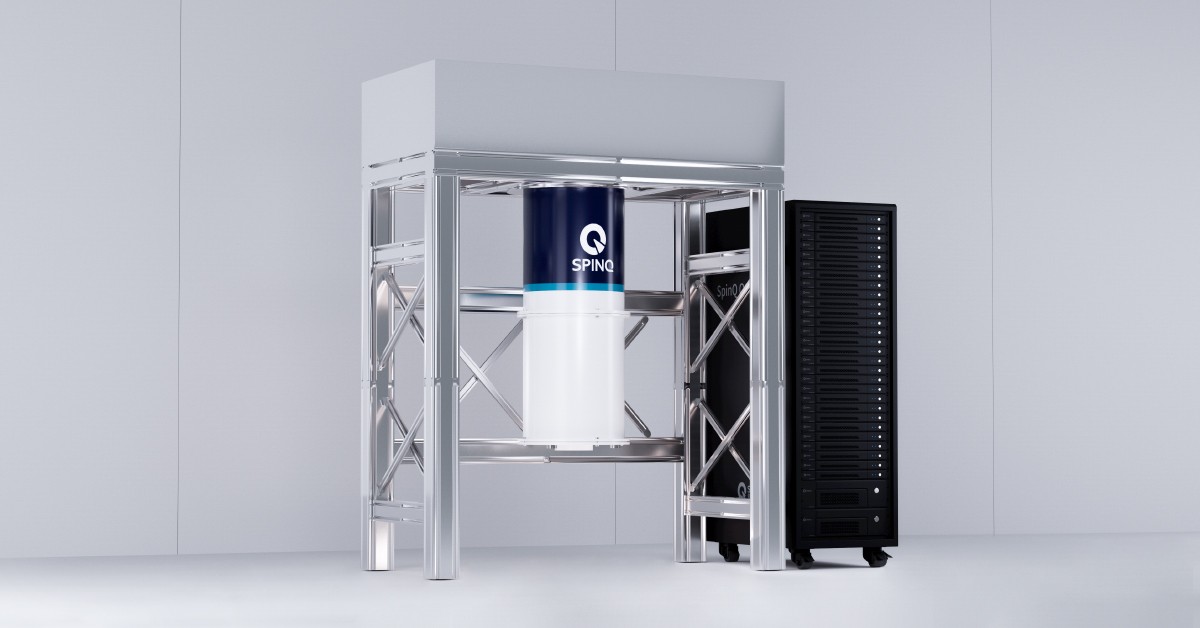
SpinQ’s portfolio is built around this system-level philosophy. Our superconducting quantum computers are engineered for high-fidelity gates and long coherence times, making them suitable for demanding algorithms in optimization, simulation, and machine learning. Our NMR quantum computers provide robust, maintenance-friendly devices that are ideal for education, algorithm prototyping, and early-stage research.
Together, these platforms form a quantum computing system that can serve different stages of an AI project:
-
Learn and experiment with quantum algorithms on NMR devices.
-
Test hybrid quantum–classical pipelines.
-
Scale promising applications to more powerful superconducting QPUs.
This end-to-end approach reduces the gap between “quantum research” and “quantum deployment” and gives users a clearer path from concept to production.
How Quantum Computing Enhances AI Workflows
Quantum computing systems do not replace all classical infrastructure. Instead, they augment AI workflows at critical bottlenecks. Several areas are particularly promising:
Quantum-Assisted Optimization
Training many machine learning models involves solving large optimization problems. Quantum algorithms can, in principle, explore complex solution spaces more efficiently than purely classical methods. When embedded into a hybrid workflow, a quantum processor can help:
-
Improve convergence on difficult loss landscapes.
-
Find better minima for certain classes of optimization tasks.
-
Reduce the number of iterations required for training.
For users, this can translate into shorter training times, improved model performance, or both.
Quantum-Enhanced Sampling and Representation
Modern AI models rely on generating and manipulating high-dimensional probability distributions. Quantum systems naturally work with high-dimensional state spaces, which opens new ways to represent and sample complex distributions. This can benefit:
-
Generative models, by offering new sampling routines.
-
Bayesian and probabilistic approaches, by enabling richer posterior exploration.
-
Representation learning, by encoding key structures in quantum states.
Instead of increasing the size of classical embeddings and hidden layers, quantum computing systems can introduce new representational primitives that compress complexity into fewer physical resources.
Hybrid Quantum–Classical Pipelines
A practical architecture for near-term quantum AI is hybrid:
-
Classical systems handle data loading, preprocessing, and large-scale orchestration.
-
Quantum processors execute targeted subroutines—optimization steps, sampling tasks, or specialized kernels.
-
Results from the quantum side are fed back into the classical pipeline for further processing and evaluation.
This hybrid model aligns with how organizations already deploy accelerators today. Just as GPUs serve particular types of computation, quantum processors become specialized units within the broader AI infrastructure.
SpinQ Quantum Computing System: Components and Capabilities
A SpinQ quantum computing system is designed to be modular and integrable. Its main components include:
Quantum Processors
SpinQ provides quantum processors built on two primary technologies:
-
Superconducting QPUs designed for high-performance, low-noise operation, suitable for advanced algorithms and scalable AI experiments.
-
NMR-based quantum devices that are physically stable, compact, and well-suited for teaching, demonstrations, and prototype algorithm development.
Each platform is engineered to expose clear interfaces for programming and control, making it easier for users to move from simulation to real hardware.
Quantum Control and Measurement
The quality of any quantum computation depends heavily on control and measurement. Our quantum control and measurement systems include:
-
Precise waveform generation and timing for qubit operations.
-
Reliable readout schemes that can extract meaningful results from noisy quantum signals.
-
Integration with cryogenic systems for superconducting hardware.
These tools ensure that quantum algorithms designed on paper or in software can be executed on physical devices with minimal friction.
Software Frameworks and Cloud Access
To make quantum computing systems useful for AI developers, software matters as much as hardware. SpinQ provides:
-
Programming frameworks that support Python-based development and standard quantum algorithm interfaces.
-
Simulators that allow users to test and debug quantum code before running it on hardware.
-
Cloud platforms that connect remote users to both simulators and real quantum devices.
AI teams can integrate quantum calls into their machine learning codebases, manage experiments, and analyze results using familiar tools and workflows.
Applications: From Education to Industry
A strong quantum computing system should serve multiple user groups. SpinQ’s systems are built to be used in:
Education and Training
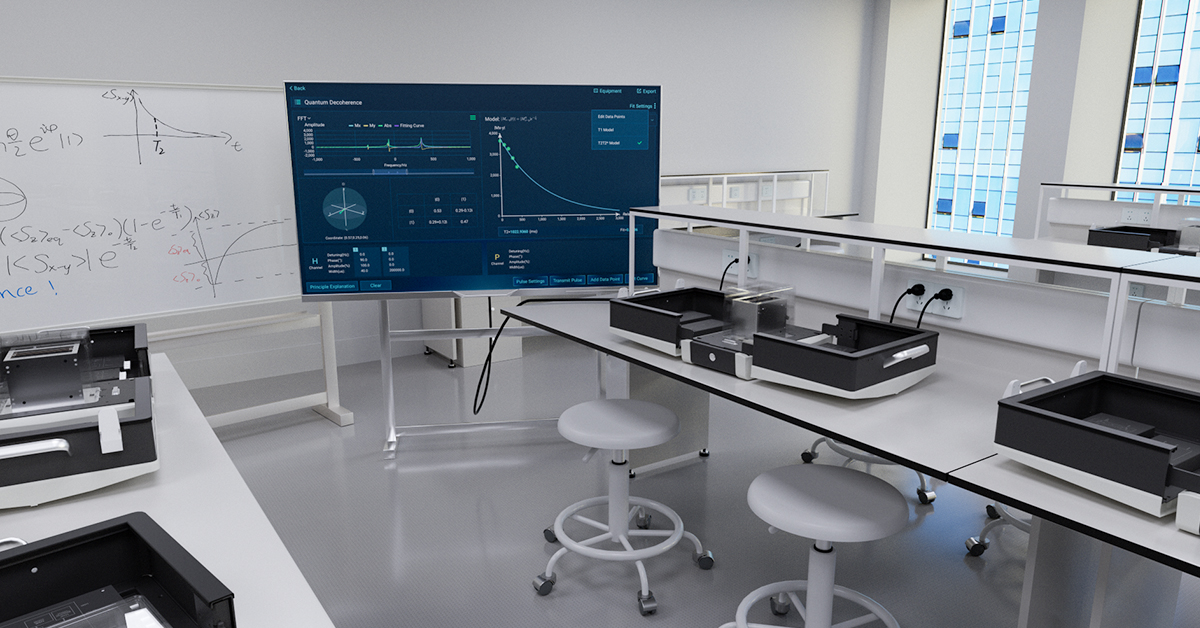
NMR quantum computers and accessible software tools are ideal for universities, research institutes, and training programs. Students and educators can:
-
Learn core principles of quantum mechanics and quantum algorithms.
-
Run real experiments instead of relying only on simulations.
-
Build intuition about how quantum computing differs from classical computing.
This educational ecosystem helps grow the next generation of quantum and AI engineers who will design future applications.
Research and Prototyping
Researchers can use SpinQ’s quantum computing systems to:
-
Explore new quantum machine learning algorithms.
-
Test hybrid workflows that combine quantum and classical routines.
-
Benchmark performance against classical baselines.
By offering both NMR and superconducting platforms, SpinQ enables researchers to move from conceptual exploration to more powerful hardware when their ideas mature.
Industrial and Enterprise Use
For enterprises, the goal is practical impact. Quantum computing systems can be applied to:
-
Optimization tasks in logistics, finance, and supply chain.
-
Simulation problems in chemistry and materials science.
-
Specialized AI workloads where quantum-enhanced components can improve efficiency or accuracy.
Over time, as quantum hardware and error mitigation techniques improve, these applications can scale and deliver tangible business results.
Toward Scalable and Sustainable AI
One of the most compelling reasons to invest in quantum computing systems for AI is energy efficiency. If quantum processors can achieve similar or better performance with fewer physical resources, AI will no longer be tied to constant growth in power consumption. Instead, organizations can aim for:
-
More capable models without a proportionate rise in infrastructure costs.
-
Smaller, more targeted quantum resources for specific tasks.
-
A smoother balance between classical and quantum hardware in their data centers.
SpinQ’s focus on practical hardware, system integration, and clear deployment paths is aligned with this long-term vision. We are not only building standalone devices; we are building quantum computing systems designed to live inside real AI infrastructure.
The Future of AI Looks Quantum
As quantum computing hardware continues to improve, its role in AI will shift from experimental to essential. Quantum computing systems will help:
-
Break through classical limits on model size and training efficiency.
-
Introduce new algorithmic building blocks for optimization, sampling, and representation.
-
Enable AI solutions that are both more powerful and more sustainable.
By designing quantum computers, control systems, software frameworks, and cloud platforms as one coherent system, SpinQ aims to make quantum-enhanced AI a practical reality—not just a theoretical promise. The next generation of AI will be defined not only by smarter models, but by smarter infrastructure. Quantum computing systems are a central part of that evolution.

Featured Content