
The New Era of Hybrid Quantum–HPC Systems with SpinQ
2026.07.16 · Blog Hybrid Quantum–HPC Systems
The New Era of Hybrid Quantum–HPC Systems with SpinQ
Around the world, governments, research institutions, and enterprises are investing heavily in both high‑performance computing (HPC) and quantum technologies. Building faster supercomputers and more advanced quantum processors is an important step, but the real challenge is integration: how do we turn separate classical and quantum machines into a unified hybrid system that solves meaningful scientific and industrial problems?
At SpinQ, we believe the answer lies in full‑stack, hybrid quantum–HPC systems. We design quantum computers, quantum chips, control and measurement electronics, and software platforms so they can work alongside classical supercomputers and AI accelerators. The goal is simple: make quantum hardware a practical, accessible resource inside existing HPC ecosystems, not a distant, isolated experiment.
From Standalone Devices to Hybrid Systems
The first generation of quantum deployments often treated quantum hardware as something separate: a specialized device you accessed through a separate cloud service or a dedicated lab. In parallel, HPC centers focused on scaling classical resources—GPU clusters, CPU nodes, and high‑speed interconnects—to meet the growing demands of AI, simulation, and data analytics.
This phase established critical capabilities, but it also created silos. Quantum devices and supercomputers lived in different worlds, with different teams, different workflows, and different tooling. SpinQ’s approach is to dissolve these silos by treating quantum and classical infrastructure as parts of the same computing system.
In our view, a modern hybrid quantum–HPC system includes:
-
Superconducting and NMR quantum processors that can serve as quantum accelerators.
-
Classical HPC resources—CPUs, GPUs, and AI accelerators—for large‑scale numerical tasks.
-
Quantum control and measurement systems that make real devices operable and reliable.
-
A unified software and orchestration layer, including our SPINQit framework and cloud platform, that routes workloads across this heterogeneous infrastructure.
By designing all these elements together, SpinQ is building hybrid systems where quantum processors are first‑class citizens inside classical HPC environments.
SpinQ Quantum Hardware: Superconducting and NMR Platforms
SpinQ’s hardware portfolio is purposely diversified, because different quantum platforms are suitable for different roles in a hybrid system.
Superconducting Quantum Computers
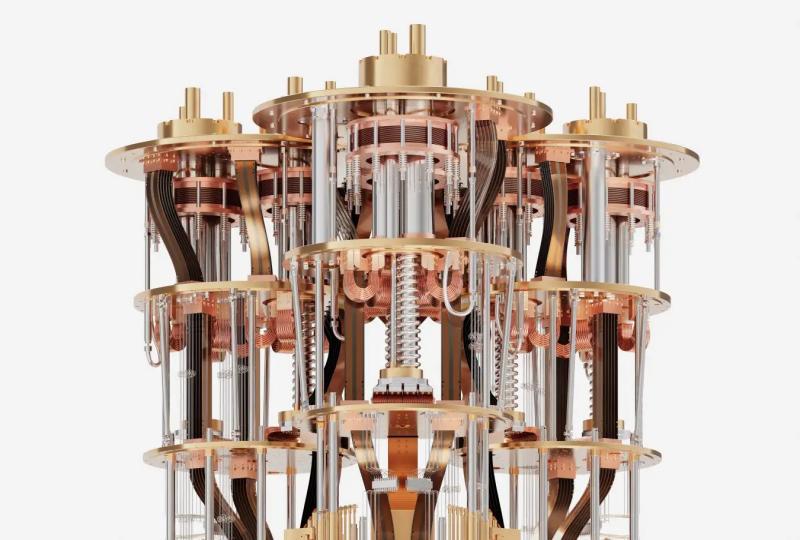
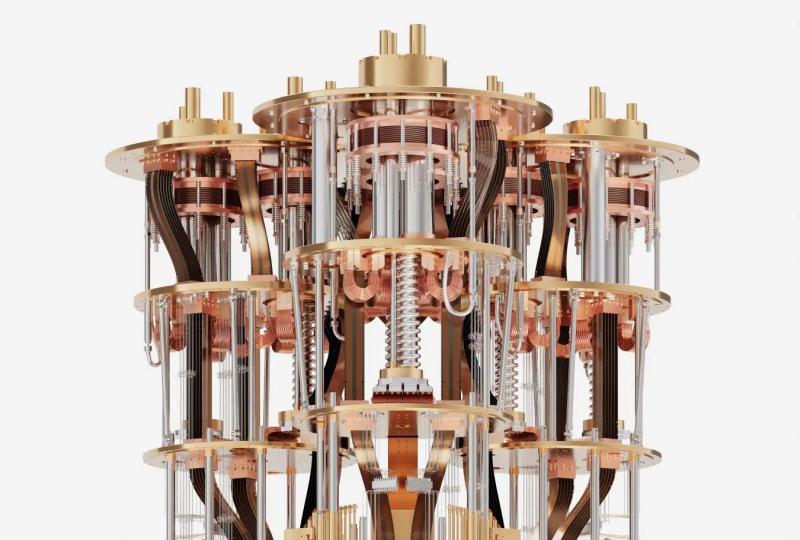
Our superconducting quantum computers are engineered for high‑fidelity quantum logic gates, long coherence times, and scalable qubit architectures. They integrate superconducting qubit chips, cryogenic deployment solutions, and low‑noise control electronics into full‑stack systems designed for real‑world applications.
In a hybrid quantum–HPC setup, superconducting quantum computers act as powerful quantum accelerators for:
-
Quantum chemistry and materials simulations.
-
Optimization and sampling tasks in AI and logistics.
-
Quantum algorithms that benefit from fast gate operations and high circuit throughput.
.jpg)
NMR Quantum Computers
SpinQ’s NMR quantum computers, such as our Gemini and related series, are compact, maintenance‑friendly, and ideal for education, prototyping, and early‑stage algorithm development. These systems demonstrate authentic quantum behaviour in a desktop form factor, making hybrid concepts accessible to classrooms and smaller research groups.
In a hybrid system, NMR devices can:
-
Serve as local quantum nodes connected to classical HPC via SpinQ’s cloud platform.
-
Act as testbeds for hybrid workflows, allowing algorithms to be validated before scaling to larger superconducting QPUs.
Together, these platforms give SpinQ the flexibility to support hybrid quantum–HPC scenarios across education, research, and industrial deployment.

The Software and Orchestration Layer: SPINQit and Quantum Cloud
Hardware alone cannot make hybrid computing practical. SpinQ’s software stack is designed to bridge quantum and classical resources.
SPINQit Programming Framework
SPINQit is SpinQ’s quantum programming framework, built around Python and standard quantum algorithm interfaces. It allows developers to:
-
Write quantum circuits and hybrid routines in a familiar language.
-
Run the same code on simulators, NMR devices, and superconducting quantum computers.
-
Integrate quantum calls into classical applications and AI workflows.
For hybrid quantum–HPC systems, SPINQit acts as a central interface: classical codes can call quantum routines through SPINQit, and quantum results flow back into classical pipelines without requiring separate tooling.
SpinQ Cloud and Quantum System Deployment
SpinQ’s cloud platform and system deployment tools connect users to real quantum hardware and large‑scale classical simulators. They support:
-
Remote access to NMR and superconducting quantum computers.
-
Integration with classical HPC clusters and AI accelerators.
-
Graphical and QASM‑based circuit design, as well as API‑driven job submission.
This combination enables high‑performance computing centers and enterprises to embed SpinQ quantum resources into their existing infrastructure, forming integrated hybrid systems.
Hybrid Quantum–HPC Workflows: A Quantum Biology Example
To illustrate how SpinQ’s hybrid systems work in practice, consider quantum biology—a field where many important processes hinge on quantum‑level phenomena in complex biomolecular environments.
Chemical reactions inside proteins and enzymes often occur at small active sites, surrounded by large molecular scaffolds. Accurate simulation requires:
-
A high‑precision quantum mechanical description of the active site.
-
A broader, but less detailed representation of the surrounding environment.
In a SpinQ hybrid workflow:
-
Classical HPC Stage
A supercomputer or large classical cluster performs geometry optimization and baseline electronic structure calculations for the full biomolecule. It handles the heavy numerical work that benefits from GPU and CPU parallelism. -
SpinQ Quantum Stage
The most challenging part of the system—the active site—is offloaded to a SpinQ superconducting quantum computer. Quantum algorithms designed for electronic structure and reaction dynamics refine the description of this region, capturing subtle correlations and quantum effects that classical approximations struggle to model. -
Hybrid Integration
Results from the SpinQ quantum stage are fed back into the classical model, improving overall accuracy. This can be done iteratively, with SPINQit and the orchestration layer coordinating job scheduling and data exchange between HPC and quantum devices.
This end‑to‑end hybrid workflow leverages the strengths of both platforms. Classical HPC still does the bulk of the computation, but crucial quantum‑sensitive regions receive higher‑fidelity treatment. The result is a more reliable model of biomolecular reactions, with clear implications for drug design, enzyme engineering, and other biochemical applications.
Beyond Biology: AI, Optimization, and Materials
Hybrid quantum–HPC systems with SpinQ hardware are not limited to quantum biology. The same architectural pattern applies to several other domains:
-
AI and Machine Learning
Hybrid quantum–classical algorithms, such as variational quantum algorithms, allow parts of training and optimization to run on SpinQ quantum processors while the rest of the workload stays on classical GPUs and AI accelerators. This can lead to new ways of tuning models, exploring complex loss landscapes, and improving sampling. -
Optimization and Logistics
Quantum‑enhanced optimization routines can be embedded into classical schedulers and solvers, using SpinQ superconducting hardware to tackle combinatorial subproblems while traditional HPC systems manage global constraints. -
Materials and Catalysis
Hybrid workflows can simulate local reaction centers or defect states on quantum hardware while the extended material environment remains on classical platforms, enabling more accurate predictions of catalytic performance and material properties.
In each case, SpinQ’s full‑stack design—chips, systems, software, and cloud—turns quantum computing from a standalone experiment into an integrated component of high‑performance computing.
System Deployment and Roadmap: SpinQ’s Vision for Hybrid Quantum–HPC
SpinQ has laid out a roadmap for quantum computing system deployment that explicitly includes hybrid integration with classical HPC infrastructure. Key elements of this roadmap are:
-
Full‑Stack Architecture
Combining quantum chips, cryogenics, control electronics, and software into cohesive systems that can be installed in data centers and HPC facilities. -
Hybrid Superconducting Quantum Computers
Developing superconducting systems that are designed from the start to operate alongside classical HPC resources, including mechanisms for job scheduling, resource sharing, and performance monitoring. -
Quantum Cloud and Platform Services
Providing platform‑level services that give users a unified view of quantum and classical resources, so hybrid workflows can be defined and executed without reinventing the entire stack.
This roadmap aligns with global trends in computing architecture: the future is not purely classical or purely quantum, but a converged ecosystem where specialized accelerators—including quantum processors—work in concert with supercomputers and AI hardware.
From National Infrastructure to Enterprise Adoption
Hybrid quantum–HPC systems are already central to national strategies in several countries, where quantum coprocessors are being integrated into flagship supercomputing facilities. SpinQ’s solutions are designed so that the same architectural principles can be applied in enterprise settings.
For enterprises, hybrid SpinQ systems promise:
-
Access to quantum resources without abandoning existing HPC and AI investments.
-
Incremental improvements in simulation accuracy and optimization performance that can translate into competitive advantages.
-
A clear migration path: start with small quantum subproblems and scale as hardware and algorithms mature.
By supporting both desktop NMR devices and data‑center‑grade superconducting systems, SpinQ offers organizations a flexible way to explore hybrid quantum–HPC computing, from early experimentation to production workflows.
Conclusion: SpinQ and the Hybrid Quantum–HPC Future
The transition from standalone quantum devices to integrated hybrid quantum–HPC systems marks a new chapter in computing. SpinQ’s full‑stack approach—combining superconducting and NMR quantum computers, control and measurement electronics, cloud platforms, and the SPINQit framework—puts us in a strong position to help shape this future.
By enabling workflows where classical supercomputers and SpinQ quantum processors work together, we turn investments in quantum technology into practical tools for chemistry, biology, AI, and beyond. Hybrid quantum–HPC systems are no longer a distant vision—they are becoming an operational reality, and SpinQ is committed to making them accessible and useful for researchers and innovators worldwide.
Featured Content