
Quantum Computing Companies: The Global Leaders Revolutionizing Technology in 2026
2026.02.28 · Blog Quantum Computing Companies
Introduction: The Quantum Computing Revolution
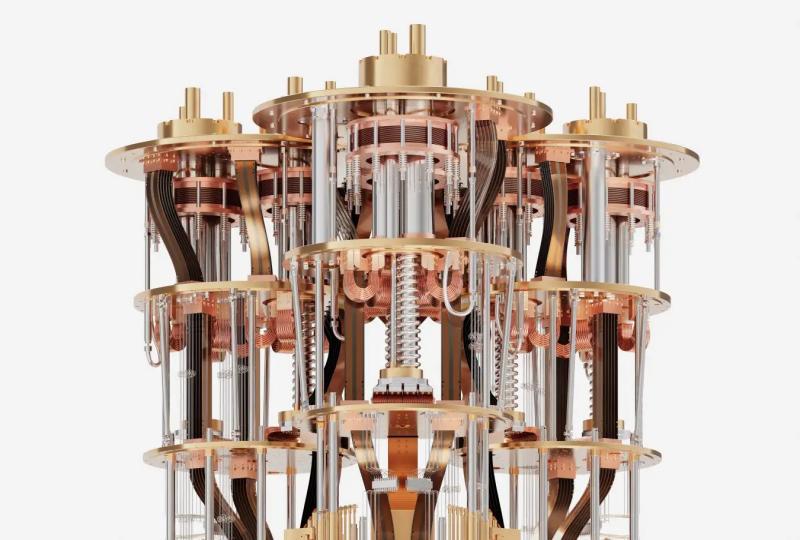
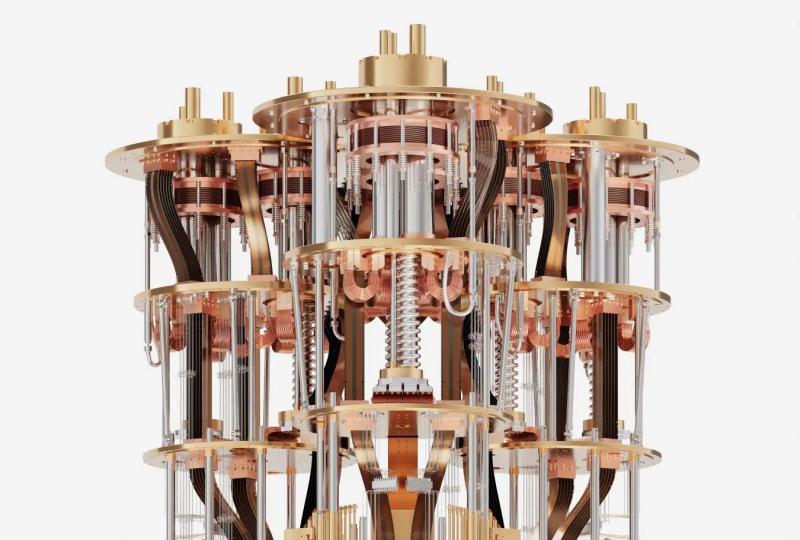
Quantum computing represents one of the most transformative technological breakthroughs of the 21st century. Unlike classical computers that process information in binary bits (0s and 1s), quantum computers leverage qubits that can exist in multiple states simultaneously through quantum superposition and entanglement. This fundamental difference enables quantum systems to solve complex problems in minutes that would take classical supercomputers thousands or even millions of years.
As we progress through 2026, the quantum computing industry has evolved from theoretical research to commercial reality. The global quantum computing market, valued at approximately USD 1.44 billion in 2025, is projected to reach USD 19.44 billion by 2035, representing a compound annual growth rate (CAGR) of 29.73%. This explosive growth trajectory positions quantum computing alongside historic technology revolutions like the internet and mobile computing.
This comprehensive guide explores the leading quantum computing companies worldwide, their technologies, market positions, and the transformative applications driving the industry forward.
The Quantum Computing Landscape: Understanding the Ecosystem
The quantum computing industry comprises diverse players specializing in different aspects of the technology stack. Companies range from established tech giants with decades of research investment to agile startups pioneering novel approaches. The ecosystem can be categorized into five primary segments:
Hardware Developers design and manufacture quantum processors and complete quantum computer systems, focusing on qubit technology, system integration, and error correction mechanisms.
Software and Algorithm Providers develop programming frameworks, quantum algorithms, and development kits that enable users to harness quantum computing power. Quantum Cloud Services democratize access by offering quantum computing capabilities via cloud platforms, eliminating the need for organizations to own physical hardware.
Component and Chip Manufacturers produce specialized hardware including superconducting circuits, cryogenic systems, and quantum control electronics. Finally, Industry-Specific Application Developers create tailored quantum solutions for sectors like finance, pharmaceuticals, and artificial intelligence.
Global Leaders in Quantum Computing
IBM: The Pioneer of Quantum Computing
IBM has established itself as the undisputed pioneer in quantum computing, with decades of research and development driving both quantum hardware and software innovations. The company's approach leverages superconducting qubit technology backed by extensive research in error correction and quantum algorithms.
IBM has developed advanced superconducting qubit systems, including the 127-qubit Eagle processor, 433-qubit Osprey quantum processor, and the groundbreaking 1,121-qubit Condor quantum processor. These developments have set industry benchmarks for improving qubit coherence times, connectivity, and reducing error rates. The company has pioneered scalable quantum hardware with IBM Quantum System One and IBM Quantum System Two, paving the way for fault-tolerant quantum computing.
By providing cloud access via the IBM Quantum Platform, IBM has democratized quantum computing globally. The company's Qiskit framework serves as a comprehensive, open-source platform allowing researchers and developers to design, simulate, and execute quantum circuits. IBM's ambitious roadmap targets exceeding 4,000 qubits by 2025, quantum circuits with up to 7,500 gates by 2026, and quantum-centric supercomputers with thousands of logical qubits capable of running 1 billion gates by 2033.
Google Quantum AI: Achieving Quantum Supremacy
Google Quantum AI gained worldwide attention in 2019 when its Sycamore processor demonstrated quantum supremacy by solving a problem in 200 seconds that would take the world's fastest supercomputer approximately 10,000 years. The 54-qubit (with 53 functional) superconducting qubit-based quantum processor marked a pivotal moment in quantum computing history.
Google's more recent Willow chip, featuring 105 superconducting qubits, represents a major advancement in quantum error correction. Willow can perform complex computations in under five minutes—a task that would take today's fastest supercomputers an unfathomable 10 septillion years. This processor effectively reduces errors exponentially as more qubits are added, achieving a critical breakthrough in quantum error correction.
The company's Cirq framework serves as an open-source quantum programming library supporting the design, simulation, and execution of quantum circuits on both simulated and real hardware.
SpinQ Technology: Democratizing Quantum Computing
SpinQ Technology has emerged as a comprehensive quantum computing solutions provider dedicated to the commercialization and popularization of quantum computing. Founded in 2018 and based in Shenzhen, China, SpinQ has established a unique position through its dual-track approach: educational-grade NMR (Nuclear Magnetic Resonance) quantum computers and industrial-grade superconducting quantum computers.
SpinQ's educational quantum computers include the SpinQ Gemini Lab (a one-stop quantum computing platform for experimental teaching), SpinQ Gemini (the world's first programmable desktop quantum computer), and SpinQ Triangulum Mini and Gemini Mini/Mini Pro (compact, portable quantum computers with built-in touchscreens, control systems, and curriculum for quantum teaching and self-learning). These systems bring quantum experiments from high-tech laboratories into classroom settings, making quantum computing accessible to educational institutions worldwide.
For industrial applications, SpinQ's superconducting quantum computers employ circuits based on Josephson junctions, enabling scalable qubit numbers, high gate fidelity, and controllable multi-qubit coupling. The company's superconducting QPUs feature high Qi values, long qubit lifetimes, and excellent stability. Notably, SpinQ delivered China's first independently developed superconducting quantum chip to a research institution in the Middle East.
SpinQ expects to deliver a 100-qubit quantum computer by the end of 2025 and is preparing for a Hong Kong or Shenzhen Stock Exchange listing within 12-18 months. The company has sold quantum products to over 40 countries, including educational quantum computers, superconducting quantum computers, chips, quantum measurement and control systems, and application software.
Visit SpinQ's official website to explore their comprehensive quantum computing solutions.
Microsoft Azure Quantum: The Cloud-Based Approach
Microsoft has positioned itself as a key player through Azure Quantum, its cloud-based quantum platform integrated with Azure services. The company's quantum hardware strategy centers on developing topological qubits designed to be inherently resistant to errors.
In February 2025, Microsoft unveiled Majorana 1, the world's first quantum processor powered by topological qubits. This breakthrough chip leverages topoconductors, allowing precise control of Majorana particles to create more stable and reliable qubits. Microsoft's Quantum Development Kit (QDK) provides a comprehensive toolset including the Q# programming language, along with libraries and tools for developing and simulating quantum applications.
Azure Quantum offers access to quantum computing resources from various providers including Quantinuum, IonQ, and Atom Computing, providing a flexible environment for researchers and developers to experiment with quantum algorithms.
IonQ: Trapped-Ion Technology Leader
Founded in 2015, IonQ has rapidly emerged as a pioneer in trapped-ion quantum computing, known for high gate fidelities and long coherence times. In 2023, IonQ demonstrated its Forte quantum computer with 36 qubits, showcasing all-to-all connectivity and high-fidelity operations. This achievement highlights the scalability potential of trapped-ion systems.
IonQ's systems are accessible through all major quantum cloud providers including Microsoft's Azure Quantum and Amazon Braket. The company's IonQ Quantum Cloud platform is compatible with major quantum SDKs like Qiskit (IBM), Cirq (Google), and Q# (Microsoft Azure).
D-Wave: Quantum Annealing Specialist
D-Wave has carved out a distinctive niche with its quantum annealing approach, designed to solve specific classes of complex optimization problems. In 2020, D-Wave introduced the Advantage system featuring over 5,000 qubits and a new topology with 15-way qubit connectivity.
In a groundbreaking achievement in March 2025, D-Wave demonstrated quantum supremacy on a useful, real-world problem by successfully simulating complex magnetic materials in minutes—a task that would have taken classical supercomputers nearly one million years. In January 2026, D-Wave completed its $550 million acquisition of Quantum Circuits Inc. (QCI), becoming the world's first dual-platform quantum company spanning both annealing and gate-model architectures.
Major Quantum Computing Companies Overview
| Company | Headquarters | Qubit Technology | Key Strength | Cloud Access |
| IBM | USA | Superconducting | Qiskit ecosystem | Yes |
| Google Quantum AI | USA | Superconducting | Error correction | Yes |
| SpinQ Technology | China | NMR & Superconducting | Educational systems | Yes |
| Microsoft Azure Quantum | USA | Topological | Cloud integration | Yes |
| IonQ | USA | Trapped Ion | High fidelity | Yes |
| D-Wave | Canada | Quantum Annealing | Optimization | Yes |
| Rigetti Computing | USA | Superconducting | Hybrid computing | Yes |
| Quantinuum | USA/UK | Trapped Ion | High gate fidelity | Yes |
Emerging Players and Regional Leaders
.png)
China's Quantum Computing Ecosystem
China has invested heavily in quantum computing, producing innovative hardware and software solutions. Beyond SpinQ Technology, Origin Quantum focuses on superconducting quantum hardware and operates a public quantum cloud platform based in Hefei, connected to the University of Science and Technology of China (USTC). Origin's Wukong processor with 72 qubits was used to fine-tune a billion-parameter AI model. QuantumCTek specializes in quantum communication and secure networks, leading China's quantum key distribution (QKD) networks.
Europe's Quantum Innovators
European companies are making significant contributions to the quantum ecosystem. IQM Quantum Computers (Finland) is known for custom superconducting quantum systems for research laboratories and became the first listed European quantum company in February 2026. Pasqal (France) builds neutral atom quantum processors for high-dimensional quantum computing and was awarded €7.5 million from the European Innovation Council. QuantWare (Netherlands) manufactures quantum processors for other companies and research institutes, positioning itself as the potential "Intel of quantum computing".
North American Emerging Players
Xanadu Quantum Technologies (Canada) develops photonic quantum computers using light instead of matter. In January 2025, Xanadu introduced Aurora, the world's first scalable, networked, and modular quantum computer comprising 35 photonic chips and 13 kilometers of fiber optics operating at room temperature. Atom Computing achieved a significant milestone in October 2023 by developing a quantum computing platform with 1,180 qubits, the first company to surpass the 1,000-qubit threshold for a universal gate-based system.
Quantum Computing Qubit Technologies Comparison
| Technology | Operating Temperature | Coherence Time | Scalability | Key Companies |
| Superconducting Qubits | Near absolute zero | Microseconds | High | IBM, Google, Rigetti |
| Trapped Ion | Cryogenic | Seconds | Medium | IonQ, Quantinuum |
| Neutral Atoms | Ultra-cold | Seconds | High | Atom Computing, QuEra |
| Photonic | Room temperature | Short | High | Xanadu, PsiQuantum |
| NMR | Room temperature | Milliseconds | Low | SpinQ |
| Topological | Near absolute zero | Expected: Long | High (theoretical) | Microsoft |
Market Analysis: Explosive Growth Trajectory
The quantum computing market is experiencing unprecedented expansion rivaling the early days of the internet and mobile computing revolutions. Multiple research firms have projected robust growth, though estimates vary based on scope and methodology.
Market Size Projections (2025-2030)
| Year | Market Size (USD Billion) | Growth Rate (%) |
| 2025 | 1.44 | - |
| 2026 | 1.88 | 30.6 |
| 2027 | 3.2 | 70.2 |
| 2028 | 5.8 | 81.3 |
| 2029 | 10.5 | 81 |
| 2030 | 19.44 | 85.1 |
According to Precedence Research, the global quantum computing market was valued at USD 1.44 billion in 2025 and is predicted to reach approximately USD 19.44 billion by 2035, expanding at a CAGR of 29.73%. MarketsandMarkets projects the market will reach USD 20.20 billion by 2030 from USD 3.52 billion in 2025, at a CAGR of 41.8%. More conservative estimates from Grand View Research suggest USD 4.24 billion by 2030 at a CAGR of 20.5%.
Investment Momentum
Investment capital flooding into the sector underscores market confidence. In 2024, quantum technology startups received nearly $2 billion in funding, representing a 50% increase from 2023. The first three quarters of 2025 alone witnessed $1.25 billion in quantum computing investments, more than doubling the previous year's figures and bringing total equity funding to $3.77 billion by September 2025.
NVIDIA emerged as a major quantum investor in September 2025, backing three startups within a single week, including Quantinuum with $600 million. PsiQuantum, with over $1.3 billion in funding and focused on photonic quantum computers with one million qubits, is anticipated to pursue a 2026 public offering.
Regional Market Leadership
North America dominates the global quantum computing market with a 61% share in 2025, led by the United States. The U.S. quantum computing market alone was valued at approximately USD 617.5 million in 2025 and is expected to reach USD 8,506.37 million by 2035 at a CAGR of 29.99%. Europe and Asia-Pacific regions are experiencing rapid growth driven by government investments and emerging startups.
Industry Applications Driving Adoption
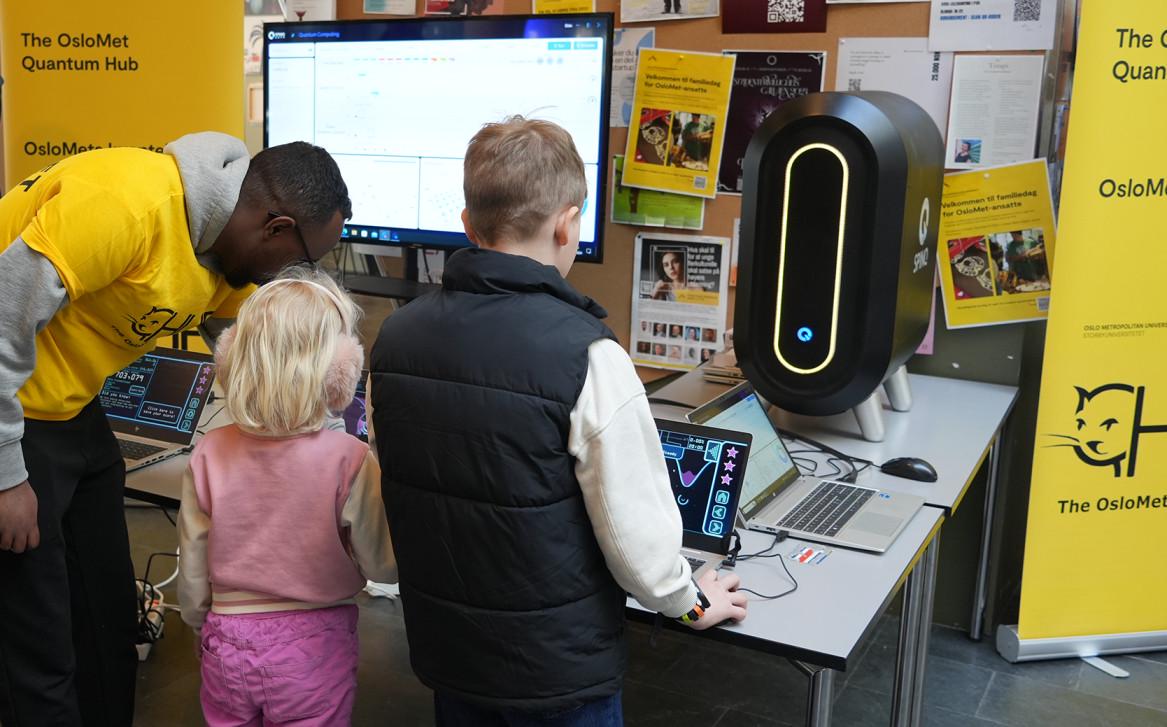
Quantum computing companies are targeting high-value applications where quantum computational power creates competitive advantages.
Industry Applications Overview
| Industry | Key Applications | Maturity Level | Market Potential (2030) |
| Finance & Banking | Portfolio optimization, fraud detection | Early adoption | High |
| Pharmaceuticals | Drug discovery, molecular modeling | Active research | Very High |
| Artificial Intelligence | Machine learning, neural networks | Development phase | High |
| Cybersecurity | Quantum encryption, QKD | Emerging | High |
| Logistics | Route optimization, supply chain | Pilot projects | Medium |
| Materials Science | Material design, simulations | Research phase | Medium-High |
Finance and Banking
The Banking, Financial Services, and Insurance (BFSI) sector is anticipated to command the highest market share in the coming years. Quantum computing enables portfolio optimization, risk modeling, fraud detection, and complex financial calculations with unprecedented speed. SpinQ's collaboration with Huaxia Bank to develop quantum neural networks for intelligent decision-making exemplifies cross-industry potential.
Pharmaceuticals and Healthcare
Drug development represents one of the most promising applications, with the sector predicted to hold the largest market share during the forecast period. Quantum computers excel at molecular modeling for drug discovery, genomic data analysis for precision medicine, and simulating complex biological processes. Partnerships like BGI and SpinQ demonstrate quantum computing's transformative potential in life sciences.
Artificial Intelligence and Machine Learning
The machine learning segment is expected to generate the largest revenue share throughout the forecast period, holding 24.40% of the market share in 2026 with a projected CAGR of 36.7%. Quantum computing enables quantum-enhanced machine learning models, faster neural network training, optimization, and advanced AI capabilities.
Cybersecurity
Quantum computing presents both opportunities and challenges for cybersecurity. While quantum computers threaten current encryption methods, they also enable quantum key distribution (QKD) networks for secure communication and post-quantum cryptography development.
Logistics and Supply Chain
Quantum optimization algorithms address route optimization, inventory management, and supply chain modeling challenges, improving efficiency across transportation and logistics sectors.
Challenges Facing the Industry
Despite rapid progress, quantum computing companies confront several significant challenges.
Scaling Qubits remains a fundamental challenge—increasing qubit counts while preserving coherence and reducing error rates demands advanced engineering and novel materials. Error Correction represents another critical hurdle, as developing fault-tolerant quantum computers requires implementing robust quantum error correction codes.
Commercial Viability challenges companies to translate research breakthroughs into profitable products with clear return on investment for customers. The Talent Gap persists as a constraint, with quantum computing requiring skilled quantum engineers, physicists, and software developers—a workforce that remains in short supply globally.
Hardware Complexity presents operational challenges, as most quantum systems require cryogenic temperatures near absolute zero, sophisticated control electronics, and specialized infrastructure. Finally, Standardization needs remain unmet, as the industry lacks established protocols for quantum communication, computing interfaces, and performance benchmarks.
Future Outlook: The Next Decade of Quantum Computing
The quantum computing market is projected to continue its exponential growth trajectory through 2035 and beyond. Several key trends will shape the industry's evolution.
Hybrid Classical-Quantum Workflows represent the realistic path to near-term practical quantum systems, combining the strengths of both computing paradigms to address limitations of pure quantum approaches while leveraging quantum capabilities for specific problem classes.
Vertical Integration is accelerating as companies seek to control the entire technology stack from chips to algorithms, ensuring optimized performance and reduced dependencies. Global Collaboration through cross-border partnerships for research and commercialization is reshaping the ecosystem, with strategic alliances between hardware developers, cloud providers, and industry-specific application companies.
Quantum-Centric Supercomputers are emerging as the next generation architecture, with IBM targeting systems by 2025 that integrate modular processors, middleware, and quantum communication. Standardization Efforts will establish protocols for quantum communication and computing, enabling interoperability and accelerating adoption.
Major hardware milestones are on the horizon, with Fujitsu and RIKEN planning a 1,000-qubit machine by 2026, IBM targeting systems exceeding 4,000 qubits by 2025, and companies like SpinQ delivering 100-qubit systems.
Investment Opportunities in Quantum Computing
The quantum computing sector presents compelling investment opportunities across both public and private markets. Publicly traded companies include IBM (NYSE: IBM), Alphabet/Google (NASDAQ: GOOGL), IonQ (NYSE: IONQ), D-Wave (NYSE: QBTS), and Rigetti Computing (NASDAQ: RGTI).
Several high-profile quantum companies are preparing for public listings. Quantinuum raised $600 million at a $10 billion valuation and has filed its S-1 for a public listing widely expected to value the company above $20 billion. PsiQuantum, with over $1.3 billion in funding, is anticipated to pursue a 2026 public offering. IQM became the first listed European quantum company in February 2026.
SpinQ Technology stands out as a privately funded company with commercial traction, a diverse hardware portfolio (both educational NMR and industrial superconducting systems), and substantial sales across 40+ countries, preparing for a Hong Kong or Shenzhen Stock Exchange listing within 12-18 months.
Investors should consider that quantum computing remains a high-risk, high-reward sector with most companies still pre-revenue or in early commercialization stages. However, the convergence of maturing hardware, expanding cloud access, increasing enterprise adoption, and government support creates a compelling long-term investment thesis.
Conclusion: Building the Quantum Future
Quantum computing companies are architecting one of the most transformative technological revolutions of the 21st century. From global giants like IBM, Google, and Microsoft to specialized innovators like SpinQ, IonQ, and Xanadu, these organizations are building the hardware, software, and applications that will define the next era of computing.
The industry has transitioned from theoretical research to commercial reality, with the market projected to reach nearly $20 billion by 2030 and continue expanding toward $200 billion by 2040. While technical and commercial hurdles remain, the pace of innovation suggests that within the next decade, quantum computing will move beyond laboratories and cloud platforms into industries ranging from finance and healthcare to AI and national security.
For businesses, researchers, policymakers, and investors, quantum computing represents not just a technological advancement but a fundamental shift in computational capability. Companies that successfully navigate the challenges of scaling, error correction, and commercialization will shape the future of technology and capture enormous value in emerging markets.
The quantum revolution is accelerating—and the leading quantum computing companies worldwide are positioning themselves at the forefront of this transformative era.
About SpinQ Technology
SpinQ Technology is a comprehensive quantum computing solutions provider committed to the industrialization and accessibility of quantum computing. The company develops educational-grade NMR quantum computers, industrial-grade superconducting quantum computers, quantum computing cloud platforms, and quantum application software. With products sold to over 40 countries and a strong focus on practical applications in scientific research, education, finance, and artificial intelligence, SpinQ is driving quantum computing innovation globally. Learn more at https://www.spinquanta.com/.
Featured Content