
Quantum Computing Advances: Breakthroughs Accelerate Industrial Transformation in 2026
2026.05.09 · Blog quantum computing advances
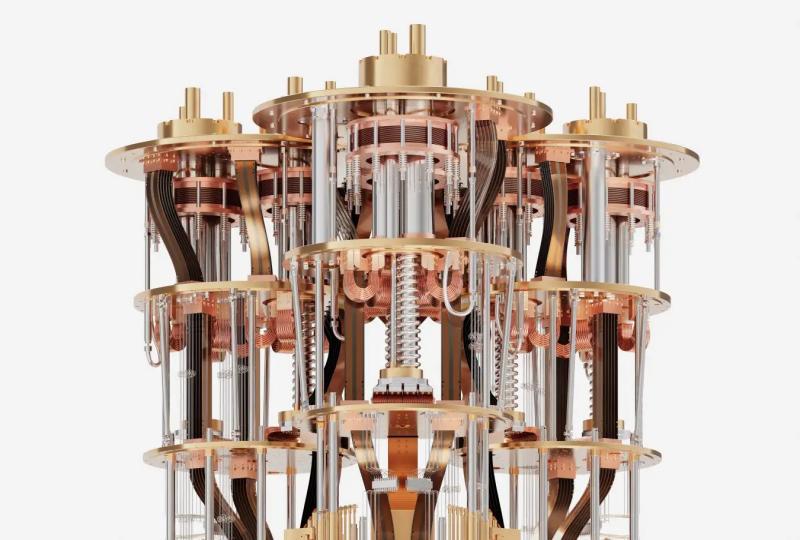
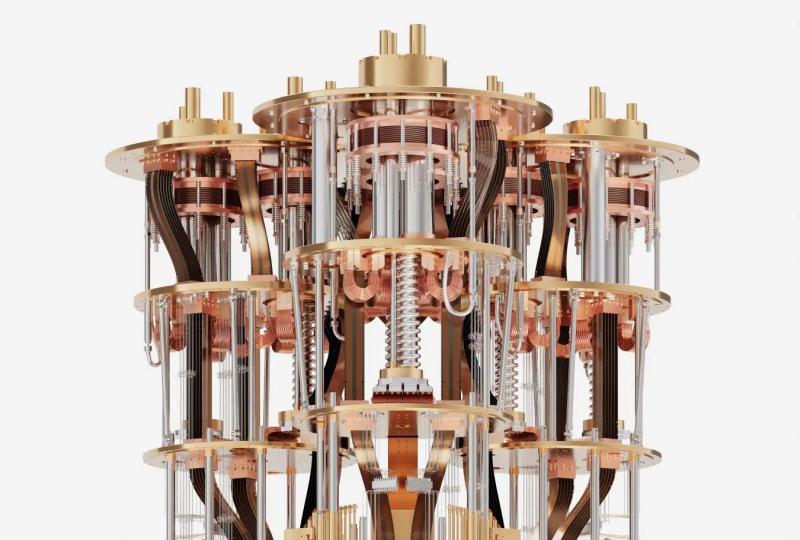
Quantum computing has long been regarded as a futuristic technology beyond mainstream industrial application, confined to theoretical research and laboratory experiments. However, a wave of groundbreaking breakthroughs in 2026 has completely rewritten the development timeline of the industry. Leading academic institutions, tech giants, and global quantum enterprises have achieved major progress in fault tolerance, error correction algorithms, hardware optimization and commercialization. Experts confirm that the maturity of large-scale practical quantum computing systems has been advanced by 5 to 10 years, marking an official shift from the noisy intermediate-scale quantum (NISQ) era to the fault-tolerant quantum computing era. This article systematically sorts out the core quantum computing advances in 2026, covering key technological innovations, diverse hardware iterations, influential academic achievements and booming commercial momentum.
1. Core Technological Breakthroughs in Quantum Computing
Error correction and fault tolerance are the core bottlenecks restricting the large-scale application of quantum computing. Qubits are extremely fragile and susceptible to external interference such as temperature changes, electromagnetic fields and vibrations, which leads to decoherence and calculation errors. In the past, traditional error correction technologies required massive physical qubit resources and could not suppress error accumulation efficiently. In 2026, multiple revolutionary algorithm and technical upgrades have solved this pain point, greatly improving the stability and operational efficiency of quantum computers.
The most landmark progress comes from optimized quantum error correction codes and innovative decoding algorithms. The following table summarizes the representative global error correction breakthroughs in 2026:
|
Research Team |
Core Technology |
Key Breakthroughs |
Industry Value |
|
Caltech & Oratomic
|
Optimized qLDPC error correction codes + LLM-assisted coding |
Reduced the physical qubit demand for a single virtual qubit from 12 to 4; able to withstand 20-24 catastrophic errors, doubling the error resistance limit |
Greatly reduced the hardware threshold for fault-tolerant quantum computing, making small-scale high-performance quantum computers feasible |
|
|
Efficient Shor’s algorithm optimization + zero-knowledge proof publishing |
Improved the efficiency of elliptic curve cryptography (ECC) cracking by 10 times; only 500,000 qubits are needed to crack mainstream cryptocurrency encryption |
Promoted the urgent transformation of global post-quantum cryptography systems |
|
SpinQ + HKUST
|
Bidirectional decoding for concatenated quantum Hamming codes |
Raised the fault-tolerance threshold from 1.56% to 4.35%; preserved near-optimal code distance; exponentially accelerated logical error suppression |
Reduced hardware overhead, providing a low-cost and efficient solution for scalable fault-tolerant quantum computing |
Among them, the joint research achievement of SpinQ Technology and the Hong Kong University of Science and Technology (HKUST) has filled the gap in high-efficiency decoding technology for concatenated quantum codes. Different from traditional one-way local decoding which is prone to error accumulation, the innovative bidirectional decoding framework can revise low-level recovery decisions through high-level syndrome information. This technology has been accepted for presentation at QEC 2026, the world’s top conference focused on quantum error correction and fault-tolerant computing, fully verifying its international leading technical level.
2. Diversified Hardware Iteration Achieves Stable Upgrade
While algorithm innovations reduce software barriers, global teams have made steady progress in quantum hardware architecture optimization. At present, three mainstream technical routes, including superconducting, neutral atom and trapped-ion, have their own advantages, forming a diversified development pattern and greatly improving the overall stability and computing performance of quantum devices. The mainstream quantum hardware architectures and their core advantages are shown in the table below:
|
Hardware Architecture |
Representative Institution/Enterprise |
Technical Advantages |
Latest Progress |
|
Superconducting Qubit
|
|
Fast operation speed, mature industrial process
|
Willow 105-qubit processor realizes error correction efficiency exceeding error generation rate, reaching the critical threshold of fault tolerance |
|
Neutral Atom
|
Harvard HQI, QuEra
|
Flexible qubit arrangement, compatible with advanced error correction codes
|
Realized precise manipulation of 6,100 neutral atoms; QuEra has successfully delivered commercial quantum computers to Japanese research institutions |
|
Trapped-ion Qubit |
Quantinuum |
Ultra-high calculation accuracy, low error rate |
Completed Fermi-Hubbard model simulation, achieving verifiable quantum advantage in material science research |
Harvard’s Quantum Initiative in Science and Engineering (HQI) has played a pivotal role in hardware innovation. Its long-term research on neutral atom technology has laid a solid foundation for the rapid development of the industry. Researchers pointed out that the comprehensive upgrade of hardware stability is the core reason for advancing the quantum computing industrial timeline. Previously, the industry generally believed that large-scale fault-tolerant quantum computers would not be available until the 2030s, but now functional large-scale systems are expected to debut by the end of the 2020s.
3. Industry Challenges and Future Development Prospects
Despite the remarkable progress in quantum computing, the industry still faces two core challenges. First, the practical application scenarios of quantum computers are not yet fully clear. Similar to the early stage of transistor invention, current quantum technology lacks mature and large-scale transformative application cases, and the industry still needs continuous exploration in drug discovery, new material development, financial computing and other fields. Second, the engineering difficulty of large-scale fault-tolerant quantum devices is still high. Although the required number of qubits has been greatly reduced, the long-term stable operation of error correction systems and large-scale qubit integration still need technological breakthroughs.
Looking ahead, the future development of quantum computing will shift from "building quantum machines" to "using quantum machines efficiently". With the continuous optimization of error correction algorithms represented by SpinQ-HKUST bidirectional decoding technology and the continuous iteration of diversified hardware architectures, fault-tolerant quantum computing will gradually realize large-scale popularization. In the next five years, quantum computing is expected to achieve disruptive breakthroughs in room-temperature superconducting material simulation, new drug molecular research and financial risk prediction, opening a new era of quantum information technology.
Conclusion
2026 is a pivotal turning point for the quantum computing industry. A series of landmark breakthroughs in error correction algorithms, hardware stability and commercialization have completely broken the previous industry cognition. The joint research results of Chinese and foreign teams represented by SpinQ & HKUST, together with the innovative achievements of Harvard, Caltech and Google, jointly promote the accelerated development of quantum computing. Although the industry still has technical and application bottlenecks to break through, the arrival of practical fault-tolerant quantum computers is no longer a distant dream. The quantum revolution that was once expected to take decades is quietly coming ahead of schedule.
Featured Content