
Quantum Computers: Use Cases, Specs & Hardware Selection Guide
2026.05.09 · Blog quantum computer
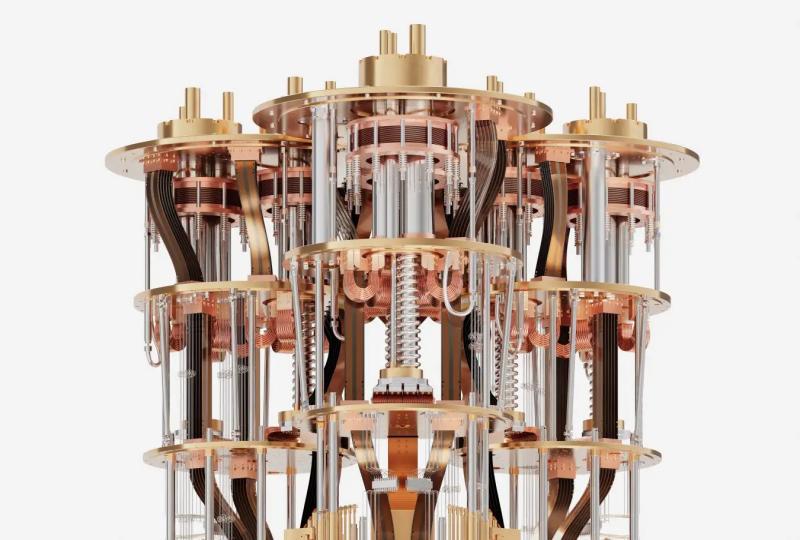
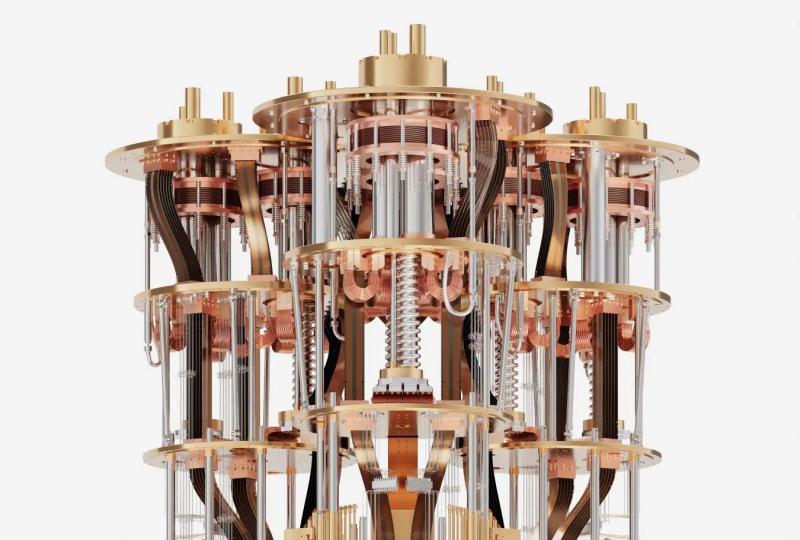
Quantum computing has evolved from a theoretical concept to a transformative emerging technology, breaking the computational limitations of traditional classical computers. Unlike conventional devices that rely on binary bits, quantum computers leverage unique quantum mechanical properties to solve ultra-complex problems with exponential computational advantages. While the technology is still in the iterative upgrading stage, it has shown clear application potential across multiple industries. This blog systematically introduces the core principles, applicable scenarios and industrial landing timeline of quantum computing, and conducts a detailed comparative analysis of mainstream SpinQ quantum hardware products to provide professional hardware selection reference for educators, researchers and industrial practitioners.
1. Core Working Principles of Quantum Computers
The fundamental difference between quantum and classical computers lies in the basic computing unit and operating logic. Classical computers process information through fixed 0/1 binary bits, while quantum computers take qubits (quantum bits) as the core carrier, relying on four key quantum mechanical properties to realize efficient computing.
The four core quantum principles are summarized in the table below:
|
Quantum Principle
|
Core Function
|
|
Superposition |
A qubit can exist in the superposition state of 0 and 1 simultaneously. Multiple qubits can form a multidimensional computational space, realizing exponential expansion of computing capability. |
|
Entanglement |
Entangled qubits form an inseparable correlation system. The state of one qubit can instantly affect the other, supporting overall collaborative computing of complex variable systems. |
|
Interference
|
Adjust the probability of quantum results through wave superposition and cancellation, amplify correct solution results, and eliminate invalid interference information. |
|
Decoherence
|
The quantum state will collapse due to environmental interference. Suppressing decoherence is the core key to improving the accuracy and stability of quantum computing. |
Not all computing tasks are suitable for quantum computers. They are only superior to classical devices in problems with exponential solution space growth and quantum system simulation characteristics. Daily data processing, general software operation and simple computing tasks still rely on classical computers efficiently.
2. Eight Main Industrial Application Scenarios & Landing Timeline
According to the latest industry research, quantum computing has eight credible industrial application directions, which are divided into near-term, mid-term and long-term landing stages based on technical maturity and commercialization progress. The specific scenarios, challenges and timelines are sorted as follows:
|
Application Scenario
|
Core Value
|
Landing Timeline |
Key Challenges
|
|
Drug Discovery & Molecular Simulation
|
Accurately simulate molecular quantum interactions, shorten drug R&D cycles, and reduce experimental costs
|
5-10 years
|
Insufficient qubit quantity and high error rate |
|
Materials Science & Battery Development
|
Develop high-energy-density batteries, high-efficiency solar cells and new industrial materials |
5-10 years
|
Need higher-fidelity quantum hardware |
|
Chemical & Catalyst Design
|
Optimize industrial reaction processes (e.g., Haber-Bosch process) to reduce global energy consumption
|
5-10 years
|
Limited scale of simulated chemical systems
|
|
Financial Portfolio Optimization
|
Realize asset allocation optimization and rapid market risk assessment |
5-15 years
|
Difficult to surpass mature classical optimization algorithms
|
|
Logistics & Supply Chain Optimization
|
Solve large-scale routing and scheduling problems to reduce operational costs |
5-15 years
|
Uncertainty of continuous quantum advantage
|
|
Quantum Cryptography |
Break traditional encryption and build anti-quantum secure encryption systems |
10-20+ years |
Fault-tolerant quantum systems are not yet mature |
|
Climate Modeling & Carbon Capture |
Improve climate prediction accuracy and develop efficient carbon capture catalysts |
10-20+ years |
Lack of core algorithm breakthroughs
|
|
Quantum AI & Machine Learning
|
Optimize neural network training and high-dimensional data feature mining |
10-20+ years |
Fierce competition from classical AI technology |
In general, molecular simulation-related fields represented by drug discovery and materials science are the most viable near-term track of quantum computing, while optimization, cryptography and AI scenarios will take longer to realize commercial value.
3. SpinQ Quantum Hardware Product Overview
At present, quantum computing hardware is divided into educational civilian type and industrial high-performance type. SpinQ, as a professional quantum hardware manufacturer, has launched two mainstream product lines: NMR quantum computers for teaching and basic research, and superconducting quantum computers for industrial R&D, covering the full needs of beginners, researchers and enterprises.
3.1 NMR Quantum Computing Series (Education & Teaching)
SpinQ NMR products adopt spin qubit technology, featuring room-temperature operation, portability and zero maintenance, which are the best choices for quantum education and basic algorithm verification.
|
Product Model
|
Qubit Number
|
Product Positioning
|
Core Advantages |
|
Gemini Mini/Mini Pro
|
2 qubits |
Portable teaching device |
Built-in touch screen and teaching courses, suitable for quick learning and classroom demonstration |
|
Triangulum Ⅱ
|
3 qubits |
Desktop research device |
Support all 3-qubit algorithms, open pulse sequence editing, high cost performance |
|
Gemini Lab |
Experimental platform |
University research and teaching platform |
Cover pulse-level, gate-level and algorithm-level quantum experiments |
3.2 Superconducting Quantum Computing Series (Industrial R&D)
SpinQ SQC S-series superconducting quantum computers are high-performance industrial devices, supporting quantum error correction and high-speed gate operation, which can meet the needs of molecular simulation, financial optimization and advanced quantum algorithm research.
|
Parameter |
S25 |
S25 Pro |
|
Qubit Quantity |
25 qubits |
25 qubits |
|
Coherence Time (T₁) |
≥30 μs |
≥60 μs |
|
Single-Qubit Gate Fidelity |
99.5% (Med.) / 99.9% (Max.) |
99.8% (Med.) / 99.9% (Max.) |
|
Two-Qubit Gate Fidelity |
96% (Med.) / 99% (Max.) |
98% (Med.) / 99% (Max.) |
|
Core Capability |
Support basic quantum simulation and optimization tasks |
Support error correction, complex algorithm operation |
The series can be customized up to 103 qubits, with ultra-high CLOPS operation performance and complete full-stack solutions including chips, cryogenic systems and programming frameworks.
4. Hardware Selection: NMR vs. Superconducting Quantum Computers
To help users quickly select suitable equipment, the two product lines are comprehensively compared from multiple dimensions:
|
Comparison Dimension |
NMR Quantum Computer |
Superconducting Quantum Computer |
|
Working Environment |
Room temperature, no refrigeration required |
Milli-Kelvin ultra-low temperature refrigeration |
|
Hardware Features |
Portable, desktop, maintenance-free |
High integration, scalable, high stability |
|
Applicable Scenarios |
Quantum teaching, beginner training, basic experiment verification |
Industrial R&D, molecular simulation, financial modeling, quantum AI research |
|
User Groups |
Schools, educational institutions, quantum beginners |
Scientific research institutions, pharmaceutical, energy and financial enterprises |
5. Conclusion
Quantum computing is stepping from theoretical exploration to practical application. The near-term industrial breakthroughs will focus on molecular simulation and materials research, while long-term technological progress will reshape finance, logistics, climate research and AI industries. For users, hardware selection should be based on application demands: NMR quantum computers are the cost-effective choice for education and basic research, while superconducting devices are the core equipment for enterprises and research institutions to explore quantum advantages. With the continuous iteration of qubit fidelity and error correction technology, quantum computing will surely release greater industrial value in the next 5-10 years.
Featured Content