
How Does Quantum Computing Work? Core Principles & Pros
2026.05.09 · Blog how does quantum computing work
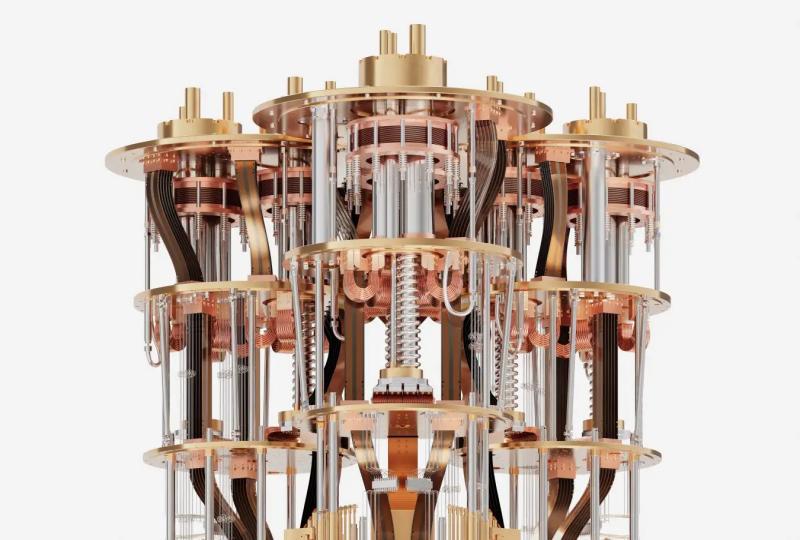
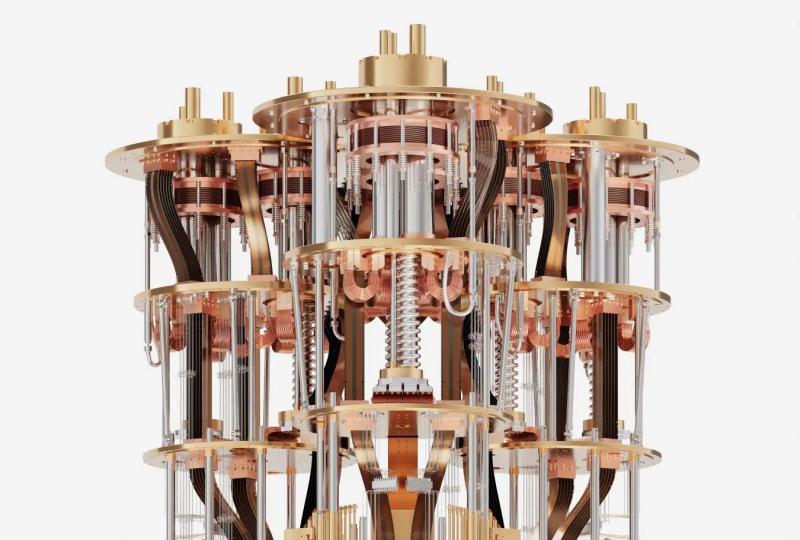
For decades, classical computers have dominated digital life, powering everything from daily smartphones to supercomputers for scientific research. However, when facing complex problems like molecular simulation, global logistics optimization and advanced cryptography, traditional binary computing falls into bottlenecks of slow computation and high energy consumption. Quantum computing is a revolutionary computing paradigm that leverages the bizarre rules of quantum mechanics to process data in an entirely new way. Different from classical computers’ linear computing logic, it can explore massive potential solutions simultaneously, bringing exponential performance leaps for specific complex tasks. This article will systematically explain the core principles, key components, operating logic and practical value of quantum computing in plain language.
1. Core Difference: Classical Bit vs. Qubit
The fundamental gap between quantum and classical computers lies in their basic information processing units. Classical computers rely on standard bits, while quantum computers take qubits (quantum bits) as the core carrier of information. The differences between the two are fully summarized in the table below:
2. Three Foundational Quantum Phenomena
The powerful computing capability of quantum computers originates from three unique quantum mechanical properties, which do not exist in classical computing systems at all.
2.1 Superposition
Superposition is the core foundation of quantum parallel computing. Unlike a classical bit that is fixed as 0 or 1, a qubit can exist in a mixed state of two states at the same time. A vivid analogy is a spinning coin: it is neither pure heads nor tails during rotation, but a superposition of both, and only falls into a fixed state after landing. Superposition allows a single qubit to carry multiple sets of data information, and dozens of qubits can superpose billions of computing possibilities instantly.
2.2 Entanglement
Quantum entanglement is a special correlation between multiple qubits. Once two or more qubits are entangled, their states are tightly bound, regardless of the distance between them. Measuring the state of one entangled qubit will instantly determine the state of the other. This long-range correlation enables quantum computers to realize efficient information interaction between multiple qubits, which is the key to large-scale parallel computing.
2.3 Quantum Interference
Quantum interference is the core mechanism for quantum computers to screen correct results. Similar to wave superposition in physics, qubits’ quantum states will produce constructive interference and destructive interference. It can amplify the probability of correct computing results and offset wrong and invalid answers, helping quantum algorithms quickly converge on optimal solutions.
3. Quantum Computing Operation System: Gates & Circuits
Quantum computing is completed through standardized quantum circuits, which are composed of a series of quantum gates. Quantum gates are the basic operation units that manipulate qubit states, and common core gate types and functions are shown in the table below:
|
Quantum Gate |
Core Function |
|
H-gate (Hadamard) |
Places a single qubit into superposition state
|
|
X-gate |
Quantum NOT gate, flips 0 and 1 states |
|
CNOT Gate |
Controls qubit entanglement and state linkage |
|
T/S Rotation Gate |
Fine-tunes quantum phase to optimize interference effect |
The complete quantum computing workflow is fixed and standardized. Firstly, initialize all qubits to the default |0⟩ state; secondly, apply different quantum gates to build superposition and entanglement states; thirdly, use quantum interference to screen and optimize results; finally, complete quantum measurement to collapse quantum states into classical 0 and 1 binary outputs. It is worth noting that measurement is irreversible, which means each measurement will end the qubit’s superposition state.
4. Real-World Application Scenarios
Quantum computers are not substitutes for classical computers, but professional computing tools for specific complex scenarios. They have unique advantages in fields that require massive data traversal and complex simulation calculation:
Drug and Material Research: Quantum computers can accurately simulate molecular atomic interactions, accelerating the research and development of new drugs, new energy materials and catalysts, and greatly shortening the R&D cycle of new products.
Cryptography and Network Security: It can crack traditional RSA encryption algorithms, and simultaneously promote the research and popularization of quantum-safe encryption technology to build a more secure network system.
Industrial Optimization: It provides optimal solutions for complex problems such as logistics scheduling, financial asset allocation and intelligent traffic planning, improving overall operational efficiency.
5. Current Technical Challenges
Despite its huge potential, quantum computing still faces many technical bottlenecks in commercialization, as summarized in the table below:
|
Core Challenge |
Specific Impact |
|
Decoherence
|
External noise such as heat and vibration will make qubits lose quantum states, resulting in calculation failure |
|
High Error Rate |
Qubits are extremely fragile, and quantum operation errors are frequent, requiring complex error correction technology |
|
Scalability Limitation |
It is difficult to stably integrate and manage large-scale qubit arrays, restricting computing power improvement |
Conclusion
In short, quantum computing works by utilizing three core quantum characteristics: superposition, entanglement and interference. Relying on qubits and quantum gate circuits, it breaks the sequential computing limit of classical binary computers and realizes efficient processing of complex computing tasks. Although restricted by decoherence, error rate and scalability problems, with the continuous progress of hardware manufacturing and algorithm optimization, quantum computing will surely become a core technological force driving the innovation of biomedicine, new materials, information security and other industries in the future.
Featured Content