
Key Components of Superconducting Quantum Chip Technology
2026.09.02 · Blog Superconducting Quantum Chip Technology
Superconducting Quantum Chip Technology is built around more than a single chip. Although the quantum processing unit, or QPU, is the core computing component, a practical superconducting quantum system also depends on precise control electronics, a stable cryogenic environment, software tools, and validation capabilities.
For research institutions, universities, and high-tech R&D teams, understanding how these elements connect is essential. Each component supports a different stage of the quantum computing workflow: creating quantum operations, protecting the operating environment, controlling qubits, reading results, and translating algorithms into hardware-level instructions.
The Superconducting Quantum Chip as the QPU
A superconducting quantum chip, commonly called a QPU, is the central hardware component of a superconducting quantum computer. It carries and operates superconducting qubits, which serve as the information-processing units of the system.
The QPU supports quantum logic operations, including single-qubit and two-qubit gates. These operations are building blocks for quantum circuits and algorithms. The chip also provides the hardware foundation on which quantum software and system-level functions can run.
When evaluating superconducting quantum chip technology, teams often focus on factors that influence usable system performance. These include qubit lifetime, gate fidelity, scalability, manufacturing consistency, and the ability to integrate the chip with the rest of the quantum system.
SpinQ’s QPU C series is positioned as a standardized, mass-produced high-performance superconducting quantum chip. It is designed with high Qi values and long qubit lifetimes to support more reliable quantum operations. Learn more about superconducting quantum products for system-level hardware options built around superconducting quantum computing.
Quantum Control and Measurement System
A QPU cannot operate independently. It requires a quantum control and measurement system, often abbreviated as QCM, to manipulate and read the states of its qubits.
In a superconducting quantum system, the QCM uses radio-frequency pulses to control quantum states. These pulses enable the system to perform programmed quantum operations and then measure the resulting qubit states. Without this control-and-readout layer, a quantum chip cannot be driven, cannot execute a computation, and cannot produce usable output.
The quality of the QCM influences how accurately and repeatably a system can control qubits. High-precision, low-noise, and repeatable measurement capabilities help researchers conduct quantum experiments with greater consistency. They also support coordination between quantum hardware and software, allowing instructions from a quantum program to be executed on a physical device.
For multi-qubit experiments and more complex quantum algorithms, the control system becomes especially important. It is the bridge between abstract quantum circuits and the physical signals that operate the superconducting chip.
Cryogenic Infrastructure for Superconducting Qubits
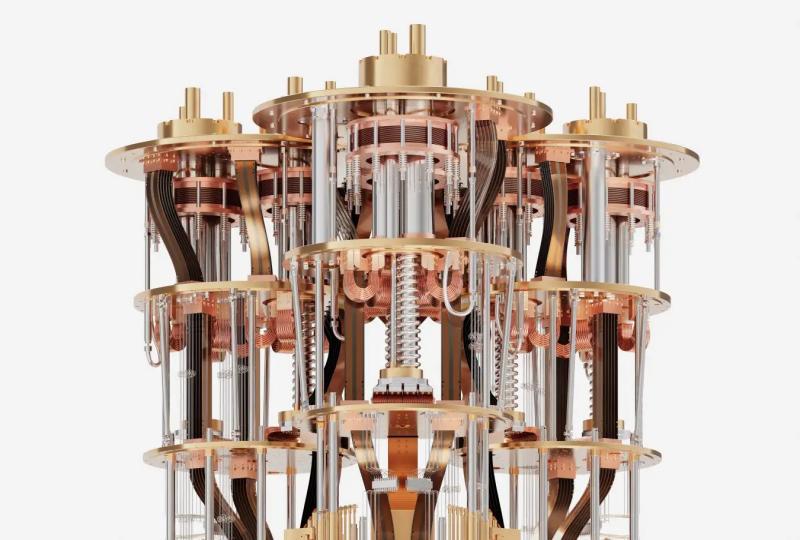
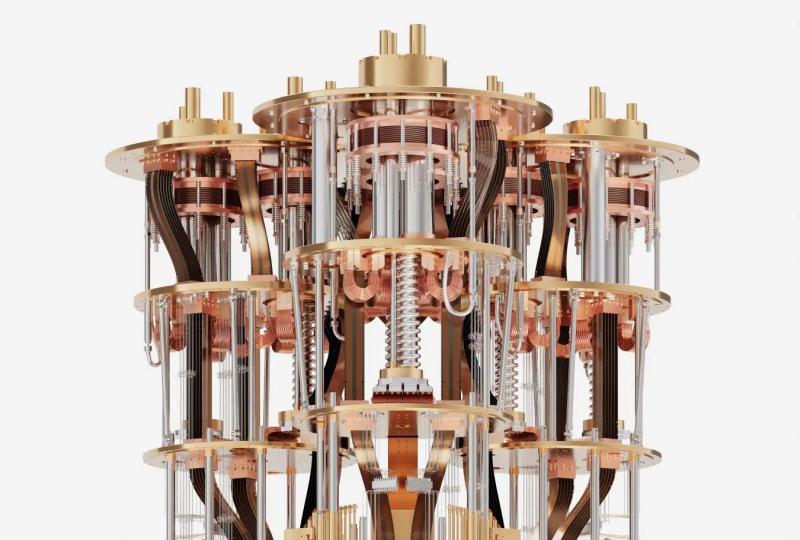
Superconducting quantum chips require an extremely low-temperature operating environment. Cryogenic infrastructure is therefore not an optional add-on; it is a core part of superconducting quantum chip technology.
A complete deployment may involve a dilution refrigerator, low-temperature radio-frequency components, supporting equipment, and laboratory installation services. Together, these elements provide the controlled environment needed for the QPU and measurement electronics to work as an integrated system.
For organizations building a superconducting quantum laboratory, infrastructure planning should include more than equipment selection. It may also include laboratory assessment, facility modification, installation, maintenance, upgrades, and technical support. Considering these requirements early helps research teams prepare for a more stable and manageable deployment process.
The cryogenic environment, QPU, and QCM should be considered as one connected engineering system. A strong chip alone cannot deliver useful experimental results without compatible control and environmental support.
Software, Pulse-Level Control, and Python APIs
Quantum hardware needs software to transform algorithms into actions that a physical quantum system can perform. In superconducting quantum computing, the software layer connects quantum circuits, pulse-level control, measurement workflows, and hardware execution.
SpinQit is a quantum computing programming framework that supports Python-based quantum programming. It provides interfaces for quantum algorithms and supports cross-platform operation across quantum computers, simulators, and cloud platforms. This type of framework helps developers and researchers move between algorithm design, simulation, and hardware-oriented experimentation.
Pulse-level control software adds another layer of flexibility. Rather than working only with high-level gates, users can work more closely with the control instructions delivered to hardware. Combined with Python APIs, this supports a more connected workflow between programming, control, and experimental validation.
For institutions developing quantum skills alongside hardware capabilities, quantum computing education solutions can help connect practical learning, programming, and experimental understanding.
Chip Design, Fabrication, and Professional Testing
The development of a superconducting quantum chip begins well before the device enters a cryogenic environment. Design, fabrication, and testing are all essential stages in the engineering workflow.
Quantum chip design tools can support parameterized quantum-device generation and automated routing, helping teams iterate layouts more efficiently. These capabilities are valuable when researchers need to explore device configurations, refine chip designs, or shorten parts of the design cycle.
Fabrication and testing services are also important for organizations without their own semiconductor process capability or specialized test conditions. A service model that covers quantum chip design, fabrication, and professional testing can help research institutes and enterprises move from an initial concept toward a validated physical device.
Testing provides a critical verification step before a chip becomes part of a larger quantum system. It supports quality control and helps ensure that chips are prepared for subsequent integration, control, and experimental use. This makes manufacturing and test support important not only for chip suppliers, but also for research teams pursuing their own superconducting quantum hardware programs.
How the Components Work Together
The value of superconducting quantum chip technology comes from system-level coordination. A typical workflow begins with a quantum algorithm or circuit written in a programming framework. The software translates that program into instructions, while pulse-level tools prepare the control signals required for the hardware.
The quantum control and measurement system delivers radio-frequency pulses to the QPU and reads the resulting quantum states. Throughout this process, cryogenic infrastructure provides the extremely low-temperature conditions required for the superconducting chip to operate. Measurement results are then collected and processed so users can evaluate an experiment or computation.
This connected workflow shows why a quantum chip should not be evaluated in isolation. QPU capability, control precision, cryogenic stability, software accessibility, and chip testing all contribute to the practical usability of a superconducting quantum system.
Building an Integrated System With SpinQ
SpinQ develops superconducting quantum computing capabilities across the hardware and software stack. Its related offerings cover superconducting quantum chips, quantum control and measurement systems, cryogenic-environment deployment, programming frameworks, pulse-level software, Python APIs, and integration-oriented support.
This integrated approach can be relevant to organizations that want to reduce the complexity of coordinating multiple technical layers and suppliers. Rather than treating the chip, measurement equipment, software, and deployment environment as entirely separate projects, research teams can consider an end-to-end system path aligned with their experimental and development objectives.
Explore SpinQ quantum computing solutions to learn how superconducting hardware, software, and supporting services can fit into a broader quantum computing development plan.
Frequently Asked Questions
What is the main component of superconducting quantum chip technology?
The superconducting quantum processing unit, or QPU, is the central computing component. It hosts and operates superconducting qubits, which perform quantum logic operations. However, the QPU must work with control electronics, cryogenic infrastructure, and software to function as part of a complete system.
Why does a superconducting quantum chip need a control and measurement system?
A quantum control and measurement system provides the signals used to manipulate qubits and the capabilities needed to read their states. Without this system, the QPU cannot be driven, operated, or measured.
What role does cryogenic infrastructure play in superconducting quantum computing?
Cryogenic infrastructure provides the extremely low-temperature environment needed for superconducting quantum chips to operate. It can include dilution refrigeration, low-temperature radio-frequency components, supporting equipment, installation, and maintenance services.
What should research teams evaluate when building a superconducting quantum system?
Research teams should evaluate the compatibility of the QPU, control-and-measurement system, cryogenic infrastructure, programming tools, pulse-level control, fabrication options, and testing support. A coordinated system approach is usually more practical than evaluating
Featured Content