
How Many Quantum Computers Are There in 2026?
2026.08.10 · Blog how many quantum computers are there
Ask a simple question—“how many quantum computers are there?”—and you quickly discover a complex reality. Quantum computers exist as lab prototypes, cloud-accessible machines, educational desktop systems, and industrial-grade platforms, spread across multiple technologies and geographies. Counting them requires understanding not only the hardware numbers, but also how these systems are actually deployed and used.
Today, the global landscape consists of several hundred quantum computing systems when you combine cloud-accessible superconducting machines, trapped-ion devices, photonic prototypes, and specialized educational systems. Within this evolving ecosystem, superconducting qubit technology has become the most industrialized route, powering many of the world’s leading quantum cloud services and early commercial deployments. SpinQ, as a one-stop quantum computing solutions provider, plays an important role by bridging educational NMR platforms with industrial superconducting quantum products and full-stack solutions that make these machines genuinely useful for research and industry.
How Many Quantum Computers Exist Today?
There is no single, universally accepted registry of quantum computers, and that makes precise counting difficult. Hardware is deployed in private research labs, national facilities, and commercial data centers; many systems are accessible only via cloud APIs; and some devices are built mainly for education rather than large-scale computation. Even so, industry reports and ecosystem field studies agree on a broad picture: the number of operational quantum systems has grown from dozens of prototypes in the early 2020s to several hundred distinct machines by mid-2020s, with the steepest growth occurring in superconducting and trapped-ion platforms.t
This number includes cloud-exposed superconducting and ion-trap devices operated by major technology companies and specialized vendors, industrial-grade systems built for dedicated customers, and a growing fleet of educational and training machines. Many of these systems are not counted individually in public statistics—cloud platforms may treat multiple quantum processors as a single service—so most estimates refer to ranges instead of exact figures. What matters more than the raw count is the trend: year by year, more organizations gain direct or indirect access to quantum hardware, and more of these machines transition from “physics experiments” into usable computing resources for specific applications.
.jpg)
Quantum Computer Types and Deployment Scenarios
Research and Cloud-Based Quantum Computers
A large portion of worldwide quantum computers are deployed in research labs and data centers operated by major technology companies and academic institutions. These machines, often based on superconducting qubits or trapped ions, are accessed remotely through cloud platforms. Users submit quantum circuits via APIs or web interfaces, and jobs are executed on actual quantum hardware behind the scenes.
This mode of deployment makes it possible for thousands of developers and researchers to “use” quantum computers without ever seeing the physical machines. Quantum cloud services provide queues of hardware back-ends, simulators, and hybrid classical–quantum workflows, hiding low-level hardware details while exposing the computational capabilities. From a counting perspective, each cloud provider may operate multiple quantum processors with different qubit counts and performance profiles, so the number of logical “quantum services” exceeds the number of individual physical devices.
Educational and Desktop Quantum Systems
A second category of quantum computers is designed for education, outreach, and hands-on training. Nuclear magnetic resonance (NMR)–based quantum computers, in particular, have proven valuable as stable, controllable platforms with a few qubits, suitable for university laboratories, teaching programs, and beginner experiments. Instead of requiring large cryogenic infrastructure, NMR systems leverage well-understood magnetic resonance techniques to realize quantum gates and algorithms at small scales.
SpinQ has been a pioneer in this area, delivering NMR-based desktop quantum computers and experimental platforms that allow students and educators to explore quantum algorithms, error phenomena, and basic quantum logic in real-world hardware settings. These educational systems contribute significantly to the total number of quantum computers, even though their primary purpose is training and skill-building rather than high-performance computation.
Industrial-Grade Quantum Systems
The third major category comprises industrial-grade quantum systems intended for concrete applications in domains such as financial technology, drug discovery, materials science, and artificial intelligence. These systems emphasize stability, integration, and scalability: they must fit into existing IT environments, support repeatable workloads, and offer predictable performance characteristics.
SpinQ focuses heavily on industrial superconducting quantum computers and chips, including quantum processors, chip-level EDA (electronic design automation), quantum control systems, and full-stack solutions that integrate hardware with algorithm software and cloud platforms. By situating superconducting quantum computers within a broader ecosystem that includes measurement and control, software, and application frameworks, SpinQ helps transform the global “count” of quantum machines into a count of genuinely usable quantum resources for business and research.
Dominant Quantum Computing Technology Routes
Superconducting Qubits – The Most Industrialized Route
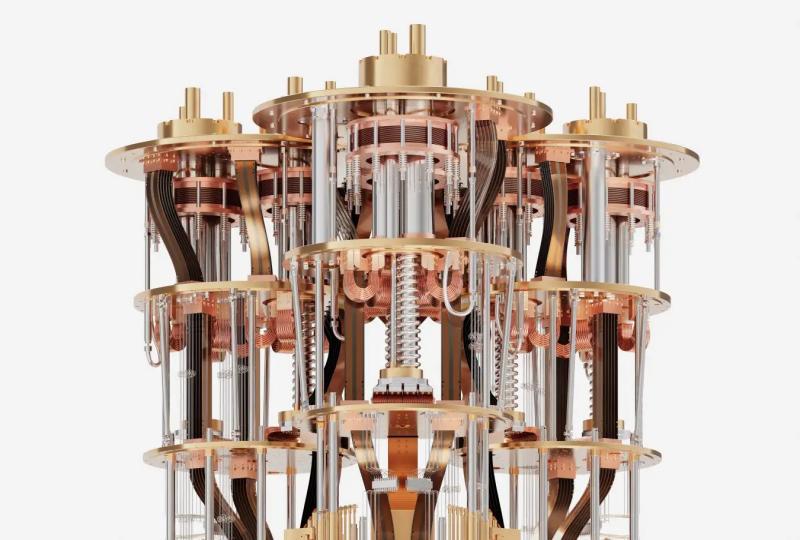
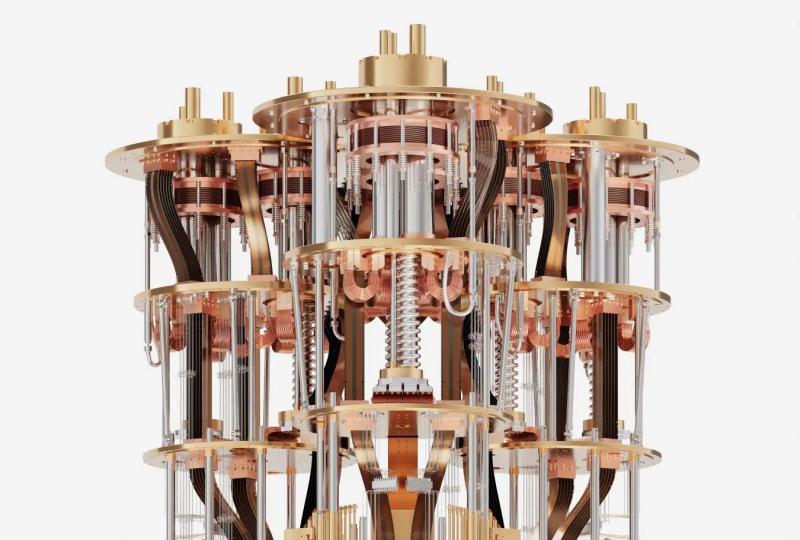
Among all quantum hardware technologies, superconducting qubits have achieved the highest level of industrialization. Built from superconducting circuits that incorporate Josephson junctions, these systems exploit macroscopic quantum effects to create qubits that can be controlled with microwave pulses and integrated into scalable architectures.
Superconducting quantum computers offer several key advantages: qubit numbers are relatively easy to scale, quantum gates can achieve high fidelities, and multi-qubit coupling is tunable within engineered circuit layouts. These traits have allowed superconducting systems to dominate early commercial deployments and cloud platforms. Many of the quantum processors behind leading public clouds are superconducting-based, and roadmaps from major vendors focus on increasing qubit counts, improving coherence times, and advancing error correction on this route.
SpinQ’s industrial superconducting quantum products build on these advantages. The company provides superconducting qubit–based quantum computers, quantum chips, chip foundry services, and quantum algorithm software as part of a full-stack offering, targeting practical industry needs. By delivering scalable, high-fidelity hardware and the surrounding ecosystem, SpinQ aligns directly with the dominant route of quantum computing deployment—superconducting qubits—and contributes to the population of machines that are ready for real-world workloads. Users exploring industrial-grade superconducting quantum solutions can learn more about SpinQ’s portfolio through its superconducting quantum products.
Other Routes: Ion Traps, Photonics, NMR, and More
While superconducting qubits lead current industrialization, several other hardware routes play important roles in the global quantum ecosystem. Trapped-ion systems use individual ions confined in electromagnetic traps and manipulated by lasers; they can achieve high gate fidelities and excellent coherence, though scaling remains technically challenging. Photonic quantum computers rely on single photons and optical circuits, promising room-temperature operation and potentially easier long-distance networking, but are still largely in prototype stages.
NMR-based quantum computers occupy a distinctive position. By using nuclear spins in molecules as qubits and controlling them via radio-frequency pulses in a strong magnetic field, NMR systems provide highly stable, well-characterized qubits at small scales. Because they do not require deep cryogenic infrastructure, NMR platforms are particularly well suited to education and training, making them an important contributor to the overall number of quantum machines even if their qubit counts are modest. SpinQ integrates this route into its product strategy by offering NMR-based educational quantum computers, linking classroom learning with the industrial superconducting stack that organizations eventually adopt.
.jpg)
SpinQ’s Role in the Quantum Computer Landscape
From Education to Industrial Superconducting Systems
Founded in 2018, SpinQ Technology Inc. positions itself as a one-stop solution provider dedicated to the industrialization and popularization of quantum computing. The company’s strategy spans both education and industry: on one side, SpinQ develops NMR-based desktop quantum computers and laboratory platforms that bring quantum computing to students and educators; on the other, it builds industrial-grade superconducting quantum computers, chips, and supporting infrastructure for serious commercial use.
SpinQ’s full-stack ecosystem encompasses quantum chips, chip-level EDA tools, quantum measurement and control systems, superconducting quantum computer systems, and quantum algorithm software. This comprehensive approach allows customers to engage with quantum technology at multiple levels—from basic hands-on experiments to production-ready hardware and algorithms. By combining educational NMR platforms with industrial superconducting solutions, SpinQ increases both the absolute number of quantum computers deployed and the fraction of those machines that are truly accessible and useful to end-users. Organizations interested in hardware-level integration and scalable quantum processors can explore SpinQ’s superconducting quantum chips and systems.
Industrial Use Cases Enabled by SpinQ
The impact of quantum computing is not measured solely by the number of machines; it is measured by the number of meaningful applications. SpinQ’s industrial-grade superconducting quantum products and software are designed to support real-world scenarios in scientific research, drug discovery, financial technology, artificial intelligence, and more.
In drug discovery, quantum computers can help model complex molecular interactions that are difficult for classical algorithms, potentially accelerating the identification of promising compounds. In financial technology, quantum algorithms may enable more sophisticated risk analysis, portfolio optimization, and scenario simulation. In artificial intelligence and machine learning, quantum-enhanced methods can assist in sampling, optimization, and certain types of pattern recognition. SpinQ’s quantum computing solutions for AI, combined with its industrial superconducting hardware, help organizations move beyond theoretical interest and into practical experimentation and deployment. By delivering integrated stacks of hardware, control, and software, SpinQ ensures that the growing count of quantum systems translates into usable capacity for these advanced applications.
FAQ – Common Questions About Quantum Computer Numbers
Q1: Why is it hard to give an exact number of quantum computers worldwide?
A1: Different organizations use different definitions of what counts as a quantum computer. Some consider only large, multi-qubit systems in research labs and data centers; others include smaller educational and desktop devices. Cloud platforms may operate multiple physical processors behind a single service endpoint, and prototype machines in private labs are rarely counted in public statistics. As a result, most experts talk about ranges and deployment trends rather than a single exact number.
Q2: Are most quantum computers superconducting?
A2: A significant share of operational quantum computers, especially those offered via public cloud services and industrial deployments, are based on superconducting qubits. This route has matured quickly thanks to scalable circuit architectures, high-fidelity gates, and robust engineering roadmaps. Trapped ions, photonics, and other technologies also contribute important systems, but superconducting qubits currently dominate in terms of commercially deployed.
Q3: How do educational quantum systems contribute to the overall count?
A3: Educational quantum systems, particularly NMR-based desktop computers and laboratory platforms, represent a substantial portion of installed quantum hardware. While their qubit counts are relatively small, they are widely deployed in universities, training centers, and outreach programs. These systems are crucial for building a workforce that understands quantum algorithms and practical hardware operation, and they help expand the number of people who engage directly with quantum computing.
Q4: What role does SpinQ play in expanding the number of usable quantum computers?
A4: SpinQ increases both the number and the usability of quantum computers by providing NMR-based educational machines and industrial superconducting quantum products within a unified ecosystem. Its educational platforms bring quantum hardware into classrooms and labs, while its industrial-grade superconducting computers, chips, control systems, and software enable organizations to run real-world applications in fields such as AI, finance, and drug discovery. This dual focus helps ensure that the growing global count of quantum machines translates into practical impact.
Conclusion
The answer to “how many quantum computers are there?” is best understood as a dynamic range rather than a fixed figure. Worldwide, several hundred quantum systems—spanning superconducting, ion-trap, photonic, and NMR technologies—are now in operation, with new machines coming online each year and cloud platforms dramatically widening access. Superconducting qubits lead this expansion due to their scalability and industrial maturity, while educational NMR systems play a vital role in training and awareness.
SpinQ stands at the intersection of these trends, combining NMR-based educational quantum computers with industrial superconducting quantum products, chips, and software to create a full-stack ecosystem that moves quantum computing from theory to practice. As the global count of quantum computers grows, SpinQ’s contribution lies not just in adding more machines to the tally, but in ensuring that more of those machines are accessible, reliable, and capable of solving meaningful problems for science and industry.
Featured Content