
How to Evaluate Fault-Tolerant Superconducting Qubit Platforms?
2026.09.03 · Blog Fault-Tolerant Superconducting Qubit
Choosing superconducting quantum hardware is about more than selecting the largest qubit count. A quantum processor can contain many physical qubits, yet still be difficult to use for demanding research if its gates, readout, calibration, or control environment are not reliable enough. The practical question is whether the platform can perform repeatable operations that support quantum error correction today and provide a credible path toward fault-tolerant computing.
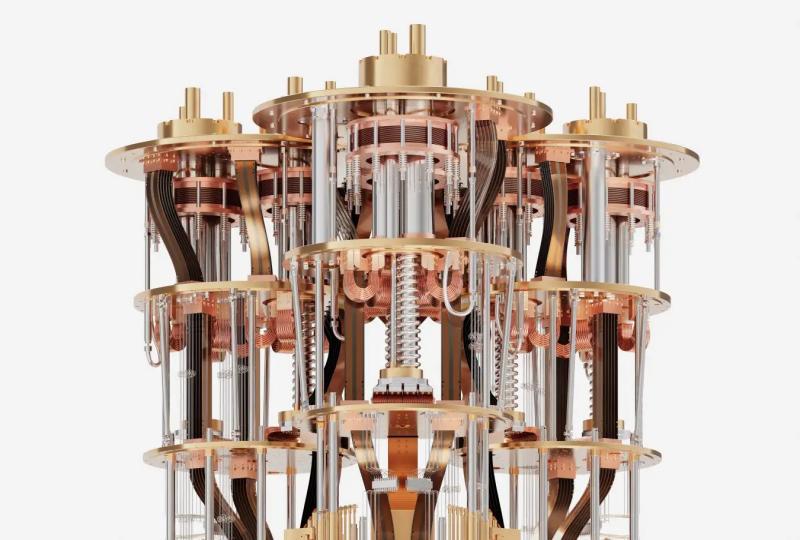
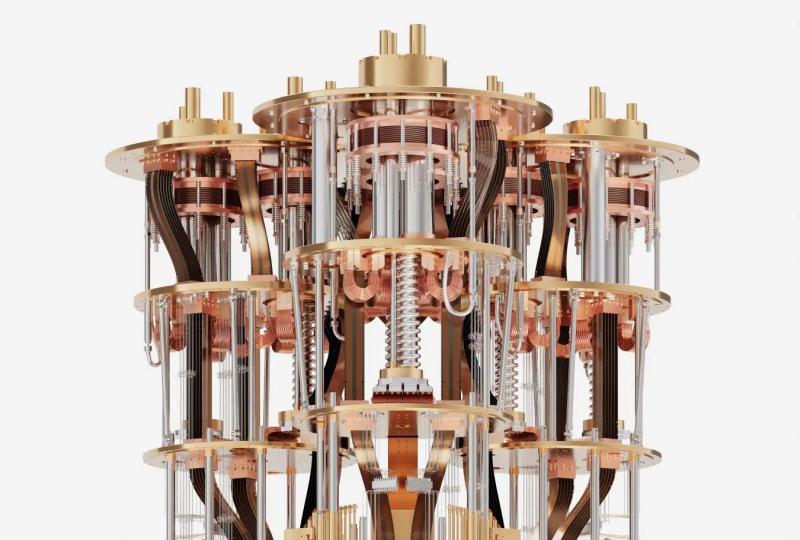
That is why a fault-tolerant superconducting qubit should be evaluated as part of a complete system. The quantum processing unit (QPU), microwave control electronics, cryogenic environment, calibration workflow, software access, and technical support all affect what researchers can achieve. SPINQ supports this system-level approach through superconducting QPUs, control and measurement solutions, chip services, software tools, and deployment support for organizations developing quantum capability.
This guide explains the 10 specifications that matter most when comparing superconducting quantum hardware. It is intended for research institutions, advanced R&D teams, and technical buyers who need to assess supplier claims, develop a request for proposal, or select a platform for quantum error correction, chip research, or scalable quantum-computing development.
What Makes a Superconducting Qubit Platform Fault-Tolerant Ready?
A superconducting qubit platform becomes more suitable for fault-tolerant quantum computing when it can repeat quantum operations while keeping errors low enough for quantum error correction (QEC) to reduce, rather than add to, the overall error rate.
This matters because a platform with many physical qubits is not automatically capable of delivering useful logical qubits. A logical qubit uses multiple physical qubits and error-correction operations to protect quantum information. Its quality depends on much more than the number of qubits fabricated on a chip.
For procurement and technical evaluation, fault-tolerant readiness should be assessed through three practical questions:
-
Can the system execute high-fidelity single-qubit and two-qubit operations consistently?
-
Can it perform fast, accurate measurement and repeated error-syndrome extraction?
-
Does the complete hardware and software stack support scalable calibration, feedback, and quantum error correction experiments?
The answer requires a system-level review of the following 10 metrics.
-
Two-Qubit Gate Fidelity and Error Rate
Two-qubit gates are central to entanglement, quantum algorithms, and surface-code quantum error correction. They are also among the most demanding operations in a superconducting quantum processor.
High two-qubit gate fidelity means an entangling operation can be performed with a lower probability of error. However, procurement teams should not rely on one best-case fidelity result. Ask for performance data across all available couplings, not only the strongest qubit pair on the chip.
When comparing systems, examine the average and median two-qubit gate error across the processor, the weakest qubit connections, gate performance during simultaneous operations, gate duration relative to coherence time, the benchmarking method used, and performance stability across repeated calibrations.
A processor can appear strong in isolated tests but become less reliable when many two-qubit gates operate in parallel. Parallel-operation data is especially important for fault-tolerant superconducting qubit research because quantum error correction relies on repeated, synchronized multi-qubit circuits.
-
Single-Qubit Gate Fidelity and Pulse Control
Single-qubit gates usually have lower error rates than two-qubit gates, but they remain essential to system reliability. Repeated single-qubit rotations are used for state preparation, basis changes, calibration routines, and error-correction circuits.
The evaluation should include both gate fidelity and gate duration. A short pulse is valuable only when it preserves control accuracy and does not introduce leakage, frequency collisions, or unwanted coupling effects.
Ask what the typical single-qubit gate error is across the full device, how stable pulse calibration remains over time, whether users can access pulse-level control for custom experiments, whether the platform supports custom gates and waveform editing, and how nearby qubit activity affects performance.
For advanced device research, pulse-level access can be as important as the published gate fidelity. It enables teams to test custom control strategies, evaluate calibration methods, and optimize operations for specific workloads.
-
Coherence Time: T1, T2, and T2*
Coherence time determines how long a quantum state can retain useful information before environmental noise changes it. In superconducting systems, the most common specifications are T1, T2, and T2*. T1 measures energy relaxation, or how quickly an excited qubit returns to its lower-energy state. T2 measures how long a qubit preserves phase information. T2* includes additional effects from slower frequency fluctuations and environmental noise.
Longer coherence times generally provide a larger operating window for quantum gates, readout, and repeated QEC cycles. However, coherence time should never be viewed in isolation.
A useful assessment compares coherence time with the time required to complete a control sequence. If an error-correction cycle consumes too much of the available coherence budget, high nominal T1 or T2 values may not translate into reliable logical-qubit performance.
Request coherence-time distributions for the entire device, historical performance over weeks or months, coherence data before and after full-system calibration, measurements under realistic operating conditions, and evidence of stability during multi-qubit operation.
SPINQ superconducting quantum products are designed for ultra-low-temperature quantum environments, where stable cryogenic operation is fundamental to preserving quantum states and supporting reliable processor performance.
-
Readout Fidelity and Measurement Speed
Quantum error correction depends on repeated measurements. The system must identify error syndromes quickly and accurately without excessively disturbing nearby qubits.
Readout fidelity measures how accurately the hardware distinguishes quantum states. Measurement speed determines how quickly the system can return a usable result and continue with the next operation. Both directly affect QEC-cycle performance.
Evaluate single-shot readout fidelity for each qubit, readout assignment error for the computational states, readout duration and reset time, simultaneous readout performance, measurement-induced dephasing on nearby data qubits, readout crosstalk, correlated measurement errors, and active reset capability.
A strong platform should provide more than a headline readout fidelity figure. It should show how performance changes when multiple qubits are measured at the same time, because practical QEC circuits require parallel stabilizer measurements.
-
Qubit Connectivity and Coupling Architecture
Connectivity describes which qubits can interact directly. The physical layout of a superconducting quantum chip affects circuit compilation, SWAP overhead, error-correction mapping, and the number of qubits that can be used effectively.
For fault-tolerant quantum computing, a two-dimensional arrangement is often important because surface-code-style error correction requires local interactions between data qubits and measurement qubits.
Review the physical qubit layout and coupling map, the number of usable nearest-neighbor connections, the uniformity of coupling performance, the use of tunable or fixed couplers, the effect of connectivity on target error-correction codes, and routing overhead for representative circuits.
A processor may have a large nominal qubit count but still offer limited usable capacity if the topology creates heavy routing requirements or contains weak connections. Buyers should review the complete connectivity map together with per-coupling error data.
-
Crosstalk and Correlated Errors
Crosstalk occurs when the control, readout, or operation of one qubit unintentionally affects another. In a small demonstration circuit, these effects may be manageable. In a fault-tolerant superconducting quantum computer, they can become a major obstacle because quantum error correction requires errors to remain sufficiently controlled and localized.
Common forms of crosstalk include microwave control interference between neighboring qubits, frequency collisions during gate operations, readout resonator interference, unwanted couplings, error increases during simultaneous gates, and leakage propagation between connected qubits.
For procurement decisions, do not accept isolated gate performance as the only measure. Request simultaneous randomized benchmarking, multi-qubit circuit testing, or equivalent data showing how errors change under parallel workloads.
Correlated errors deserve particular attention. Quantum error correction is generally more effective against independent local errors than against errors that affect multiple qubits at once. A platform should therefore be assessed not only for average error rate but also for error behavior across time, adjacent qubits, and repeated cycles.
-
Leakage Rate and Leakage Reduction
Superconducting qubits are not perfect two-level systems. In some conditions, a qubit can leave its intended computational states and enter a higher energy state. This is known as leakage.
Leakage can cause persistent errors because the affected qubit may not respond correctly to later gates, measurements, or reset operations. In a repeated QEC cycle, even a small leakage rate can create a larger reliability issue if the system cannot detect and remove it efficiently.
Ask suppliers about leakage during single-qubit and two-qubit gates, leakage behavior in long circuits, leakage under simultaneous operations, active reset performance, leakage-reduction protocols, and the detection and mitigation methods used in QEC experiments.
This metric is particularly important for teams developing surface-code experiments, custom quantum-control protocols, or multi-round stabilizer measurement workflows.
-
Quantum Error Correction Cycle Time and Real-Time Feedback
A quantum error-correction cycle is not only a sequence of gates. It also includes qubit measurement, signal acquisition, classical processing, syndrome decoding, and, where required, real-time feedback.
The shorter and more reliable this cycle is, the more likely the system can complete repeated QEC operations before decoherence erodes the quantum state.
A practical evaluation should cover the total duration of one QEC cycle, gate-sequence duration, measurement latency, data-transfer latency, decoder integration options, FPGA or hardware-level acceleration, conditional operations, mid-circuit measurement, and real-time feedback capability.
For research teams, a control platform should not be treated as an accessory. It is part of the quantum computer’s operating foundation. Without precise, repeatable control and measurement, a QPU cannot deliver meaningful experimental results.
-
Logical Error Rate and Code-Distance Scaling
Logical error rate is one of the most relevant metrics for assessing whether a platform is progressing toward fault tolerance. It measures the error rate of an encoded logical qubit rather than a single physical qubit.
A critical test is whether logical error decreases as code distance increases. If adding more physical qubits and additional error-correction resources makes the logical qubit more reliable, the system is demonstrating the behavior required for scalable QEC.
When reviewing a supplier’s fault-tolerance claims, request the logical error per QEC cycle, code type and code distance used, number of repeated error-correction rounds, physical-to-logical qubit overhead, decoder method and latency, error bars and sample size, use of post-selection, and results for quantum memory, logical gates, and multi-round operations.
Do not treat a single logical-qubit demonstration as proof that a system can run fault-tolerant applications. A strong technical evaluation looks at repeatability, code distance, number of cycles, control-stack stability, and the full resource overhead.
-
Calibration Stability, System Uptime, and Support
Quantum hardware is sensitive to calibration drift, environmental noise, cryogenic performance, and electronics stability. For this reason, the best performance result from one day is not always the most useful indicator of a platform’s real-world value.
Long-term operational stability affects experiment planning, team productivity, data reliability, and total cost of ownership.
Review calibration frequency and duration, automated calibration capabilities, qubit yield and availability, processor uptime and maintenance history, performance drift, cryogenic-system monitoring, replacement and upgrade processes, technical support availability, and training for system operation and experimental workflows.
A complete superconducting quantum program may involve chip design, QPU manufacturing, control and measurement integration, cryogenic deployment, software access, and ongoing characterization. Evaluating these elements together helps teams reduce integration risk and build a more dependable research environment.
How to Compare Suppliers Fairly
A reliable comparison begins by asking every supplier to report performance under comparable conditions. Do not compare one platform’s best-case gate fidelity with another platform’s average performance, or compare readout figures measured using different methods without understanding the test conditions.
Standardize the questions in your evaluation process. Request chip-wide gate and readout distributions, coherence-time history, coupling maps, parallel-operation results, leakage data, QEC-cycle timing, logical-error evidence, software access details, calibration practices, and technical-support commitments.
Then match the evaluation to your intended use case. A QEC research group should prioritize repetitive syndrome extraction, readout quality, feedback timing, and logical-error scaling. A hardware development group may prioritize custom chip access, pulse-level control, testing workflows, and control-system flexibility. An enterprise research team may place more weight on deployment options, secure access, hybrid software integration, training, and long-term service support.
How to Avoid Common Procurement Mistakes
Choosing by Qubit Count Alone
Physical qubit count is easy to compare, but it does not show how many qubits are usable for a specific task. A smaller, more uniform processor with stronger two-qubit gates, lower crosstalk, stable readout, and an appropriate topology may be more valuable than a larger device with uneven performance.
Comparing Best-Case Metrics
A supplier may publish its highest coherence time or best gate fidelity. Procurement teams should request median performance, full-device distributions, worst-case results, and data from simultaneous operations.
Ignoring the Control and Cryogenic Stack
A superconducting QPU requires a stable ultra-low-temperature environment and precise RF control. If the cryogenic infrastructure, cabling, electronics, software integration, and calibration workflow are not evaluated together, the delivered system may not meet the expected performance.
Treating Below-Threshold Performance as the Final Goal
Operating below an error threshold is important, but it is only one part of the path toward fault tolerance. Buyers should also assess logical-error suppression, repeated QEC cycles, code-distance scaling, feedback capability, system stability, and the hardware resources required to create useful logical qubits.
Omitting Support and Acceptance Criteria
Technical specifications should be translated into acceptance criteria before purchase. Define what will be tested at delivery, what data must be supplied, how uptime will be measured, and what technical support is included after installation.
Questions to Include in a Superconducting Quantum Hardware RFP
-
What are the average, median, and worst-case two-qubit gate errors across all active couplings?
-
How do two-qubit gate errors change when multiple gates operate simultaneously?
-
What are the T1, T2, and T2* distributions across the processor, and how stable are they over time?
-
What are the readout fidelity, readout duration, reset time, and simultaneous-measurement error rates?
-
Can the platform support mid-circuit measurement, conditional operations, and real-time feedback?
-
What is the duration of a complete quantum error-correction cycle?
-
What leakage-reduction, active-reset, and crosstalk-mitigation capabilities are available?
-
What logical error-rate data has been demonstrated, and does logical error decrease with higher code distance?
-
What pulse-level access, calibration data, raw measurement data, and software interfaces are available to users?
-
What support, maintenance, training, cryogenic deployment, and upgrade services are included in the project scope?
Choosing the Right System for Your Goal
The ideal superconducting quantum system depends on what your organization is trying to achieve. For quantum error-correction research, prioritize two-qubit gate performance, readout, crosstalk, leakage, QEC-cycle time, and logical-error scaling. For quantum-chip research, focus on pulse-level control, QPU customization, coherence, fabrication support, and characterization capability.
For quantum hardware deployment, evaluate system integration, the cryogenic environment, control electronics, calibration stability, and technical support. For quantum algorithm testing, consider usable qubit availability, connectivity, gate performance, software frameworks, and access requirements. Enterprise quantum R&D programs should also assess data control, deployment models, integration services, training, roadmaps, and long-term operational requirements.
For universities and research groups that want hands-on quantum learning and experimental access before deploying cryogenic hardware, SPINQ quantum computing products include educational and research platforms that support quantum programming and practical experimentation.
Build a Measurement-Driven Procurement Plan
The most effective procurement decision is based on evidence, not headline figures. Start by defining the target workload: quantum error correction, chip characterization, algorithm development, private quantum infrastructure, or advanced hardware research. Then convert that goal into measurable technical and operational requirements.
For fault-tolerant superconducting qubit programs, prioritize the quality and repeatability of the full quantum stack. Look beyond physical-qubit count, request complete measurement data, assess realistic multi-qubit performance, and define acceptance criteria before deployment. This approach gives teams a clearer foundation for selecting superconducting quantum hardware that can support both current research and the next stages of scalable quantum computing.
Featured Content