
Error-Corrected Superconducting Quantum Computers
2026.08.05 · Blog error-corrected superconducting quantum computer
Error correction is one of the most important topics in quantum computing. As systems become more advanced, the ability to reduce the impact of noise and operational imperfections becomes increasingly critical. For this reason, the error-corrected superconducting quantum computer is a major area of interest for researchers, engineers, and organizations that want to move quantum technology toward more dependable use.
Superconducting platforms are especially relevant in this discussion because they offer a strong foundation for controlled experiments, hardware scaling, and system integration. When paired with error correction approaches, they can support the long-term goal of more reliable quantum operation.
Why Error Correction Matters
Quantum systems are highly sensitive. Small disturbances can affect results, which makes consistency a major challenge. Error correction addresses this challenge by using structured methods to detect, manage, and reduce the effects of noise. In a superconducting quantum computer, this becomes a key part of the pathway from experimental systems to practical platforms.
For organizations exploring quantum computing, error correction is not just a technical detail. It is central to system reliability, experimental confidence, and future application development. Without it, scaling quantum hardware would be much harder to manage.
The Role of Superconducting Architecture
Superconducting quantum systems are often discussed in connection with error correction because they offer precise control and strong integration potential. Their architecture supports the kind of measurement and coordination needed for advanced quantum workflows. That makes them a serious candidate for ongoing research into error-resilient operation.
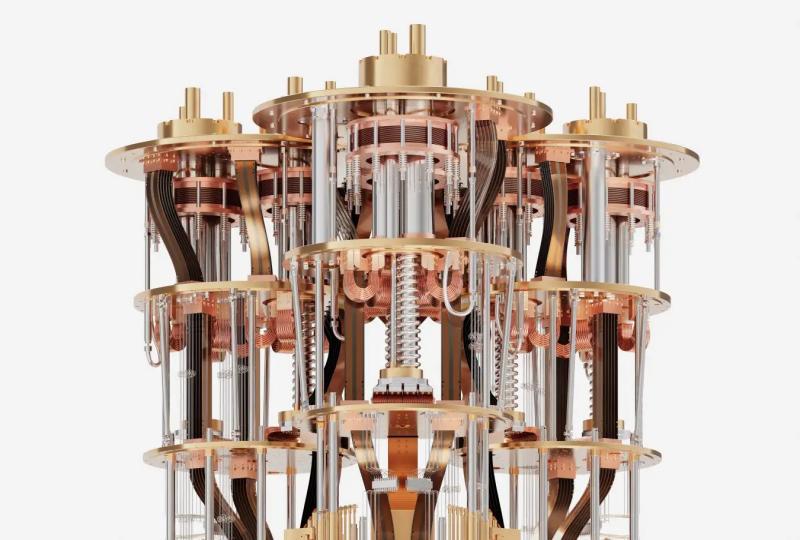
An error-corrected superconducting quantum computer is not defined by one single component. It depends on the full system stack, including qubit design, control electronics, measurement infrastructure, cryogenic environment, and calibration methods. Each layer contributes to overall performance.
From Physical Qubits to Logical Stability
In quantum computing, a major goal is to move from raw physical qubits toward more stable logical operations. Error correction is one of the methods used to support that transition. In superconducting systems, this involves carefully designed circuits, stable control, and repeated measurement processes.
For research teams, this creates an exciting challenge. The system must be engineered well enough to maintain signal quality while remaining flexible enough for experimentation. That balance is one reason superconducting quantum computers are so important in current quantum research.
Research Value for Industry and Academia
Error-corrected superconducting systems are important not only for commercial development but also for academic and applied research. Universities, labs, and technology companies all benefit from hardware that can support experiments in system stability, calibration, and algorithm behavior under realistic conditions.
This is especially valuable for groups studying quantum engineering, control theory, and device architecture. A superconducting quantum computer provides a real environment for exploring these ideas, making it easier to test assumptions and refine methods.
System Integration Is Essential
Error correction does not work in isolation. It depends on reliable hardware integration and measurement support. That includes the cryogenic environment, signal routing, control stack, and readout processes. If any part of the system is unstable, error management becomes more difficult.
That is why hardware deployment and integration planning matter so much. At SpinQ, we focus on helping customers understand the complete system rather than only a single device layer. For a broader view of how the hardware environment is assembled, see our superconducting quantum computer page.
The Path Toward Practical Use
The phrase “error-corrected quantum computer” often appears in discussions about future-ready quantum systems. In practice, the path involves steady progress in hardware performance, control precision, and system engineering. Superconducting platforms are an important part of this path because they support repeatable experiments and ongoing optimization.
For companies and research groups, this means evaluating not just whether a quantum computer works, but how it behaves over time. Error correction becomes part of a broader reliability strategy that supports long-term development.
Why the Control Stack Matters
A superconducting quantum computer depends heavily on the quality of its control and measurement systems. These systems help maintain stability, collect data, and support the feedback needed for error management. As a result, many of the most important improvements in error correction happen at the system-integration level.
This is why a strong control architecture is so important. It helps researchers test ideas more consistently and gives engineering teams a practical way to improve performance over time. If you want to explore that layer further, our quantum control and measurement system page provides relevant context.
A Practical View of Quantum Reliability
Error correction can sound abstract, but at the hardware level it is about consistency, observability, and control. Superconducting platforms are attractive because they make these elements easier to study in a real experimental environment. That gives researchers more room to refine methods and improve system behavior.
For organizations investing in quantum technology, this practical view is essential. The goal is not simply to build a more complex device. The goal is to build a more dependable platform that can support meaningful work.
SpinQ’s Perspective
At SpinQ, we believe superconducting quantum systems are an important foundation for future quantum reliability. Our work focuses on practical deployment, system integration, and hardware solutions that support real development needs. For teams evaluating error-corrected pathways, that means a partner who understands both the engineering and the operational challenges.
We help customers think about quantum computers as complete systems, not isolated components. That perspective matters when building toward more stable and usable quantum platforms.
Conclusion
An error-corrected superconducting quantum computer represents one of the most promising directions in the field. It combines the strengths of superconducting hardware with the long-term goal of more reliable quantum operation. For research institutions and technology teams, it offers a realistic path toward better performance and greater system confidence.
Featured Content