
Entanglement in Quantum Computing: From Theory to Real Devices
2026.07.14 · Blog Entanglement in Quantum Computing
1.Why entanglement matters in quantum computing
Entanglement is often described as the “strangest” feature of quantum mechanics, but in quantum computing it is also one of the most useful. Without entanglement, many of the algorithms that make quantum computers interesting would simply not work. It is entanglement that allows qubits to share correlations beyond anything possible in classical systems, enabling more compact encodings of information and more powerful computational steps.
For organizations exploring quantum technology—whether universities setting up teaching labs or companies testing early applications—understanding entanglement is essential. It tells you what makes quantum hardware different from advanced classical processors, and it shapes how algorithms should be designed, tested, and interpreted. Even if not everyone needs to master the underlying mathematics, having a clear conceptual grasp of entanglement helps teams use quantum devices in a more purposeful way.
2.What entanglement actually is
At a basic level, entanglement occurs when two or more quantum systems are described by a single joint state that cannot be separated into independent parts. For qubits, this means that the overall state of the system cannot be written as a simple product of individual qubit states. Instead, the qubits share correlations that show up when you perform measurements.
A classic example is a pair of qubits in a Bell state. Measured individually, each qubit might look random—sometimes 0, sometimes 1. But measured together, their outcomes are perfectly correlated or anti‑correlated. These patterns cannot be explained by pre‑assigned hidden values alone; they arise from the quantum mechanical structure of the joint state.
In quantum computing, these correlated states are not just curiosities. They are resources. Algorithms use entanglement to encode relationships between variables, enforce global constraints, and propagate information across circuits in ways that classical correlations cannot match.
3.Entanglement as a computational resource
Entanglement is more than a feature; it is a resource that quantum algorithms actively consume and manipulate. When qubits are entangled, operations on one can affect the joint state in a way that influences measurement outcomes of others. This allows quantum circuits to perform coordinated transformations across many qubits at once.
For example, in algorithms for searching or optimization, entanglement can be used to couple candidate solutions together so that certain interfering patterns emphasize good answers while suppressing bad ones. In quantum simulation, entangled qubits can represent the complex correlations found in molecules or materials more naturally than classical bits. In error correction, entangled states form the basis of codes that detect and correct errors without measuring each physical qubit directly.
Because entanglement is central to these tasks, the ability of a quantum computer to create, maintain, and control entangled states is a key measure of its usefulness. Good hardware is not just about qubit count; it’s about how those qubits can be entangled and how long entangled states can survive under realistic operations.
4.How entanglement is created in real devices
In practice, entanglement is created by applying specific gates to qubits. In many gate‑based quantum computers, a typical sequence starts with qubits initialized in simple basis states, then uses single‑qubit gates to prepare superpositions, followed by two‑qubit entangling gates—such as controlled‑NOT or controlled‑phase operations—to link qubits together.
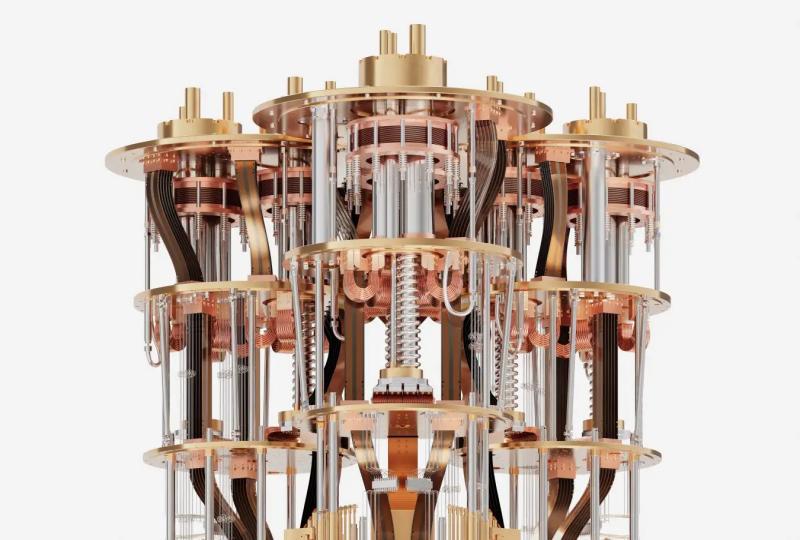
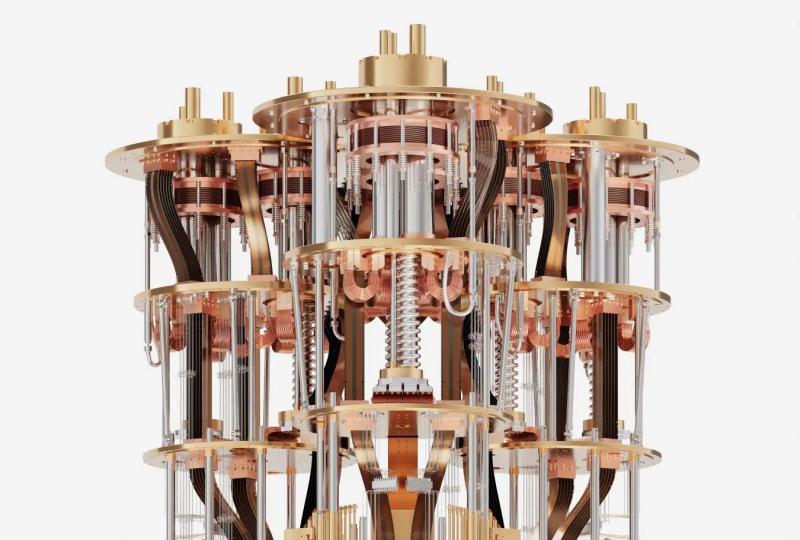
On superconducting hardware, these entangling gates are implemented through controlled microwave interactions between coupled qubits. The design of the chip, the layout of couplers, and the timing of pulses all influence how well entanglement can be produced and controlled. On NMR‑based systems, such as SpinQ’s desktop quantum computers, entanglement arises through carefully timed pulse sequences that exploit spin‑spin interactions in molecules. These sequences require precise control of phases and amplitudes, guided by the underlying quantum mechanical model.
Regardless of platform, the quality of entanglement depends on coherence, control fidelity, and noise levels. Devices that can generate high‑fidelity entangled states repeatedly give users more room to experiment with advanced algorithms and error‑resilient techniques.
5.Entanglement in SpinQ’s educational and research systems
SpinQ’s mission is to make entanglement in quantum computing something students and engineers can work with directly, rather than only read about. In our NMR‑based desktop quantum computers, users can design circuits that intentionally create entangled states and then measure the correlations that result. Lab exercises guide learners through preparing simple Bell states, observing correlated outcomes, and exploring how decoherence affects those correlations over time.
For institutions ready to move beyond classroom experiments, SpinQ’s superconducting quantum chip and system offerings are built with entanglement in mind. Chip designs focus on coupling patterns that support reliable two‑qubit gates, while the control and measurement stack is engineered to maintain coherence across multi‑qubit operations. Together, these platforms allow users to study entanglement both as a teaching concept and as a practical tool in algorithm development and early application pilots.
By providing hardware that exposes entanglement in a controlled, repeatable way, SpinQ helps institutions build intuitive understanding alongside technical skill. Students learn not only that entanglement exists, but also how to create it, measure it, and use it inside real circuits.
6.Challenges: keeping entanglement alive
While entanglement is powerful, it is also fragile. Environmental noise, imperfect gates, and material defects can break entangled correlations, a process often described as decoherence. In multi‑qubit systems, the more qubits you entangle and the longer you try to maintain those entangled states, the more opportunities there are for errors to accumulate.
This fragility is one of the main reasons why large‑scale quantum computing remains challenging. Designing devices that preserve entanglement long enough for complex algorithms to run requires careful attention to materials, isolation, control electronics, and error‑mitigation strategies. It also influences architectural choices, such as how qubits are arranged and how many neighbors each qubit can connect to.
For users, understanding these challenges helps set realistic expectations. Classroom systems like SpinQ’s NMR devices are ideal for demonstrating entanglement in small, well‑controlled setups. Larger superconducting systems can push entanglement to greater scales, but they require more sophisticated calibration and error‑handling. Recognizing that entanglement is both the source of quantum power and a key engineering challenge is vital for planning experiments and interpreting results.
7.Entanglement in algorithms, simulation, and error correction
Entanglement plays different roles in different quantum computing tasks. In algorithms such as quantum phase estimation or certain optimization routines, entangled states are used to link variables or encode amplitude patterns that are difficult to mimic classically. The structure of entanglement—who is entangled with whom—often dictates the logic and complexity of the circuit.
In quantum simulation, entanglement is used to reproduce the rich correlations found in physical systems, such as molecules or condensed‑matter models. Being able to generate the right entangled structures means that quantum computers can act as direct emulators of quantum phenomena, potentially offering insights that classical simulations struggle to capture efficiently.
In error correction, entanglement is at the heart of many codes. Logical qubits are encoded into entangled states of multiple physical qubits, allowing errors to be detected and corrected without directly measuring the logical information. This use of entanglement as a protective resource may be one of its most important long‑term applications, enabling quantum computers to scale to larger sizes and longer runtimes.
8.Using entanglement as a selection criterion for hardware
For institutions choosing quantum hardware, entanglement can serve as a practical selection criterion. Questions such as “How many qubits can be reliably entangled?” or “What is the fidelity of typical two‑qubit gates?” give concrete insight into a system’s capabilities. Devices that can only produce low‑quality entanglement will limit the types of algorithms and experiments that are feasible.
SpinQ encourages buyers to think in these terms when evaluating different platforms. Our systems are presented not only with basic specs like qubit count, but also with information about how entanglement can be generated and controlled. For education‑focused customers, this ensures that labs on entangled states will behave as expected. For research‑oriented users, it helps them judge whether a platform can sustain the multi‑qubit entanglement needed for their projects.
By treating entanglement as a key metric rather than an abstract idea, organizations can make more informed decisions about which quantum systems fit their goals.
9.Building intuition about entanglement for the future
Entanglement in quantum computing will continue to be a central topic as the field progresses. Hardware roadmaps, algorithm developments, and error‑correction strategies all depend on how well entanglement can be harnessed. Institutions that help their students and engineers build strong intuition about entanglement today will be better prepared to adopt and contribute to advanced technologies tomorrow.
SpinQ’s role is to support this learning curve. Through NMR‑based classroom systems, teaching materials, and more advanced superconducting platforms, we aim to make entanglement something people can explore in real experiments, not just in theory. As quantum computing moves from demonstration to application, this combination of conceptual understanding and practical experience will be essential for turning entanglement from a mysterious phenomenon into a reliable tool.

Featured Content