
Educational Quantum Computer Processor Explained
2026.05.28 · Blog Educational Quantum Computer processor
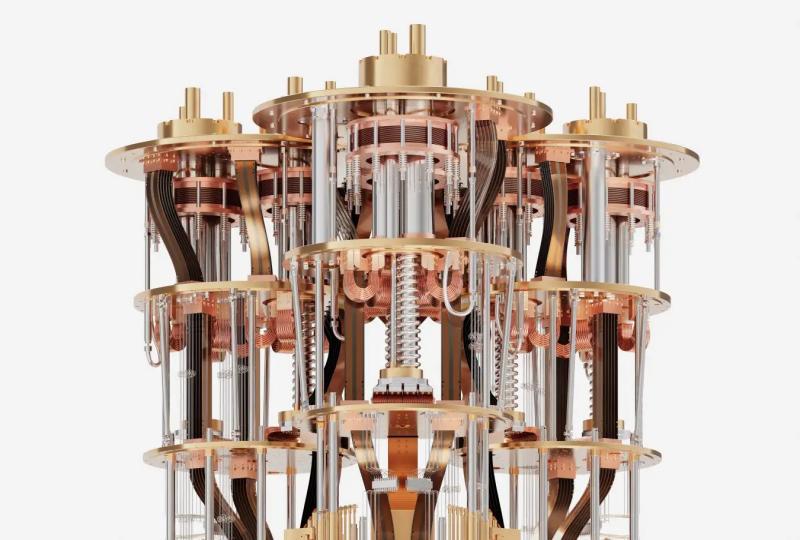
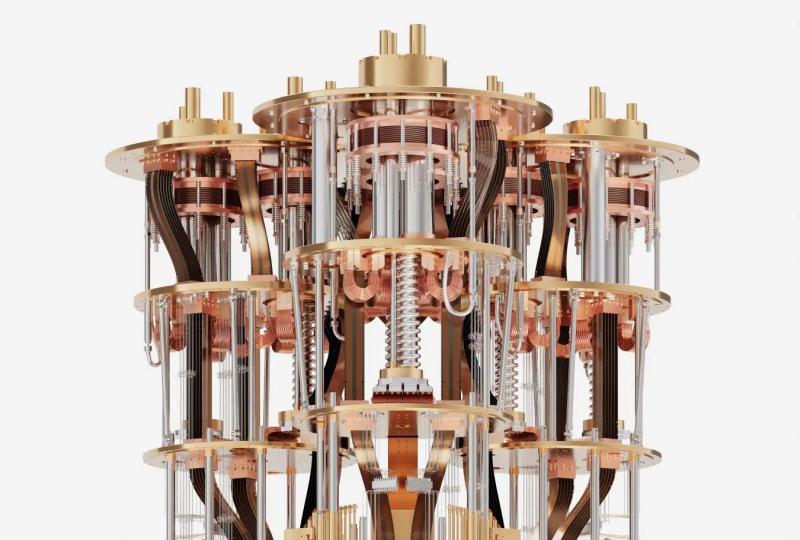
The Educational Quantum Computer processor is the core component that turns a classroom quantum device into a genuine, hands-on quantum laboratory. It hosts the physical qubits, executes quantum gates, and provides students with real quantum behavior instead of pure simulation. Understanding how this processor is designed and how it differs from industrial quantum chips helps educators choose the right platform and design effective learning experiences.
What Is a Quantum Computer Processor?
A quantum computer processor is the central unit that performs quantum operations using qubits, much like a CPU performs classical operations using bits. Unlike classical processors, which flip transistors to represent 0 and 1, quantum processors exploit superposition, entanglement, and interference to process many possible states at once for certain problems.
In technical terms, this processor is usually built as a quantum chip—a specialized device that implements qubits and quantum gates in hardware. For superconducting platforms, it is a multilayer semiconductor etched with superconducting components and readout resonators; for other platforms such as NMR, it is an integrated system where the qubit-bearing sample and control hardware together form the processor.
Educational Quantum Computer Processor vs General QPU
In large-scale systems, the processor is often called a quantum processing unit (QPU), which includes not only the quantum chip but also control electronics and classical hardware for signal management and error mitigation. Educational Quantum Computer processors share the same conceptual role but are optimized for accessibility, robustness, and teaching rather than raw performance.
While industrial QPUs may be housed in dilution refrigerators near absolute zero and optimized for hundreds of qubits, Educational Quantum Computer processors usually feature small numbers of qubits in compact, often room-temperature devices. The design focus is on stability, repeatability, and an interface that allows students to see the link between circuits, pulses, and observed outcomes.
How Educational Quantum Computer Processors Work
At a high level, Educational Quantum Computer processors follow the same computational model as research and industrial devices.
-
Qubit initialization The processor prepares its qubits in well-defined starting states, often ∣0⟩∣0⟩, ready for computation. In NMR-based educational systems, this corresponds to preparing nuclear spins in effective polarization states using tailored electromagnetic pulses.
-
Quantum gate application Controlled pulses or fields implement quantum gates such as X, Y, Z, Hadamard, and controlled operations, rotating qubit states on the Bloch sphere and entangling them. In hardware terms, this is implemented by precise control sequences delivered by the device’s control subsystem.
-
Readout and measurement After executing a quantum circuit, the processor measures qubits in a chosen basis, converting quantum states into classical data (e.g., bitstrings) that students can analyze. Educational systems often include visual tools to show probability distributions and Bloch sphere representations.
-
Classical post-processing Results are sent to the host PC or built-in controller, where students interpret measurement statistics, compare with theory, and iterate on circuit design.
In essence, the Educational Quantum Computer processor encapsulates this full quantum cycle within a form factor suitable for a classroom or lab bench.
Processor Technologies Used in Educational Quantum Computers
Different physical technologies can implement the processor inside an Educational Quantum Computer, each with trade-offs in cost, complexity, and performance.
-
NMR-based processors Our education-grade NMR quantum computers use nuclear magnetic resonance to encode qubits in the spin states of nuclei within a sample. Radio-frequency pulses play the role of quantum gates, and magnetic resonance signals provide readout, all at room temperature. These processors are compact, maintenance-free, and ideal for general teaching.
-
Superconducting processors (via cloud or lab setups) Superconducting processors, like IBM’s superconducting QPUs or Google’s Willow chip, are based on Josephson junction circuits that must operate at millikelvin temperatures. While not usually placed directly in classrooms, educational programs often use cloud access to these processors alongside local educational hardware.
-
Other processor types in education Some educational platforms expose trapped-ion or photonic processors through cloud services, but for on-premise Educational Quantum Computers, room-temperature designs such as NMR remain the most practical.
Our SpinQ Gemini and Triangulum series are concrete examples of Educational Quantum Computer processors built into ready-to-use devices, designed specifically for quantum education and entry-level research.
What Makes a Processor “Educational”?
Several design principles distinguish an Educational Quantum Computer processor from processors intended solely for cutting-edge industrial performance.
-
Low barrier to operation Educational processors are chosen so that systems can run in standard labs or classrooms, often at room temperature, with straightforward safety and installation requirements.
-
Stable and repeatable behavior Educational devices are engineered for high stability and predictable operation across many sessions, so students and instructors can rely on consistent results.
-
Limited but didactically useful qubit counts Instead of chasing hundreds of qubits, educational processors provide a few well-behaved qubits, enough to demonstrate states, gates, entanglement, and small algorithms like Deutsch–Jozsa or simple variational circuits.
-
Deep integration with software and curriculum The processor is tightly integrated with software platforms that expose circuits visually, show state evolution, and provide example experiments. Vendors like SpinQ bundle their processors with teaching content and structured lab exercises.
These characteristics make educational processors particularly effective for building intuition and skills, even if they are not optimized for record-breaking benchmarks.
Role of the Processor in a Complete Educational Quantum System
The Educational Quantum Computer processor sits at the heart of a larger system that includes control electronics, software, and teaching resources.
-
Hardware stack The processor is connected to control hardware that generates pulses, timing signals, and readout, all integrated into the educational device. In SpinQ’s systems, this comes as a single, all-in-one unit with built-in control and monitoring.
-
Software stack Software bridges student code and the processor, offering layers from drag-and-drop circuit builders to advanced programming frameworks like SpinQit. This stack abstracts low-level details while still allowing advanced users to experiment more deeply.
-
Educational solutions SpinQ’s education solutions show how processors are embedded in complete offerings: customized classroom configurations, professional teaching teams, and lab equipment tailored to quantum education. In this context, the processor is the “engine,” while the solution is the full “vehicle.”
Examples of Educational Quantum Computer Processors in Practice
Several well-known processors and product lines illustrate how Educational Quantum Computer processors are deployed.
-
SpinQ Gemini & Triangulum processors SpinQ highlights Gemini and Triangulum devices as portable quantum processors for quantum education and research. These NMR-based processors offer a small number of qubits with stable, room-temperature operation, making them ideal for university and high-school labs.
-
Cloud-accessible superconducting processors Google’s Willow and IBM’s superconducting QPUs are frequently used as backends for education-oriented cloud platforms. While not “educational processors” in the narrow hardware sense, they play an important role in advanced quantum courses, where students transition from local educational hardware to high-qubit remote processors.
These examples show a continuum: local Educational Quantum Computer processors for foundational learning, complemented by cloud-accessible processors for advanced topics.
Choosing an Educational Quantum Computer Processor
When institutions evaluate Educational Quantum Computer processors, several criteria matter.
-
Intended depth of instruction For introductory courses and outreach, a small NMR-based processor integrated into a desktop system may be sufficient. For graduate-level courses, pairing such devices with access to higher-qubit cloud processors can provide a complete learning path.
-
Operational environment Most educational labs prefer room-temperature, maintenance-free processors to avoid cryogenics and complex safety procedures. This heavily favors processors embedded in compact, all-in-one educational devices.
-
Software ecosystem The processor should be supported by robust educational software, including circuit editors, programming SDKs, examples, and diagnostic tools. This ecosystem often matters more in practice than a marginal difference in qubit count.
-
Vendor support and roadmap Choosing a vendor with a clear roadmap for both educational processors and future systems ensures that skills and materials developed today will remain relevant. SpinQ, for example, offers both educational NMR systems and superconducting quantum products, positioning its processors within a broader learning and application journey.
How SpinQ Positions Educational Processors
SpinQ explicitly frames Education Grade NMR quantum computer series as the foundational layer of its quantum education and practical computing ecosystem. These processors are built into experimental, desktop, and portable models, all characterized by low cost, maintenance-free operation, and high stability.
Paired with SpinQ’s cloud platform, software (such as SpinQit), and quantum education solutions, these processors help institutions build complete quantum talent pipelines.
By focusing on Educational Quantum Computer processors that are practical, deployable, and well-supported, SpinQ enables educators worldwide to move from theory-heavy quantum teaching to truly experimental, processor-centric learning.
Featured Content