
Are Quantum Computers Real Yet? Spinq’s Superconducting and NMR Platforms
2026.08.12 · Blog are quantum computers real
For years, quantum computers have sounded like pure science fiction—machines that could crack encryption, simulate complex molecules, or turbocharge AI overnight. So it’s natural to ask: are quantum computers real yet, or are they still just a laboratory dream?
Quantum computers are real. Real hardware exists, real experiments are running every day, and real organizations are already using quantum platforms for education and research. At the same time, most systems are not yet ready for broad, drop‑in replacements of classical computing.
What It Means for a Quantum Computer to Be “Real”
Before judging whether quantum computers are “real,” it helps to clarify what we mean by a real quantum computer. At minimum, a genuine quantum computer must offer:
-
Physical quantum bits (qubits) implemented in a controllable physical system.
-
Programmable quantum gates and circuits that can be executed reliably.
-
Repeatable experiments with measurable quantum effects, such as superposition and entanglement.
Within this definition, there are several categories of real quantum systems:
-
Research prototypes, often housed in specialized labs, pushing the frontier of qubit counts and error correction.
-
Cloud‑accessible quantum processors, offered by various providers for algorithm testing and experimentation.
-
Desktop and classroom quantum systems, designed specifically for education and hands‑on training.
Most current devices fall into what is called the NISQ (Noisy Intermediate‑Scale Quantum) era: they have tens to potentially hundreds of qubits, but these qubits experience noise and decoherence. That means quantum computers today are powerful for certain exploratory tasks, yet still limited in scale and precision compared with the long‑term vision of fault‑tolerant, general‑purpose quantum computing.
Today’s Quantum Hardware Landscape
The hardware landscape confirms that quantum computers are not only real, but also diverse. Several leading approaches are being actively developed and deployed:
-
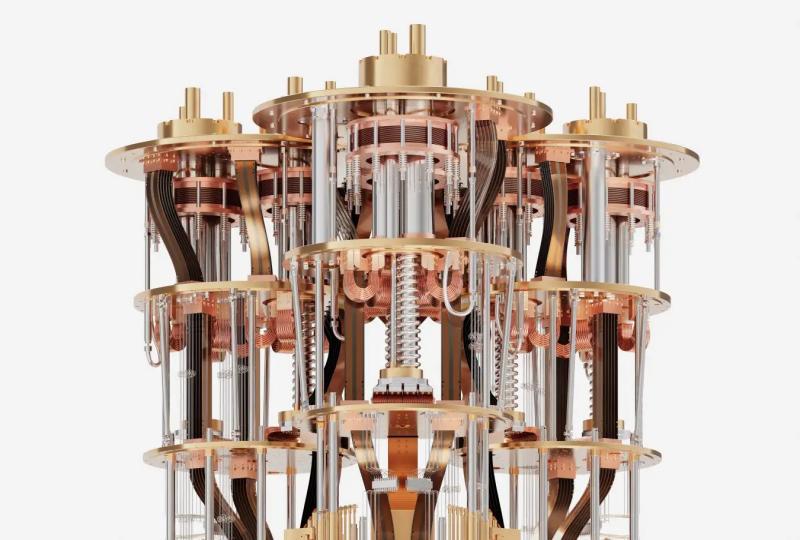
Superconducting qubits, implemented in superconducting circuits using Josephson junctions, are currently one of the most widely used platforms in industrial and large‑scale research settings.
-
Ion‑trap systems, which leverage trapped ions manipulated by lasers, excel in coherence and gate fidelity but often have more complex engineering requirements.
-
NMR (Nuclear Magnetic Resonance) platforms, where qubits are encoded in nuclear spins within molecules, are particularly attractive for education and controlled experiments.
In terms of scale, practical systems today typically range from small numbers of qubits in compact educational devices to larger, rack‑scale superconducting systems with tens or more qubits for research. These machines are already being used to explore optimization problems, quantum chemistry models, and early quantum machine learning prototypes.
Within this landscape, Spinq stands out by offering both NMR desktop quantum computers for classrooms and superconducting quantum computing solutions for labs and industry, allowing different audiences to access real quantum hardware at appropriate scales.
Spinq’s NMR Quantum Platforms: Making Quantum Computing Tangible in Education
One of the biggest barriers to quantum adoption has been accessibility: traditional lab‑scale quantum hardware is expensive, complex, and difficult to operate. Spinq’s NMR quantum platforms address this challenge by providing education‑grade, desktop quantum computers that are affordable and maintenance‑friendly.
In NMR quantum computing, qubits are encoded in the nuclear spins of atoms within a molecule, manipulated via radio‑frequency pulses in a high‑precision magnetic environment. This approach offers:
-
Stable, repeatable experiments, ideal for demonstrating core quantum phenomena such as superposition and entanglement.
-
Compact form factors, suitable for classrooms, teaching labs, and training centers.
-
Lower operational overhead, compared with cryogenic superconducting systems, making them well‑suited to universities and institutions starting their quantum education journey.
Typical use cases for these NMR systems include:
-
Introducing students to quantum circuits, gates, and algorithms in a hands‑on manner.
-
Running small‑scale experiments for quantum algorithm design, such as basic versions of Grover’s search or simple variational algorithms.
-
Supporting faculty and researchers who require a reliable, classroom‑ready quantum platform as part of broader curricula.
For organizations looking to make quantum computing tangible in teaching and training, Spinq’s NMR quantum computers provide a practical bridge from textbook theory to live hardware demonstrations, as part of its broader portfolio on the Spinq quantum computing solutions platform.
Spinq’s Superconducting Quantum Platforms: From Lab to Industry
While NMR platforms excel in education and foundational experiments, superconducting quantum computers are the primary engine behind many cutting‑edge quantum research and industrial pilots. Spinq’s superconducting quantum products are designed to align with this demanding landscape, providing scalable and high‑fidelity quantum hardware.
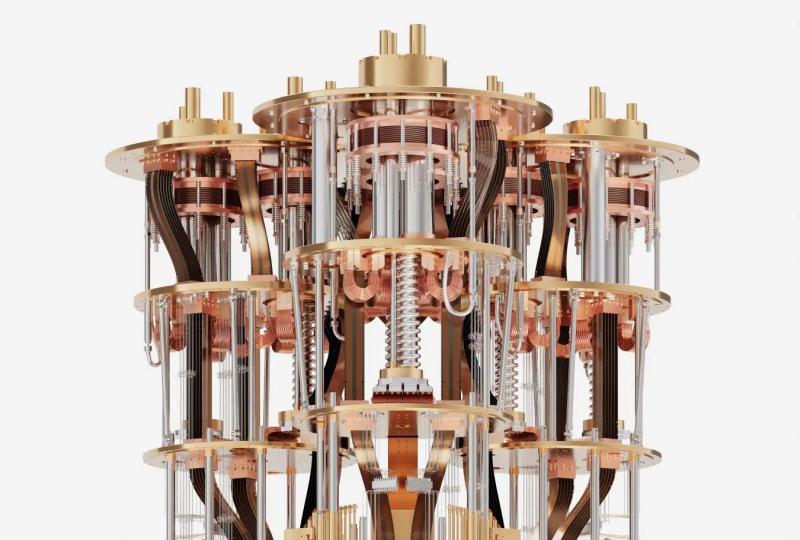
Superconducting qubits are realized using superconducting circuits that incorporate Josephson junctions. When cooled to extremely low temperatures, these circuits exhibit quantum behavior and can be driven to perform gate operations. Spinq’s superconducting platforms typically highlight:
-
Scalable qubit architectures, enabling the gradual expansion from smaller to larger quantum processors.
-
High‑fidelity quantum gates and multi‑qubit operations, critical for implementing complex quantum algorithms.
-
Integration with quantum control and measurement systems, allowing researchers to finely tune and analyze circuit performance.
These systems are well‑suited to advanced use cases such as:
-
Exploring optimization problems via variational quantum algorithms in fields like logistics, portfolio design, and resource allocation.
-
Running quantum chemistry and materials simulations to study molecular interactions or material properties at scale.
-
Prototyping quantum machine learning models that leverage quantum state spaces for pattern recognition or feature extraction.
Organizations that require industrial‑grade quantum capability can look to Spinq’s superconducting quantum computer and chip solutions as part of its superconducting quantum products portfolio, which covers superconducting QPUs, chips, and related tools for advanced quantum development.
Are Quantum Computers Useful Today? Current Capabilities and Limits
Knowing that quantum computers are real is one thing; understanding how useful they are today is another. Current hardware operates under constraints, but still delivers meaningful value in specific contexts.
On the capability side, today’s quantum machines can:
-
Execute non‑trivial quantum circuits and algorithms on real qubits, providing experimental evidence and insight beyond purely classical simulation.
-
Support exploratory optimization and sampling tasks, where quantum algorithms can be tested against classical heuristics.
-
Enable early‑stage quantum chemistry and materials simulations, often for smaller molecules or simplified models.
-
Act as training platforms for researchers, students, and engineers, building the skills needed to leverage future, larger‑scale quantum hardware.
On the limitations side, NISQ hardware is still constrained by:
-
Noise and decoherence, which limit circuit depth and reduce the reliability of long computations.
-
Relatively modest qubit counts, which restrict problem sizes compared with ambitious, long‑term roadmaps.
-
Complex calibration and control requirements, especially for superconducting and ion‑trap systems.
In practice, this means quantum computers today are not yet general‑purpose accelerators for every workload. Instead, they operate as specialized tools for targeted experiments, algorithm development, and education. Spinq’s combination of NMR and superconducting platforms reflects this reality: providing accessible hardware for teaching and research, while building paths toward more powerful, scalable systems.
FAQ: Common Questions About Whether Quantum Computers Are “Real”
Q1: Are quantum computers really faster than classical computers today?
In specific, carefully chosen problems, quantum algorithms can demonstrate advantages or promising scaling behavior. However, most current devices are still experimental and noisy, so their performance is often measured in terms of research value rather than consistent, broad speed‑ups over classical systems.
Q2: Can universities and labs access quantum hardware from Spinq?
Yes. Spinq provides education‑grade NMR quantum computers for classrooms and training, as well as superconducting quantum platforms and quantum chips aimed at research and industrial users. These offerings are designed to help institutions build practical quantum education programs and exploratory research projects.
Q3: What is the difference between NMR and superconducting quantum computers?
NMR quantum computers encode qubits in nuclear spins and are typically easier to operate and maintain, making them ideal for teaching and controlled experiments. Superconducting quantum computers rely on cryogenic superconducting circuits, offering higher scalability and gate speeds but requiring more complex infrastructure for advanced research and industrial pilots.
Q4: Will quantum computers replace classical servers in the near future?
Not in the short term. Quantum computers are best viewed as specialized co‑processors that can complement classical systems for particular tasks. As hardware matures, they may become critical for certain workloads—such as complex optimization or molecular modeling—but classical computing will remain foundational for general‑purpose processing.
Conclusion: A Real Technology in an Early Chapter
So, are quantum computers real yet? Yes: they exist as working machines, delivering real experiments, teaching value, and early‑stage applications across education and industry. At the same time, they are still in the early chapters of their story, operating in a NISQ regime with meaningful, but carefully bounded, capabilities.
By combining NMR desktop quantum platforms with superconducting quantum computing solutions, Spinq demonstrates how quantum technology can move beyond the theoretical and into classrooms, labs, and industry pilots. For organizations that want to engage with quantum computing today, the choice is not between science fiction and reality—it’s about selecting the right platform for your stage of adoption and building the skills and experiments that will matter as the field continues to evolve.
Featured Content