
The Ultimate Guide to Quantum Computing Basics: Principles, Technologies, and the Future
2026.03.06 · Blog quantum computing basics
The world of technology is standing on the brink of a revolutionary paradigm shift. For decades, classical computers have been the engine driving human progress, utilizing binary logic to process information, solve problems, and connect the globe. However, as our mathematical, scientific, and logistical challenges grow increasingly complex, the limitations of classical computation are becoming apparent. Enter quantum computing—a groundbreaking approach to computation that leverages the bizarre and fascinating laws of quantum mechanics. Understanding quantum computing basics is no longer just for theoretical physicists; it is rapidly becoming essential knowledge for software engineers, data scientists, educators, and technology enthusiasts.
In this comprehensive guide, we will dive deep into the foundations of quantum computing. We will explore how it differs from traditional computing, the core physical principles that make it work, the hardware powering these machines, and the real-world applications that will transform industries. Furthermore, we will highlight how innovators like SpinQ are democratizing access to this technology through educational platforms, desktop quantum computers, and advanced superconducting systems.
What is Quantum Computing?
At its core, quantum computing is a multidisciplinary field comprising aspects of computer science, physics, and mathematics that utilizes quantum mechanics to solve complex problems exponentially faster than classical computers. While traditional computers process information sequentially using binary bits, quantum computers process vast amounts of data simultaneously using quantum bits, or qubits.
This is not merely a faster version of a regular computer; it represents an entirely different dimension of processing information. Problems that would take classical supercomputers thousands of years to calculate—such as simulating complex molecular structures or factoring large prime numbers for cybersecurity cryptography—could theoretically be solved by a mature quantum computer in a matter of seconds or minutes.
Quantum Computing Basics: Core Principles Explained
To grasp how quantum computers achieve their immense processing power, one must understand the foundational pillars of quantum mechanics: superposition, entanglement, interference, and decoherence.
Qubits and Superposition
In a classical computer, information is stored in bits, which can exist in one of two distinct states: 0 or 1. A quantum computer, on the other hand, uses qubits (quantum bits). Unlike classical bits, a qubit can exist in a state of 0, a state of 1, or a quantum superposition of both 0 and 1 simultaneously.
Superposition allows a quantum computer to evaluate multiple possibilities at the exact same time. If you have two qubits, they can represent four states simultaneously (00, 01, 10, 11). As you add more qubits, the computational capacity grows exponentially. A highly stable system with just 300 perfectly functioning qubits could simultaneously represent more states than there are atoms in the observable universe.
Quantum Entanglement
Entanglement is a phenomenon where two or more qubits become inextricably linked, such that the state of one qubit instantaneously influences the state of another, regardless of the physical distance separating them. Albert Einstein famously referred to this phenomenon as "spooky action at a distance."
In the context of quantum computing basics, entanglement acts as a powerful computational multiplier. It allows qubits to share information instantaneously and work together to process complex algorithms synchronously. Because entangled qubits operate as a single unified system, adding more qubits to an entangled state exponentially increases the system's ability to evaluate multiple outcomes and parameters at once.
Interference
Quantum interference is the process by which a quantum computer manipulates the probabilities of different computational outcomes. Because qubits operate as wave functions (due to wave-particle duality), their probability waves can physically interact with one another. Constructive interference amplifies the probability of the correct mathematical answer, while destructive interference cancels out the probabilities of incorrect answers. Modern quantum algorithms are specifically designed to leverage this interference to sift through massive amounts of data and heavily amplify the correct solution.
Decoherence and Error Correction
While the principles of quantum mechanics offer immense power, they also introduce significant engineering challenges. Quantum states are incredibly fragile. Any interaction with the external environment—such as a slight change in temperature, electromagnetic radiation, or even minor physical vibrations—can cause the qubits to lose their delicate quantum state, a process known as decoherence. Managing decoherence, implementing error correction protocols, and maintaining qubit stability (known as coherence time) remain some of the primary obstacles to building large-scale, fault-tolerant quantum computers.
Classical vs. Quantum Computing: A Comparative Analysis
To better understand quantum computing basics, it is helpful to contrast the technology directly with classical computing architectures.
| Feature | Classical Computing | Quantum Computing |
| Data Unit | Bit (0 or 1) | Qubit (0, 1, or both simultaneously) |
| Processing Method | Sequential (one calculation at a time) | Parallel (evaluates multiple states at once) |
| Power Scaling | Linear (adding bits adds linear power) | Exponential (adding qubits doubles processing capacity) |
| Operating Temperature | Room temperature | Often requires cryogenic cooling near absolute zero (-273°C) |
| Best Suited For | Everyday tasks, web browsing, databases | Molecular simulation, cryptography, optimization, AI |
| Error Rate | Extremely low | Currently high due to decoherence and environmental noise |
Quantum Algorithms: The Software Behind the Hardware
To harness the hardware of a quantum computer, developers must write specialized quantum algorithms. Unlike traditional code, which relies on standard Boolean logic (AND, OR, NOT gates), quantum algorithms utilize quantum logic gates that manipulate superposition and entanglement to process information.
One of the most famous examples of this is Shor's Algorithm. In classical computing, finding the prime factors of an incredibly large number is virtually impossible within a human lifetime, which is why modern internet encryption relies heavily on this mathematical difficulty. However, Shor's algorithm leverages quantum interference to find these prime factors exponentially faster, paving the way for advanced quantum cryptography and cybersecurity.
Another essential algorithm is Grover's Algorithm, which provides a quadratic speedup for searching unsorted databases. If a classical computer needs to search an unstructured database of one million entries, it might need to check half a million entries on average to find the correct one. A quantum computer using Grover's algorithm could theoretically find the specific entry in just one thousand steps. These algorithms highlight why understanding quantum computing basics is essential for the future of software engineering.
Hardware: How Does a Quantum Computer Work?
Building a machine that can isolate, control, and measure individual quantum particles is an extraordinary engineering feat. There are several different hardware approaches currently being developed in the quantum computing industry.
Superconducting Qubits
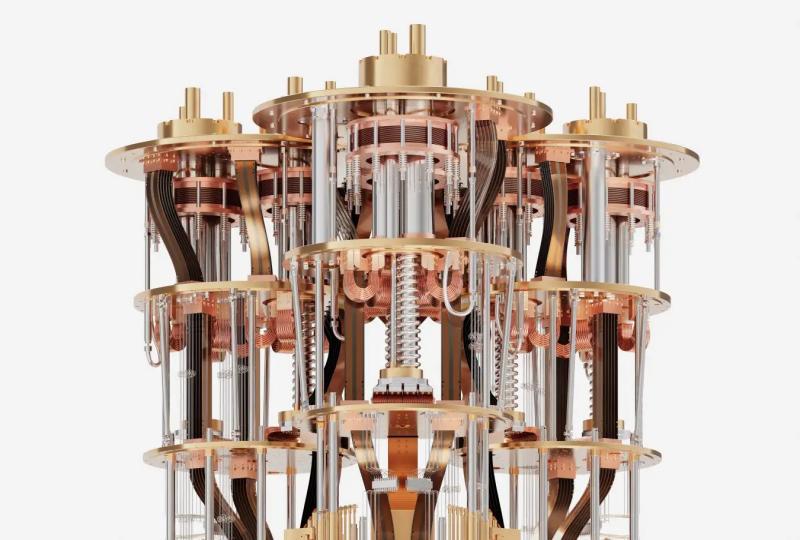
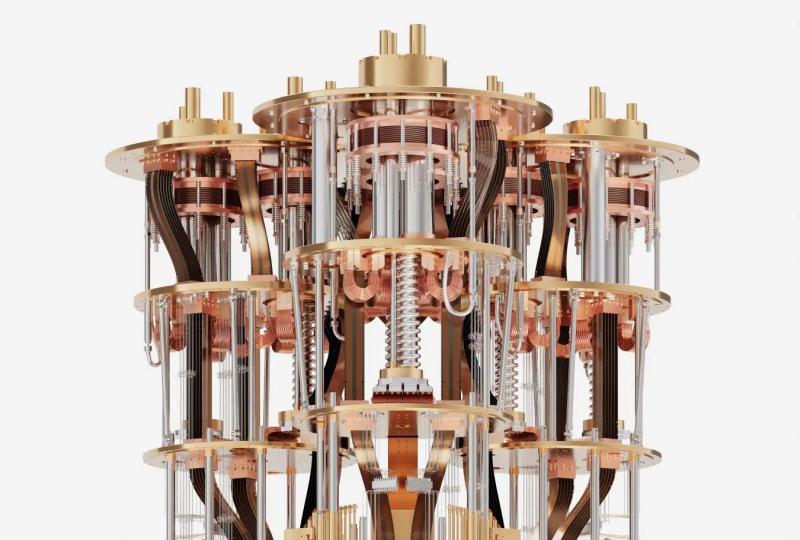
Superconducting quantum computers are currently the most prominent and widely researched architecture. Superconductivity is a phenomenon where certain materials conduct electricity with absolutely zero electrical resistance when cooled to temperatures near absolute zero.
At the heart of a superconducting qubit is the Josephson junction, an electronic component made of two superconducting layers separated by a microscopically thin insulating barrier. This junction exhibits non-linear electrical behavior, allowing engineers to manipulate the energy states of the circuit using precisely tuned microwave pulses to create superposition and entanglement. Because they operate without electrical resistance, superconducting qubits can maintain their fragile quantum states for longer periods, enabling more accurate and complex calculations.
Nuclear Magnetic Resonance (NMR)
Nuclear Magnetic Resonance (NMR) quantum computing utilizes the magnetic spin of atomic nuclei in a molecule to serve as functional qubits. By applying radio-frequency pulses within a strong, controlled magnetic field, the spin states of the nuclei can be manipulated to perform quantum logic gate operations. NMR technology is highly stable at room temperature and represents a fantastic platform for education, prototyping, and small-scale algorithm demonstration.
Practical Applications of Quantum Technology
While universal, fault-tolerant quantum computers are still in active development, the potential applications of the technology are already driving massive investments across various global sectors.
-
Drug Discovery and Healthcare: Simulating the exact behavior of molecules and chemical reactions is an incredibly resource-intensive task for classical computers. Quantum computers can accurately map the exact quantum states of complex molecules, drastically reducing the time required to discover new life-saving drugs, analyze proteins, and develop personalized medical treatments.
-
Financial Modeling and Optimization: The financial industry relies on complex risk analysis, portfolio optimization, and algorithmic trading. Quantum algorithms can evaluate millions of fluctuating market variables simultaneously to find optimal investment strategies or identify fraudulent behavioral patterns with unprecedented speed.
-
Quantum Artificial Intelligence (Quantum AI): By integrating quantum computing basics with machine learning methodologies, Quantum AI can accelerate the training process of advanced neural networks. Quantum systems can natively explore vast solution spaces and datasets in parallel, enabling AI models to learn faster, process massive datasets, and recognize far more complex patterns.
-
Logistics and Supply Chain: Optimizing global shipping routes, traffic networks, and supply chains involves calculating an astronomical number of moving variables. Quantum computers can instantly sift through billions of route combinations to find the most cost-effective and time-efficient path, saving industries time, fuel, and vital resources.
Entering the Quantum Era with SpinQ
As the quantum computing landscape rapidly evolves, SpinQ stands at the forefront of hardware innovation and quantum educational outreach. Dedicated to democratizing quantum technology, SpinQ provides an expansive ecosystem ranging from portable educational devices to enterprise-grade superconducting hardware systems.
Empowering Quantum Education
Understanding quantum computing basics is notoriously difficult due to the highly abstract and counterintuitive nature of quantum physics. To bridge this gap, SpinQ has developed the SPINQ Gemini Mini, a portable 2-qubit NMR desktop quantum computer. Designed specifically for classroom and educational environments, the Gemini Mini enables users of diverse academic backgrounds to perform real quantum logic gate operations and demonstrate custom quantum algorithms natively. With multi-mode quantum programming interfaces and comprehensive learning curriculums, the Gemini Mini brings quantum computing out of the isolated laboratory and directly onto the student's desk.
For more advanced educational and laboratory needs, SpinQ also offers a 3-qubit desktop NMR quantum computer that provides hardware-level pulse sequence editing, making it a highly stable, maintenance-free solution for high schools and universities looking to build comprehensive quantum experimental classrooms.
Enterprise Superconducting Solutions
For deep research institutions and high-end commercial applications, the SPINQ SQC Superconducting Quantum Computer delivers ready-to-use, high-end computational power. Leveraging advanced circuit design and robust cryogenic cooling systems, the SQC ecosystem features exceptional coherence times, high-speed gate operations, and extremely high-fidelity qubit architectures. SpinQ provides a unique turnkey service, securely managing everything from initial quantum chip fabrication and control electronics implementation to full system deployment and software optimization.
Software and Cloud Ecosystem
A powerful quantum computer requires equally powerful software to operate efficiently. The SpinQ Cloud platform successfully links remote users to various real-world quantum computing systems (featuring machines with 2, 3, 5, and 8 qubits) and high-performance simulation platforms capable of handling up to 24 qubits. This cloud infrastructure ensures that remote researchers, educators, and software enthusiasts alike have sufficient machine time to test, refine, and deploy their complex quantum algorithms.
Furthermore, for electrical engineers designing the next generation of physical quantum hardware, SpinQ offers SpinQ QEDA, a highly automated Electronic Design Automation (EDA) software specifically built for superconducting Quantum Processing Units (QPUs). SpinQ QEDA features deeply optimized automatic wiring algorithms that allow industry professionals and dedicated enthusiasts to iterate and generate cutting-edge quantum device designs with exceptional speed and efficiency.
The Future is Quantum
The global journey toward fully mature, error-corrected quantum computers is an ongoing endeavor, but the fundamental milestones have already been clearly achieved. As modern researchers continue to overcome the inherent physical challenges of decoherence, error correction, and qubit scaling, the technology will gradually transition from specialized government and corporate laboratories into mainstream, ubiquitous commercial adoption.
Understanding quantum computing basics today ensures that you are adequately prepared for the computational and technological revolution of tomorrow. Whether you are a student writing your very first quantum search algorithm on a SpinQ educational desktop device, or an enterprise architect integrating sophisticated quantum AI into your logistical workflows, the quantum era is officially underway, and the possibilities are completely boundless.
Frequently Asked Questions (FAQs)
What are the basic requirements to learn quantum computing?
To comfortably grasp quantum computing basics, you do not need to be a practicing theoretical physicist. However, a foundational understanding of linear algebra, complex numbers, and basic probability theory is highly beneficial. Familiarity with standard programming languages like Python is also heavily recommended, as many quantum software frameworks utilize Python for algorithm design and testing. Tools like the SPINQ Gemini Mini provide intuitive graphical interfaces to help novices successfully learn the core concepts without needing extensive mathematical prerequisites.
How is a qubit physically different from a regular bit?
A regular bit in a classical desktop or mobile computer can only hold one of two rigid values: a 0 or a 1. A qubit, dynamically leveraging the quantum physics principle of superposition, can represent a 0, a 1, or any proportional combination of both simultaneously. This unique physical state is exactly what allows quantum computers to perform massive parallel calculations that would stall classical systems.
Why do superconducting quantum computers need to be so cold?
Most advanced quantum computers, particularly those utilizing superconducting architectures, must be strictly kept at temperatures incredibly close to absolute zero (-273°C). Heat creates unwanted thermal energy, which naturally causes microscopic vibrations at the atomic level. These vibrations disrupt the fragile quantum states of the qubits, leading to immediate decoherence and calculation errors. Cryogenic cooling isolates the qubits from this environmental interference, ensuring stable computation.
Will quantum computers entirely replace my classical computer?
No. Quantum computers are not currently designed to replace classical consumer or enterprise computers; they are designed to explicitly complement them. Classical computers will still be utilized for everyday sequential tasks, web hosting, email, and running basic software. Quantum computers will instead be utilized as highly specialized coprocessors to tackle incredibly specific, exponentially complex problems that classical systems cannot efficiently or mathematically resolve in a reasonable timeframe.
How can I access a quantum computer today without buying one?
You can easily access quantum computing power via dedicated quantum cloud platforms. Services like SpinQ Cloud allow users to securely run their programmed algorithms on real quantum hardware or high-fidelity simulators remotely over the internet. Additionally, educational institutions and hobbyists can acquire desktop NMR quantum computers, such as SpinQ's portable offerings, to provide affordable, hands-on, room-temperature access to real quantum programming without needing a cryogenic laboratory.
Featured Content