
The State of Advanced Quantum Technologies in 2026: Progress, Challenges, and Future Outlook
2026.01.21 · Blog Advanced Quantum Technologies
Introduction: At What Stage of the Quantum Era Are We?
The term "Advanced Quantum Technologies" (AQT) evokes images of computers solving impossibly complex problems in seconds, ultra-secure global networks, and sensors of unimaginable precision. It represents a suite of capabilities—computing, sensing, communication, and simulation—harnessing the counterintuitive laws of quantum mechanics. As we move through 2026, the buzz remains high, but a critical question emerges: Are these technologies still confined to research labs, or are they genuinely inching toward transforming industries?
The reality lies in a nuanced middle ground. We have moved beyond pure theory and isolated experiments into an era of rigorous engineering, targeted application exploration, and ecosystem building. This article cuts through the hype to examine the current landscape of AQT, the tangible milestones achieved, the stubborn challenges that remain, the key players shaping the field—including innovators like SpinQ that exemplify strategic diversification—and offers a grounded outlook on what the next decade may realistically hold.
The 2026 Quantum Landscape: Moving Beyond Hype
The field is characterized by a multi-front race across different technological approaches, each with its own maturity curve and target market.
The Multi-Path Race in Quantum Computing
Quantum computing is no longer a one-horse race. Several hardware modalities are vying for dominance, each with distinct advantages:
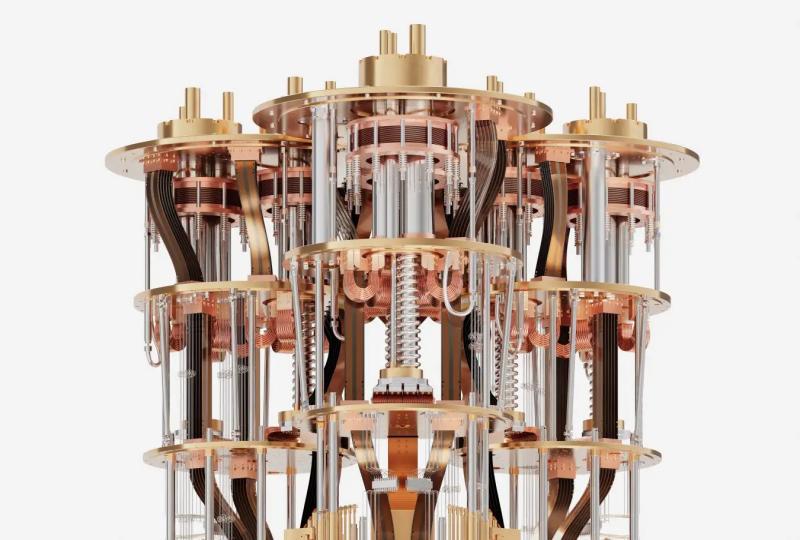
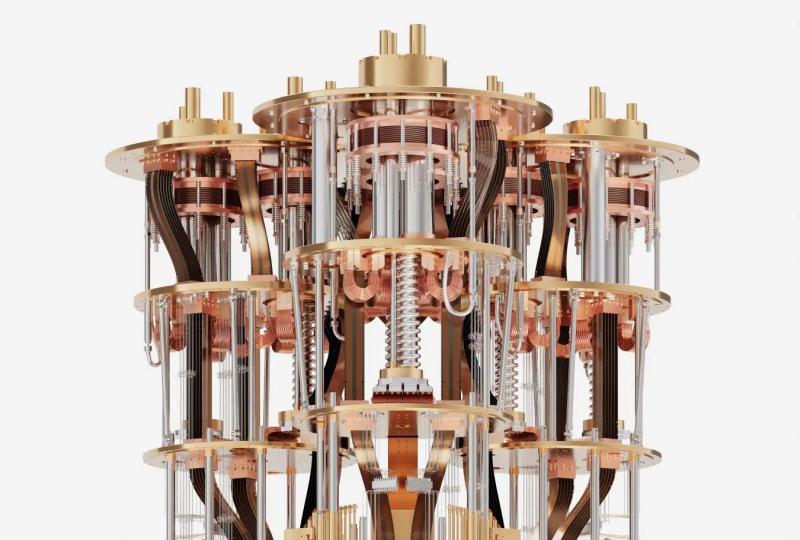
- Superconducting Qubits (Pursuing Scale): Led by tech giants and dedicated firms, this path focuses on scaling the number of qubits and improving gate fidelities within massive dilution refrigerators. The goal is clear: build a fault-tolerant, general-purpose quantum computer. Companies across the globe, from North America to Asia, are pushing these boundaries. For instance, SpinQ Technology has developed the “Ursa Major” superconducting quantum computer and the “Shaowei” series of standardized superconducting quantum chips, contributing to the industrial-grade hardware ecosystem with a focus on performance and controllability.
- Trapped Ions & Neutral Atoms (Prioritizing Quality): Known for their exceptional qubit coherence and high-fidelity gates, these platforms are strong contenders for early demonstrations of quantum advantage in specific algorithms and simulations.
- Photonic Quantum Computing (Networking & Speed): Leveraging photons for quantum processing, this path shows promise for quantum communication and certain types of quantum algorithms, often with the benefit of operating at room temperature.
- Nuclear Magnetic Resonance (NMR) – The Access & Education Path: Often overlooked in the "qubit count" race, NMR-based quantum computers play a crucial, pragmatic role. They offer unparalleled accessibility, reliability at room temperature, and low cost. This makes them powerful tools for quantum education and hands-on training. Companies like SpinQ have pioneered this space with desktop and portable NMR quantum computers (e.g., the Gemini and Triangulum series), which are now used in universities and high schools worldwide to demystify quantum concepts and foster the next generation of talent. This aligns with a mission of quantum democratization and education.
Quantum Sensing & Metrology: The Silent Frontrunner
Perhaps the closest to widespread commercialization, quantum sensing uses quantum states (like superposition or entanglement) to make measurements of physical quantities—magnetic fields, gravity, time—with unprecedented sensitivity. Applications in biomedical imaging, navigation without GPS, and foundational science are already being piloted and deployed.
Quantum Communication & Networking
Quantum Key Distribution (QKD) is a commercially available technology providing theoretically unhackable secure communication. The broader vision of a "quantum internet"—connecting quantum processors over long distances—is the subject of major national and international research initiatives, with significant progress in quantum memory and repeater technologies.
Current Milestones vs. Persistent Core Challenges
Achieved Milestones in 2026:
-
Multiple Quantum Advantage Demonstrations: Several teams have published papers claiming "quantum advantage" or "quantum utility" for specific, carefully chosen problems, proving that quantum processors can, in principle, outperform classical ones.
-
Access to 100+ Qubit Processors: Through cloud platforms like AWS Braket, Azure Quantum, and others, researchers and developers can experiment with processors boasting hundreds of physical qubits, a resource unimaginable a few years ago.
-
Industry-Specific Proof-of-Concepts (PoCs): The most promising sign of maturation is the proliferation of PoCs in key industries. SpinQ's collaborative projects serve as concrete examples: partnering with Hua Xia Bank to explore quantum neural networks for financial decision-making, with BGI on genomic sequencing algorithms, and with self-driving company Yuanrong Qixing on accelerating deep learning training. These ventures move beyond theory into practical problem-solving.
-
A Thriving Quantum Education Market: The demand for quantum education tools has exploded. Universities and even high schools are establishing quantum labs, often starting with accessible, hands-on hardware. This grassroots adoption is critical for building a sustainable talent pipeline.
Persistent Core Challenges:
-
Quantum Error Correction (QEC): The paramount challenge. Today’s quantum processors are “noisy” (NISQ era). Creating a single, reliable “logical qubit” from many error-prone physical qubits remains a daunting engineering and resource problem. This is the key gateway to large-scale, fault-tolerant computation.
-
Scalability & Integration: Increasing qubit count isn't just about making more; it's about improving control electronics, minimizing cabling (a major hurdle for dilution refrigerators), developing advanced packaging, and creating a seamless software stack—a full-stack challenge.
-
The Algorithm & Talent Gap: There is still a shortage of proven, practical quantum algorithms that deliver clear commercial value on near-term devices. This gap is compounded by a severe shortage of professionals who understand both quantum physics and domain-specific problems in chemistry, finance, or logistics.
-
The ROI Question: Building quantum hardware is extraordinarily capital-intensive. Companies and investors are increasingly asking for clearer paths to commercial return, pushing the industry to identify viable business use cases sooner rather than later.
Key Player Ecosystem and Strategic Divergence (2026 View)
The AQT landscape is shaped by diverse actors with different goals:
-
Tech Giants (Google, IBM, Microsoft, Amazon): They are building comprehensive cloud-based ecosystems. Their strategy is to provide the platform (hardware access, software tools, simulators) and foster a developer community, betting on long-term platform dominance.
-
Pure-Play Quantum Companies (Rigetti, IonQ, Pasqal, SpinQ): These firms compete through hardware specialization or full-stack solutions. Their strategies vary widely. SpinQ’s "Dual-Wheel Drive" strategy is a notable example: simultaneously advancing industrial-grade superconducting quantum computers for high-performance applications while driving quantum democratization through its portable NMR quantum computers and education solutions. This approach secures revenue and market presence in the near-term education sector while investing in the long-term industrial future.
-
National Research Initiatives: Governments in the US, China, EU, and elsewhere are making multi-billion-dollar, decade-long commitments, funding basic research and national quantum infrastructure.
-
Early Industry Adopters: Pharmaceutical companies (e.g., for molecular simulation), financial institutions (e.g., for portfolio optimization), and chemical companies are the leading explorers, often through partnerships with the above players.
The Outlook: Realistic Predictions for the Next 5-10 Years
| Timeline | Quantum Computing Focus | Quantum Sensing/Communication | Industry Impact |
| Near-Term (1-3 Years) | Expansion of the NISQ era. More specialized quantum processing units (QPUs) for optimization and simulation. Growth in quantum education and training tools. | Commercial adoption of quantum sensors in niche markets (geophysical, biomedical). Expansion of QKD networks for high-security applications. | Increased PoCs. Early adopters begin internal pilot projects. Value is primarily in research and strategic learning. |
| Mid-Term (3-7 Years) | First meaningful demonstrations of error correction, leading to early logical qubits. Hybrid quantum-classical algorithms become standard workflow in some fields. | Quantum sensors become more compact and affordable, entering broader markets. Prototypes of quantum repeater links for future networks. | Potential for quantum advantage on specific, valuable business problems. First generation of "quantum-ready" software and algorithms sold as services. |
| Long-Term (7-10+ Years) | The road to fault-tolerant, large-scale quantum computing continues. Scaling logical qubits becomes the central engineering task. | Integrated quantum sensing systems and the first metropolitan-scale quantum network testbeds. | Transformative potential begins to materialize for drug discovery, advanced materials, and possibly cryptography. |
Conclusion: Embracing an Incremental Revolution
The state of advanced quantum technologies in 2026 is one of transition: from scientific marvel to engineered system, and from general promise to targeted application. While the headlines often chase qubit counts, the real progress is in the less-glamorous work of improving software stacks (like SpinQ's SpinQit framework), building collaborative industry solutions, and educating a future workforce.
The revolution will be incremental, not instantaneous. Breakthroughs will be interspersed with periods of hard engineering grind. Success will depend on sustained collaboration across disciplines, continued investment, and pragmatic roadmaps that deliver value at each step of the journey. Companies like SpinQ, with a foot in both the accessible present of quantum education and the ambitious future of industrial-scale quantum computing, exemplify the multifaceted approach needed to navigate this complex and ultimately transformative landscape. The quantum future is being built today, one qubit, one algorithm, and one student at a time.
Featured Content