
Qubit Quantum Computer: A Guide to Quantum Power
2026.04.23 · Blog qubit quantum computer
Introduction: The Qubit – Quantum Computing’s Core
In the ever-evolving world of technology, quantum computing stands out as a revolutionary breakthrough, and at its core lies the qubit—a tiny but powerful unit that redefines how we process information. Unlike classical computers that rely on binary bits (0s and 1s), a qubit quantum computer leverages the weird and wonderful laws of quantum mechanics to tackle problems that were once thought impossible. From drug discovery to cryptography, qubit quantum computers are poised to transform industries, and understanding their basics—including quantum entanglement—is key to grasping their potential.
Qubits vs. Classical Bits: What Makes Qubits Unique?
First, let’s break down the fundamentals: what exactly is a qubit, and how does it differ from a classical bit? A classical bit is straightforward: it can only exist in one of two states, 0 or 1, at any given time. This limitation means classical computers struggle with complex problems that require analyzing millions of possibilities simultaneously. A qubit, short for “quantum bit,” is the quantum equivalent—but it’s far more flexible. Thanks to a quantum phenomenon called superposition, a qubit can exist in both 0 and 1 states at the same time, along with every possible combination of these states. Imagine a coin spinning in the air: it’s not quite heads or tails until it lands; a qubit is like that spinning coin, existing in multiple states until it’s measured.
Superposition: The Power of Multiple States
This superposition is what gives qubit quantum computers their extraordinary power. While a single classical bit can only represent one value, a single qubit can represent two values. Two qubits? Four values. Three qubits? Eight values. As the number of qubits increases, the number of possible states grows exponentially—meaning a 50-qubit quantum computer can process more states than there are atoms in the observable universe. This exponential scaling is why qubit quantum computers can solve complex problems that would take classical supercomputers thousands, if not millions, of years.
Quantum Entanglement: The “Spooky” Link That Boosts Quantum Power
But superposition alone isn’t enough to unlock the full potential of a qubit quantum computer. Another critical quantum phenomenon—quantum entanglement—takes things a step further. Quantum entanglement occurs when two or more qubits become linked in such a way that the state of one qubit directly influences the state of the others, no matter how far apart they are. This “spooky action at a distance,” as Albert Einstein once called it, is a defining feature of quantum mechanics and a key component of quantum computing.
Understanding Entanglement: From EPR Paradox to Practical Use
To understand entanglement, consider two entangled qubits. If you measure one qubit and find it in the 0 state, the other qubit will instantly be in the 1 state—even if they’re on opposite sides of the planet. This isn’t because the qubits are communicating faster than light (which would violate the laws of relativity), but because they exist as a single quantum system, not as individual particles. Einstein, along with physicists Boris Podolsky and Nathan Rosen, first explored this phenomenon in 1935 in what became known as the EPR paradox, though they initially questioned its validity. Later, physicist Erwin Schrödinger coined the term “quantum entanglement” and recognized it as a defining feature of quantum mechanics that separates it from classical physics.
How Entanglement Powers Qubit Quantum Computers
In a qubit quantum computer, entanglement allows qubits to work together in a coordinated way, enabling parallel processing on a scale that classical computers can’t match. For example, when solving a complex optimization problem—like finding the most efficient route for a fleet of delivery trucks—entangled qubits can explore all possible routes simultaneously, rather than one at a time. This makes qubit quantum computers ideal for tasks like drug discovery (simulating molecular structures), climate modeling (analyzing complex environmental systems), and cryptography (breaking or securing encryption keys).
Challenges in Building Qubit Quantum Computers
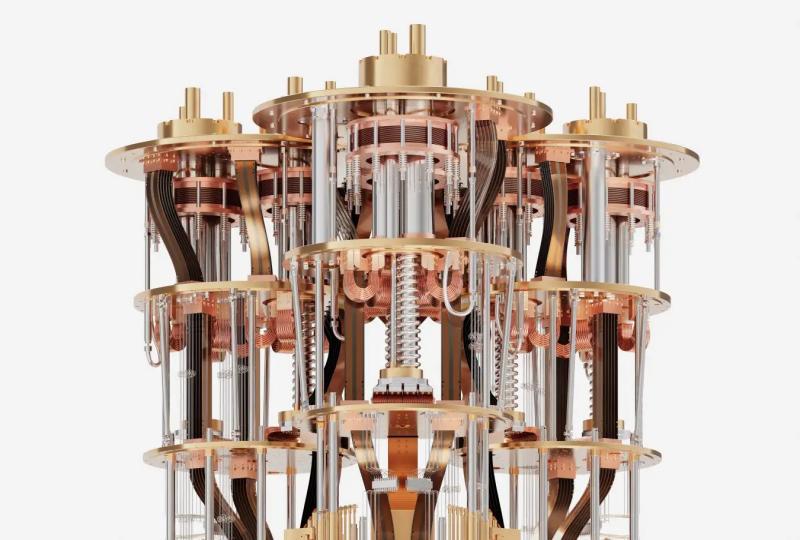
But building a functional qubit quantum computer is no easy feat. Qubits are extremely fragile; their superposition and entanglement can be disrupted by even the smallest environmental disturbances—like temperature changes, electromagnetic radiation, or vibrations. This disruption, known asdecoherence, causes qubits to lose their quantum state and revert to classical bits, leading to errors in calculations. To combat this, researchers use specialized technologies to isolate qubits: superconducting qubits are kept at near-absolute zero temperatures (-273°C), while trapped ion qubits use electromagnetic fields to isolate ions in a vacuum.
Recent Advancements in Qubit Technology
Recent advancements have made significant progress in overcoming these challenges. In 2026, a team at Princeton University developed a superconducting qubit with a coherence time (the time it can maintain its quantum state) of over 1 millisecond—15 times longer than the industry standard. This breakthrough, which used high-purity silicon and tantalum instead of traditional materials, brings us closer to building reliable, scalable qubit quantum computers.
Real-World Potential of Qubit Quantum Computers
Today, qubit quantum computers are still in the early stages of development—most are experimental and used primarily for research. But their potential is undeniable. For example, in drug discovery, a qubit quantum computer can simulate the behavior of molecules at the quantum level, allowing researchers to design new drugs faster and more efficiently than ever before. In cryptography, quantum computers could break current encryption standards (like RSA) by factoring large numbers exponentially faster than classical computers—though they could also create unbreakable quantum encryption systems that leverage entanglement to secure data.
Qubit Quantum Computers vs. Classical Computers
It’s important to note that qubit quantum computers won’t replace classical computers—they’ll complement them. Classical computers are still ideal for everyday tasks like browsing the web, word processing, and streaming video. Qubit quantum computers will handle the complex, computationally intensive tasks that classical computers can’t tackle. This hybrid approach—combining quantum and classical computing—will be key to unlocking the full potential of quantum technology.
The Future of Qubit Quantum Computers
So, what does the future hold for qubit quantum computers? Experts predict that in the next decade, we’ll see more powerful quantum processors with hundreds, if not thousands, of qubits. As coherence times improve and error rates decrease, qubit quantum computers will move from the lab to real-world applications, transforming industries and solving problems we can’t even imagine today. Quantum entanglement, once a theoretical curiosity, will become a practical tool for powering these next-generation computers.
Conclusion: Embracing the Qubit Revolution
In conclusion, the qubit is the heart of the quantum computing revolution. Its ability to exist in superposition and entangle with other qubits gives qubit quantum computers the power to redefine what’s possible with technology. While there are still challenges to overcome—like decoherence and scalability—the progress we’ve made in recent years is promising. Whether you’re a tech enthusiast, a business leader, or just someone curious about the future, understanding qubits and quantum entanglement is essential to staying ahead in a world increasingly shaped by quantum technology. The era of the qubit quantum computer is just beginning, and its impact will be felt across every industry.
Featured Content