
Quantum Computing Basics: Qubits, Entanglement & Algorithms
2026.04.23 · Blog quantum computing basics
What Is Quantum Computing, and Why Does It Matter?
In a world where classical computers struggle with complex problems—from simulating molecular structures to breaking advanced encryption—quantum computing emerges as a transformative technology. But what exactly is quantum computing, and how does it differ from the devices we use daily? This guide breaks down quantum computing basics, demystifying core concepts like qubits, quantum entanglement, and quantum algorithms in simple terms, perfect for anyone new to the field.
The Foundation: Qubits vs. Classical Bits
First, let’s start with the foundation of quantum computing: the qubit. Classical computers rely on bits, which can only exist in one of two states—0 or 1. These bits are the building blocks of all digital operations, from browsing the web to running software. Quantum computers, however, use qubits (quantum bits), which leverage the laws of quantum mechanics to exist in more than one state at once—a phenomenon called superposition.
Superposition is what gives quantum computing its extraordinary potential. Imagine a coin spinning in mid-air: it’s neither heads nor tails, but a combination of both, until it lands (or is measured). Similarly, a qubit can be 0, 1, or a superposition of both states simultaneously. This means a single qubit can process multiple pieces of information at once, and as you add more qubits, the computing power grows exponentially. For example, 3 classical bits can represent only one of 8 possible states (000 to 111) at a time, but 3 qubits in superposition can represent all 8 states simultaneously—a capability that classical computers can never match.
Quantum Entanglement
But superposition alone isn’t enough to unlock quantum computing’s power. Another key concept—quantum entanglement—takes things further. Quantum entanglement is a phenomenon where two or more qubits become linked in such a way that the state of one qubit directly affects the state of the others, no matter how far apart they are. Albert Einstein famously called this "spooky action at a distance" when he first encountered the concept in 1935, as part of the EPR alongside his colleagues Boris Podolsky and Nathan Rosen.
To simplify entanglement: if two qubits are entangled, measuring one will instantly determine the state of the other, even if they’re separated by thousands of miles. For instance, if one entangled qubit is measured and found to be in state 0, the other will immediately be in state 1—there’s no in-between. This isn’t because of a hidden signal; it’s a fundamental property of quantum mechanics. Unlike classical systems, entangled qubits act as a single unit, not independent particles. Erwin Schrödinger later coined the term "Quantum Entanglement" and emphasized it as a defining feature that separates quantum mechanics from classical thinking. Today, experiments have confirmed that entanglement’s effect is at least 10,000 times faster than light, though it can’t be used to send classical information, so it doesn’t violate the laws of causality.
Quantum Algorithms: Turning Concepts Into Action
Together, superposition and entanglement form the backbone of quantum computing, enabling it to solve problems that are practically impossible for classical computers. But how do we turn these concepts into useful tools? That’s where quantum algorithms come in. Quantum algorithms are step-by-step procedures designed to run on quantum computers, leveraging superposition and entanglement to outperform classical algorithms for specific tasks.
Shor’s Algorithm: Revolutionizing Cryptography
Two of the most famous quantum algorithms are Shor’s algorithm and Grover’s algorithm, both of which highlight the unique advantages of quantum computing. Shor’s algorithm, developed by Peter Shor in 1994, is a game-changer for cryptography. It can factor large prime numbers exponentially faster than the best classical algorithms. Why does this matter? Most modern encryption—like the RSA system used to secure online banking and communication—relies on the difficulty of factoring large primes. A powerful enough quantum computer running Shor’s algorithm could break this encryption in minutes, whereas a classical computer would take billions of years.
Grover’s Algorithm: Speeding Up Data Search
Grover’s algorithm, created by Lov Grover in 1996, is another key example. It’s designed for searching unstructured databases—think of looking for a specific name in a list of a million entries. A classical computer would have to check each entry one by one, taking an average of 500,000 checks. Grover’s algorithm, however, uses quantum superposition to search all entries simultaneously, reducing the number of checks to around 1,000—a quadratic speedup that’s revolutionary for data retrieval.
Quantum vs. Classical Computing
It’s important to note that quantum computing isn’t meant to replace classical computing. Instead, it’s a complementary technology. Classical computers are still ideal for everyday tasks like word processing, streaming, and web browsing. Quantum computers excel at complex, data-heavy tasks that classical computers struggle with, such as simulating quantum systems (like new drugs or materials), optimizing supply chains, and solving complex mathematical problems.
Common Misconceptions About Quantum Computing
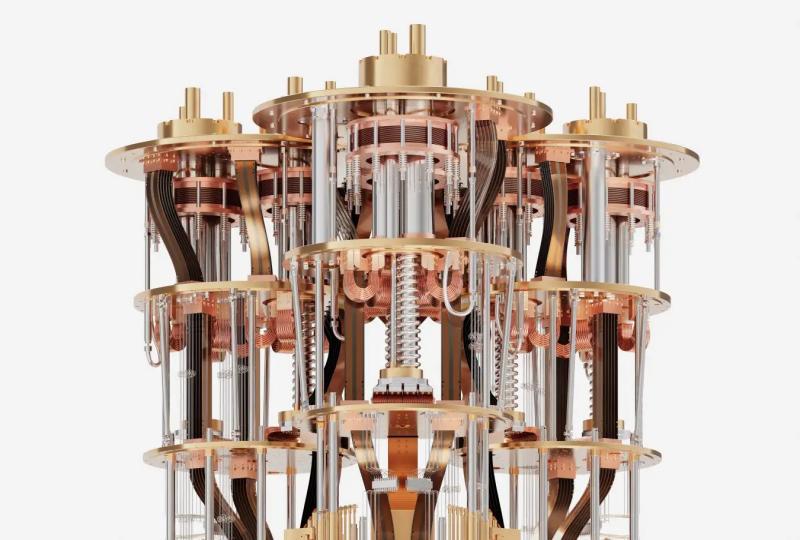
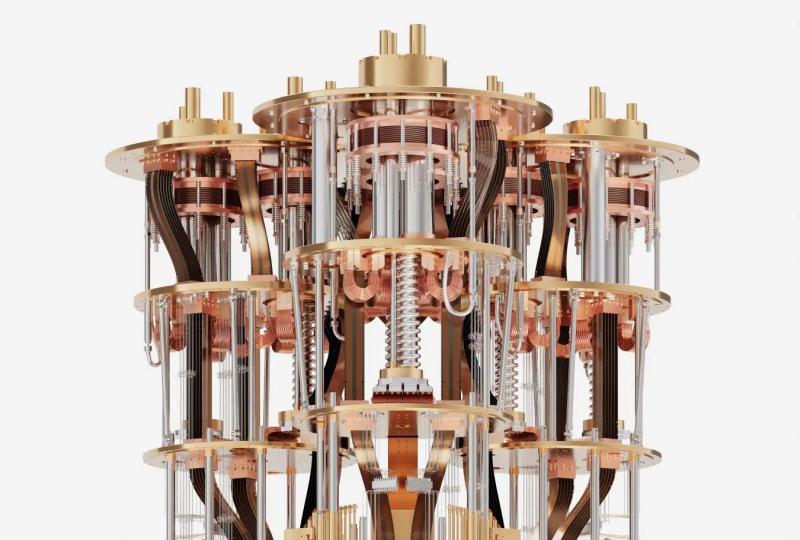
Now, let’s address some common misconceptions about quantum computing. First, quantum computers aren’t "faster" than classical computers in all cases—they’re faster for specific problems that leverage superposition and entanglement. Second, quantum computing is still in its early stages. Today’s quantum computers (called NISQ, or Noisy Intermediate-Scale Quantum, devices) have a limited number of qubits (usually fewer than 200) and are prone to errors due to quantum decoherence—the loss of quantum state when a qubit interacts with its environment. Researchers are working to develop more stable qubits, with technologies like superconductors and ion traps showing promise.
Another misconception is that quantum entanglement allows for faster-than-light communication. While the state of entangled qubits changes instantly, this can’t be used to send meaningful information, as the results of measurements are random. You can’t control the state of a qubit to send a message, so causality remains intact.
Why Quantum Computing Basics Matter for the Future
So, why should you care about quantum computing basics? Because this technology is poised to reshape industries. In healthcare, quantum computers could simulate molecular interactions to develop new drugs faster than ever before. In finance, they could optimize investment portfolios and predict market trends with greater accuracy. In climate science, they could model complex weather patterns and accelerate the development of renewable energy solutions. Even in everyday life, quantum computing could lead to more powerful AI, faster internet, and more secure digital transactions.
Summary: Key Takeaways on Quantum Computing Basics
In summary, quantum computing basics revolve around three core concepts: qubits (the building blocks), superposition (the ability to exist in multiple states), and entanglement (the "spooky" link between qubits). These concepts power quantum algorithms like Shor’s and Grover’s, which offer exponential and quadratic speedups for specific tasks. While quantum computing is still evolving, its potential to transform our world is undeniable.
Whether you’re a student, a professional, or just someone curious about the future of technology, understanding quantum computing basics is the first step toward embracing this revolutionary field. As research advances and quantum computers become more powerful, the possibilities are endless—and it all starts with grasping the fundamentals.
Featured Content