
Quantum Computing System Deployment: How Quantum Computers Work and Why They Matter
2026.05.14 · Blog quantum computing system deployment
Quantum computing is rapidly moving from research laboratories into real-world business and scientific applications. As organizations begin planning for quantum computing system deployment, understanding the fundamentals of quantum computers becomes increasingly important.
Unlike classical computers, which process information using bits represented as 0s and 1s, quantum computers use quantum bits, or qubits, that can exist in multiple states simultaneously. This unique capability allows quantum systems to solve certain classes of problems exponentially faster than conventional machines.
This article explains what quantum computers do, how they work, where they are deployed, and which industries are expected to benefit most from this transformative technology.
What Is Quantum Computing System Deployment?
Quantum computing system deployment refers to the process of designing, installing, integrating, and operating a functional quantum computing platform in a laboratory, data center, or cloud environment.
A deployed quantum system includes far more than just the quantum processor. It typically consists of:
-
Quantum Processing Unit (QPU)
-
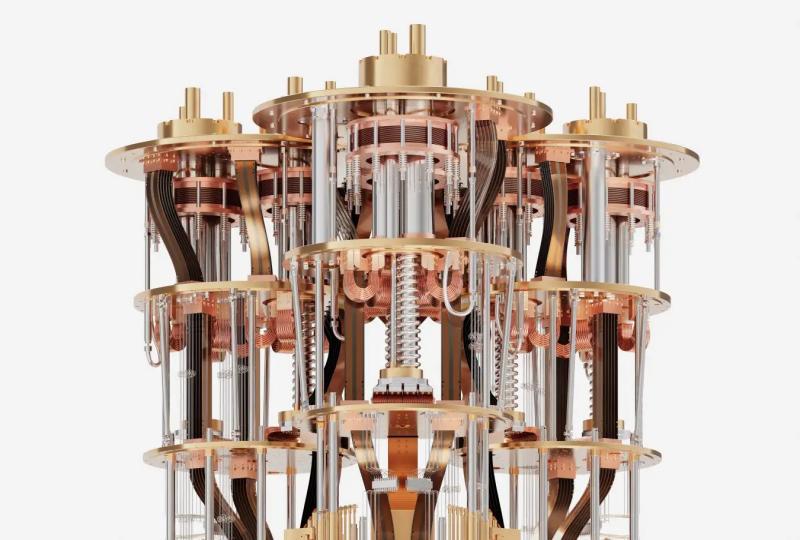
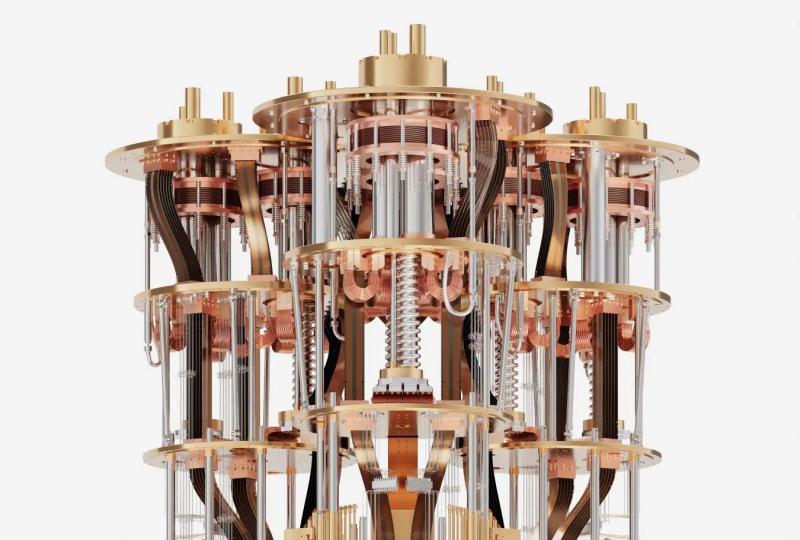
Cryogenic refrigeration systems
-
Microwave control electronics
-
Laser systems (for certain qubit types)
-
High-speed classical computers
-
Error correction software
-
Cloud access and orchestration platforms
Successful deployment requires expertise in quantum physics, computer science, electronics, cryogenics, and systems engineering.
What Does a Quantum Computer Do?
Quantum computers are designed to solve problems that are difficult or impractical for classical computers.
-
Drug Discovery
Simulating molecular interactions to accelerate pharmaceutical development.
-
Materials Science
Designing superconductors, batteries, and advanced materials.
-
Optimization
Improving logistics, scheduling, and resource allocation.
-
Cryptography
Analyzing and potentially breaking current encryption schemes.
-
Artificial Intelligence
Enhancing machine learning and pattern recognition.
-
Financial Modeling
Portfolio optimization and risk analysis.
Why Quantum Computers Are Important
Classical computers process information sequentially or through massive parallelism, but they still struggle with certain problems whose complexity grows exponentially.
Quantum computers exploit the laws of quantum mechanics to evaluate many possibilities simultaneously, offering potential breakthroughs in fields that require enormous computational power.
For example:
-
Simulating a complex molecule may take classical supercomputers years.
-
A fault-tolerant quantum computer could perform the same task dramatically faster.
-
Optimization problems involving millions of variables may become tractable.
How Quantum Computers Work
Quantum computing relies on several principles of quantum mechanics.
-
Superposition
A classical bit is either 0 or 1. A qubit can be 0, 1, or a probability combination of both states at the same time.
-
Entanglement
Qubits can become correlated so that the state of one instantly affects another, enabling coordinated computation.
-
Interference
Quantum algorithms amplify correct answers and suppress incorrect ones.
-
Measurement
When qubits are measured, they collapse into classical states, producing the final result.
What Is a Qubit?
A qubit is the fundamental unit of quantum information.
Physical implementations include:
-
Superconducting circuits
-
Trapped ions
-
Neutral atoms
-
Photonic qubits
-
Spin qubits
Each technology offers different advantages in coherence time, scalability, and operating requirements.
Major Components of a Quantum Computing System
-
Quantum Processing Unit (QPU)
The QPU contains the qubits and executes quantum gates.
-
Cryogenic System
Superconducting qubits operate near absolute zero, often around 10–20 millikelvin.
-
Control Electronics
Microwave pulses manipulate qubit states with extreme precision.
-
Classical Control Server
Coordinates experiments and processes measurement data.
-
Software Stack
Includes compilers, optimizers, simulators, and cloud APIs.
Step-by-Step Quantum Computing Workflow
-
Prepare qubits in a known initial state.
-
Apply quantum gates.
-
Create entanglement among qubits.
-
Execute a quantum algorithm.
-
Measure qubits.
-
Repeat the computation many times.
-
Analyze statistical outcomes.
Quantum Error Correction
Qubits are highly sensitive to environmental noise, making errors unavoidable.
Quantum error correction protects information by encoding logical qubits across many physical qubits and continuously detecting faults without destroying the quantum state.
This capability is essential for large-scale, fault-tolerant quantum computing.
Challenges in Quantum Computing System Deployment
Deploying a quantum computer presents several technical challenges:
-
Maintaining ultra-low temperatures
-
Isolating environmental noise
-
Calibrating thousands of control signals
-
Managing cryogenic infrastructure
-
Implementing error correction
-
Integrating classical and quantum hardware
-
Scaling from dozens to millions of qubits
On-Premises vs Cloud Quantum Deployment
-
On-Premises Deployment
Research institutions and governments may install systems locally for maximum control and security.
-
Cloud Deployment
Many organizations access quantum processors remotely through cloud services, avoiding infrastructure complexity.
Industries Preparing for Quantum Deployment
Quantum computing is expected to reshape many sectors.
-
Pharmaceuticals
-
Chemicals
-
Automotive
-
Aerospace
-
Finance
-
Energy
-
Telecommunications
-
National Security
-
Academic Research
Quantum Computing Timeline
-
Current Era: NISQ Systems
Today's machines contain tens to thousands of noisy qubits.
-
Near-Term
Improved qubit quality and larger processors.
-
Long-Term
Fault-tolerant systems capable of solving commercially transformative problems.
Why Businesses Should Learn About Quantum Deployment
Even organizations not deploying their own hardware should understand:
-
Which use cases may provide competitive advantage
-
How post-quantum cryptography affects security
-
When cloud access is sufficient
-
Which partnerships and skills are needed
Early preparation helps companies build expertise before the technology matures.
Frequently Asked Questions
-
How cold does a quantum computer operate?
Superconducting systems typically operate at 10–20 millikelvin, colder than outer space.
-
Can quantum computers replace classical computers?
No. They are specialized accelerators designed for specific problem types.
-
How many qubits are needed for useful applications?
Practical fault-tolerant systems may require thousands of logical qubits and millions of physical qubits.
-
Is quantum computing available today?
Yes. Organizations can access quantum processors through cloud platforms and research partnerships.
Conclusion
Understanding quantum computing system deployment is essential for anyone preparing for the next generation of computing. A deployed quantum system combines qubits, cryogenics, control electronics, software, and error correction into a highly integrated platform.
Quantum computers are not faster at every task, but for molecular simulation, optimization, cryptography, and advanced scientific research, they offer capabilities that could fundamentally transform entire industries.
As hardware improves and deployment becomes more practical, quantum computing is moving from experimental science to a strategic technology that businesses and researchers can begin leveraging today.
Featured Content