
Quantum Computing and AI: How SpinQ Is Powering the Future of Quantum Artificial Intelligence
2026.03.13 · Blog quantum computing and ai
Quantum computing and AI are converging into one of the most transformative technology stacks of the next decade, often referred to as Quantum Artificial Intelligence (QAI) or Quantum Machine Learning (QML). This article explains how quantum computing enhances AI, what is possible today, how SpinQ and SpinQuanta are building practical solutions, and how you can start learning and experimenting in this emerging field.
What Is Quantum Computing in AI?
Quantum computing uses quantum bits (qubits) that can exist in superposition and become entangled, allowing certain computations to be performed more efficiently than on classical digital hardware. When combined with AI and machine learning, this leads to hybrid quantum-classical workflows where quantum circuits handle complex subproblems while neural networks and other classical models manage the rest.
Key ideas:
-
Superposition lets qubits encode many states at once, enabling parallel exploration of solution spaces for AI optimization tasks.
-
Entanglement creates correlations that can represent rich probability distributions, useful for generative models and pattern recognition.
-
Quantum algorithms such as HHL and Grover’s search can provide polynomial or quadratic speedups for tasks that appear in AI pipelines, like solving linear systems or searching unstructured data.
Why Quantum Computing Matters for AI
Quantum computing does not replace AI; it amplifies it by accelerating or improving specific algorithmic steps. The most promising benefits appear in four broad areas.
-
Faster training and inference
-
Quantum-enhanced optimization can reduce training time for certain model classes, especially variational and kernel-based methods.
-
Variational quantum circuits act like parameterized layers, which can be trained similarly to neural networks, but in higher-dimensional Hilbert spaces.
-
-
Better optimization and search
-
Algorithms like the Quantum Approximate Optimization Algorithm (QAOA) target combinatorial optimization problems such as routing, scheduling, and portfolio construction.
-
SpinQ has applied QAOA to logistics, achieving about 30% runtime reduction over a classical genetic algorithm on a 16-node routing problem in simulations.
-
-
Richer representations and generative models
-
Quantum feature maps and kernel methods embed classical data into high-dimensional quantum states, sometimes leading to more compact or expressive decision boundaries.
-
Quantum sampling techniques can improve training of generative models that depend on drawing from complex distributions.
-
-
Smarter quantum systems
-
AI can be used to auto-calibrate and stabilize quantum hardware, while quantum AI can optimize control pulses and error mitigation strategies.
-
SpinQ explicitly explores quantum AI for automatic calibration of its desktop NMR quantum computers.
-
Key Application Areas of Quantum AI
Below are some of the most active and realistic application domains for quantum computing and AI today.
-
Quantum Machine Learning (QML)
QML integrates quantum circuits into machine learning pipelines. Typical examples include:
-
Quantum kernel methods and quantum SVMs for classification and regression.
-
Variational quantum classifiers where trainable quantum gates replace part of a neural network.
-
Hybrid models where a classical neural network reads embeddings produced by a quantum circuit.
SpinQ’s Quantum AI Lab implemented quantum kernel methods and regression on a 4-qubit NMR device, reaching over 85% accuracy on a handwritten digit recognition task, demonstrating the benefits of quantum feature spaces.
-
Optimization and Operations Research
Quantum AI is especially promising in logistics, energy, manufacturing, and finance.
-
QAOA and related variational algorithms can solve routing, scheduling, and resource-allocation problems more efficiently on suitable instances.
-
SpinQ’s logistics scheduling project used QAOA on a superconducting prototype and observed approximately 30% runtime reduction versus a classical genetic algorithm on a benchmark routing scenario.
-
Natural Language Processing (QNLP)
Natural language involves high-dimensional, context-dependent structure, which fits well with quantum state representations.
-
Quantum embeddings can encode sentences into quantum states, potentially representing nuanced semantic relationships more compactly.
-
SpinQ combined a quantum embedding layer with classical models and matched classical performance on short-text sentiment analysis benchmarks, validating QNLP feasibility at small scale.
-
Computer Vision and Time-Series Analysis
Quantum neural networks built from parameterized quantum circuits can act as feature extractors for images and signals.
-
SpinQ’s research includes quantum neural networks for image and time-series classification, where quantum layers may offer advantages for certain structured data.
-
Reinforcement Learning and Autonomous Systems
Quantum reinforcement learning (QRL) explores how quantum policy representations and exploration strategies can improve decision-making in dynamic environments.
-
SpinQ developed a quantum policy-gradient algorithm for an autonomous driving simulator, where the quantum agent converged faster and exhibited more diverse driving strategies than a classical deep RL baseline.
SpinQ and SpinQuanta: Practical Quantum + AI Platforms
SpinQ (SpinQuanta) focuses on making quantum computing and AI accessible with integrated hardware, software, and educational solutions. Its portfolio spans NMR desktop devices, superconducting quantum computers, cloud platforms, and curricula for universities and research labs.
Quantum Hardware
-
Education-grade NMR quantum computers:
-
Desktop and portable systems operate at room temperature, designed for teaching and entry-level research.
-
Series like SpinQ Gemini and SpinQ Triangulum support hands-on experimentation with real qubits in classroom or lab settings.
-
-
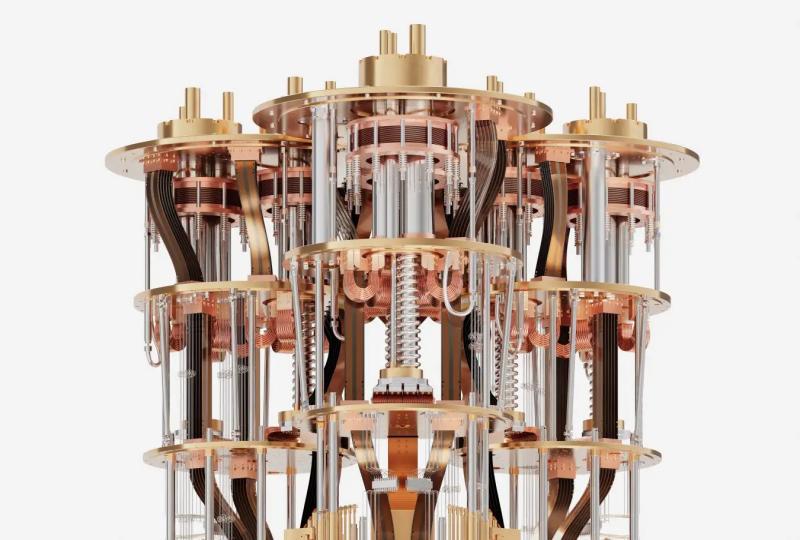
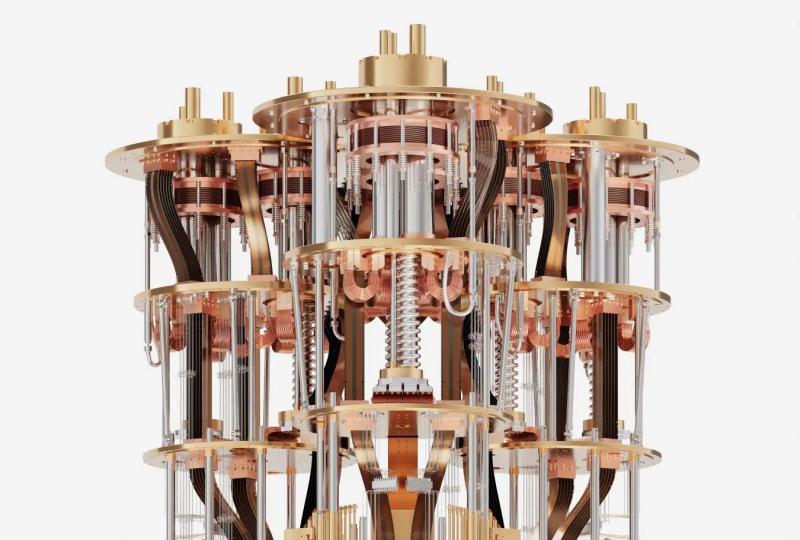
Industrial-grade superconducting quantum computers:
-
SpinQ’s SQC systems provide configurable superconducting quantum chips with high coherence and gate fidelity for advanced research in chemistry, materials, and AI.
-
The architecture spans chip design, cryogenics, control electronics (SpinQ QCM System), and software frameworks, forming a turnkey quantum stack.
-
Quantum Cloud and Software
SpinQ’s software ecosystem is designed for hybrid AI–quantum workflows.
-
SpinQ Cloud
-
Connects real quantum devices with 2–8 qubits and simulators up to 24 qubits, accessible through a web-based platform.
-
Includes graphical circuit builders, OpenQASM support, and Python integration, ideal for QML experiments and teaching.
-
-
SpinQit programming framework
-
A Python-based SDK that supports hybrid quantum–classical algorithm design and integrates with mainstream AI frameworks like TensorFlow.
-
Provides noise simulation, enabling realistic testing of QML models before deployment on real hardware.
-
Educational Ecosystem
SpinQ emphasizes a “hardware + software + curriculum + cloud” learning environment.
-
Structured courses, ready-made experiments, and instructor training lower the barrier to teaching quantum computing and QAI in high schools and universities.
-
The University of Western Australia, for example, uses SpinQ Gemini and Triangulum to deliver interactive, hands-on quantum computing labs that enhance students’ skills and program quality.
Quantum Computing and AI Use Cases with SpinQ
Here are representative use cases where SpinQ solutions support quantum computing and AI workflows.
Representative Quantum + AI Scenarios
| Use case | Quantum role in AI workflow | SpinQ support example |
| Handwritten digit recognition | Quantum kernel classifier for feature mapping and decision | 4-qubit NMR device on SpinQ Cloud with quantum regression achieving >85% accuracy on digits task |
| Logistics routing optimization | QAOA for route optimization and constraint handling | QAOA simulations on superconducting prototype with ~30% runtime reduction vs genetic algorithm |
| Short-text sentiment analysis | Quantum embeddings feeding classical classifier | Quantum NLP model matching classical accuracy on benchmark |
| Autonomous driving simulator | Quantum policy-gradient RL with richer exploration | Quantum agent converging faster and exploring more diverse policies |
| Quantum device calibration | AI optimizing pulse sequences and qubit parameters | Quantum AI applied to automatic calibration of SpinQ desktop systems |
All these examples involve hybrid pipelines where quantum circuits run on SpinQ hardware or SpinQ Cloud and interface with classical AI code through SpinQit and standard ML frameworks.
Getting Started: Learning Quantum Computing and AI Together
You do not need a large data center or dilution refrigerator to start exploring quantum computing and AI.
-
Build separate foundations
-
Learn the basics of linear algebra, probability, and classical machine learning first.
-
Study quantum computing fundamentals such as qubits, gates, measurement, and basic algorithms.
-
-
Use educational hardware or cloud access
-
Classroom users can adopt SpinQ’s NMR desktop systems like Gemini or Triangulum for hands-on labs.
-
Individuals and institutions can access small real devices and simulators through SpinQ Cloud, sufficient for toy QML experiments and teaching.
-
-
Start with hybrid QML examples
-
Use SpinQit to build small variational circuits and connect them to a classical optimizer.
-
Run classification tasks (e.g., small image or text datasets) where quantum layers replace or augment a few classical layers.
-
-
Join research or educational collaborations
-
SpinQ collaborates with universities and institutes worldwide on quantum AI topics like robotics, computer vision, bioinformatics, and QNLP.
-
For details about hardware, cloud, and educational solutions, you can explore product and solution pages on the official SpinQ website at https://www.spinquanta.com/ (for example, product pages under “Products” or “Quantum Computing Solutions”).
FAQs: Quantum Computing and AI
-
What is Quantum Artificial Intelligence (QAI)?
Quantum Artificial Intelligence refers to AI techniques that use quantum algorithms or quantum hardware to improve training speed, model expressiveness, or solution quality. It includes quantum machine learning, quantum optimization, and quantum-enhanced data analysis.
-
How is QAI different from traditional AI?
Traditional AI runs on classical processors and GPUs, while QAI uses quantum processors for specific subroutines such as optimization, sampling, or linear algebra. In practice, most QAI systems are hybrid, combining classical deep learning with quantum circuits.
-
Can quantum computers already beat classical AI models?
For broad, commercial-scale tasks like large language models, classical systems still dominate. However, research shows promising quantum advantages on certain structured problems, such as constrained optimization and specific kernel-based learning tasks, especially in small to medium problem sizes.
-
What is Quantum Machine Learning (QML)?
QML is the subfield where quantum circuits are used to implement or accelerate machine learning methods including classification, regression, clustering, and dimensionality reduction. Examples include quantum support vector machines, variational quantum classifiers, and quantum Boltzmann machines.
-
What hardware do I need to experiment with quantum AI?
You can use:
-
Simulators on a laptop for very small circuits.
-
Cloud access to real quantum devices, like SpinQ Cloud’s real hardware (2–8 qubits) and simulators up to 24 qubits.
-
Education-grade desktop devices such as SpinQ’s NMR quantum computers if you are in a lab or classroom environment.
-
How does SpinQ support quantum AI research?
SpinQ operates a dedicated Quantum AI Lab and focuses on QML, QAOA, QNLP, quantum neural networks, and quantum reinforcement learning. It offers customizable quantum systems, cloud access, and SDKs for researchers to prototype and validate quantum AI algorithms.
-
Is quantum computing only for researchers and PhD students?
No. SpinQ’s educational ecosystem is specifically designed to bring quantum computing into high schools, undergraduate classrooms, and training centers. Room-temperature desktop devices and structured curricula make it feasible to introduce quantum concepts to beginners.
-
What industries will benefit most from quantum AI?
Early beneficiaries include:
-
Finance: portfolio optimization, risk modeling, fraud detection.
-
Logistics and transportation: routing, scheduling, and fleet optimization.
-
Healthcare and life sciences: drug discovery, protein folding, bioinformatics.
-
Energy and smart cities: grid optimization and resource allocation.
-
What are the main challenges today?
-
Hardware limitations: current quantum devices are noisy and have limited qubit counts, constraining model size.
-
Algorithm design: many QAI algorithms are still experimental, and proven speedups are problem-specific.
-
Talent gap: there is a shortage of engineers trained in both quantum computing and AI, which SpinQ’s training and education solutions aim to address.
-
How can my institution start with quantum computing and AI?
Institutions typically:
-
Deploy education-grade quantum hardware in labs or use SpinQ Cloud for remote access.
-
Integrate SpinQ’s curricula and teaching resources to add quantum computing and QAI modules to STEM programs.
-
Collaborate with SpinQ on joint research projects in quantum AI and quantum education.
Featured Content