
Overview and Definition of Portable Quantum Computers
2026.05.13 · Blog Portable Quantum Computer
Quantum computing is emerging as one of the most important directions in next-generation computing technology, gradually moving from laboratory research into education, scientific exploration, and industrial applications. Among various technological approaches, the Portable Quantum Computer has become a key platform for quantum computing education and foundational research due to its low entry barrier, easy deployment, and strong instructional capabilities.
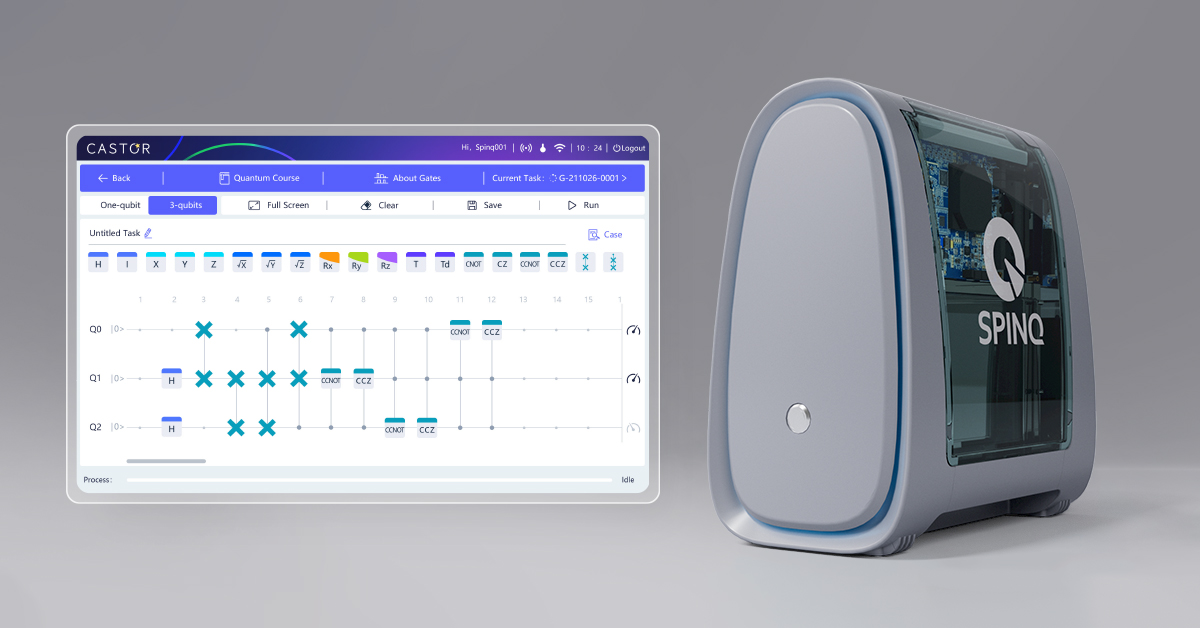
The 2-qubit portable nuclear magnetic resonance (NMR) quantum computer developed by SpinQ provides a complete solution for quantum computing education and demonstration. Based on nuclear spin systems, it enables users to understand the core principles of quantum mechanics and quantum algorithms in a real quantum hardware environment.
Concept and Definition of Portable Quantum Computers
A portable quantum computer is a compact and integrated quantum computing system. Unlike large-scale superconducting or ion-trap quantum computers, it does not rely on ultra-low temperature environments or complex laboratory infrastructure. Instead, it enables quantum state manipulation and computation within a simplified and compact setup.
Its primary goal is not to replace high-performance quantum computers but to serve as an educational and experimental platform that helps users intuitively understand quantum bits, superposition, and entanglement.
Among current implementations, systems based on nuclear spin technology are a key realization of nuclear spin quantum computer architectures.
Principles of NMR Quantum Computing
Nuclear magnetic resonance (NMR) quantum computing uses the spin states of atomic nuclei as qubits and is therefore also known as nuclear spin quantum computing.
In this system:
-
Nuclear spin “up” and “down” states represent |0⟩ and |1⟩ qubits
-
Radio-frequency pulses are used to control quantum state evolution
-
NMR signals are measured to extract computational results
Due to its stable physical system and room-temperature operation, NMR quantum computing is particularly suitable for teaching and experimental demonstrations.
In terms of NMR Quantum Products & Services, its core value lies in transforming complex quantum control processes into visual and operable experimental systems, enabling learners to intuitively understand quantum logic gates and quantum algorithms.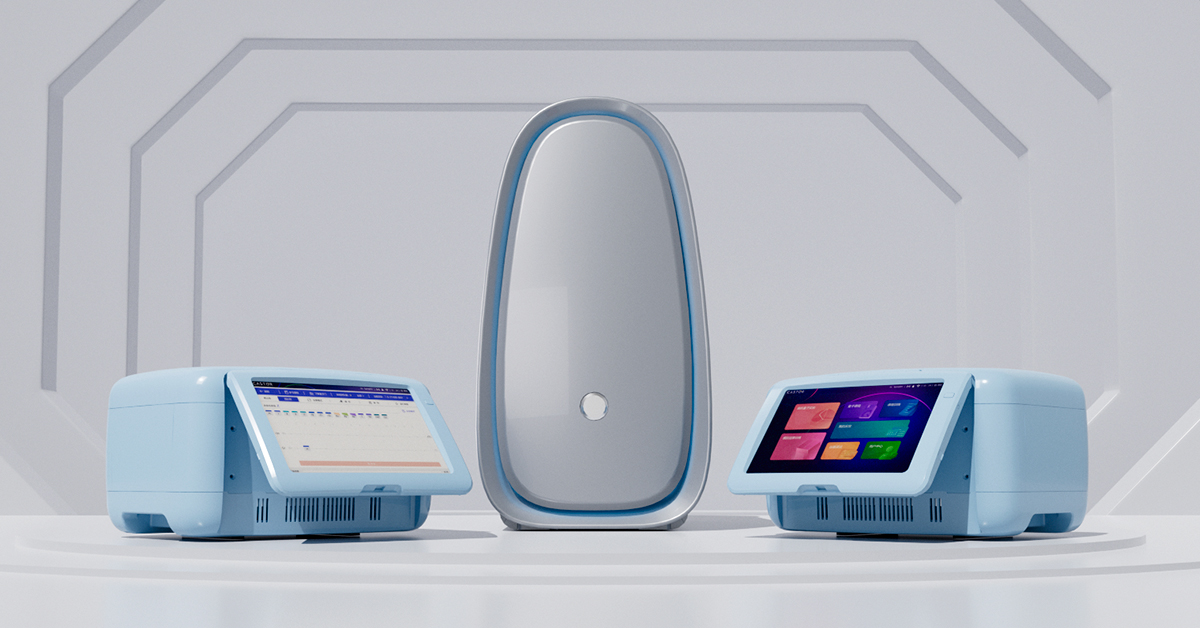
Practical Value of NMR Quantum Computing
Regarding the usefulness of NMR quantum computing, its value is reflected in several key aspects:
-
Educational Visualization
NMR quantum systems convert abstract quantum states into measurable signals, helping learners understand quantum computation intuitively.
-
Low Entry Barrier for Experiments
No ultra-low temperature infrastructure is required, significantly reducing experimental costs.
-
Stable Physical System
Nuclear spin systems provide relatively long coherence times, making them suitable for basic quantum algorithm experiments.
-
Algorithm-Friendly Learning
Ideal for teaching fundamental quantum algorithms such as Deutsch’s algorithm and Grover’s search algorithm.
SpinQ 2-Qubit Portable NMR Quantum Computer Solutio
The 2-qubit portable NMR quantum computer developed by SpinQ is designed specifically for education and demonstration purposes.
Based on nuclear magnetic resonance technology, the system operates stably at room temperature and provides users with a genuine quantum computing experience.
Key System Features:
-
Built-in Touchscreen and Operating System
The device integrates a touchscreen interface that allows users to control experiments, configure parameters, and view results directly without external equipment.
-
Complete Quantum Education Curriculum
The system includes structured teaching materials covering quantum fundamentals, quantum gate operations, and basic algorithm experiments.
-
Dual Mode for Teachers and Students
Teachers can conduct classroom demonstrations, while students can perform independent experiments, enabling a complete teaching workflow.
-
Core Applications: Quantum Algorithm Experiments
Supports basic quantum logic gates, superposition experiments, and simple quantum algorithm execution.
Role in Quantum Computing Education
In modern quantum education systems, this device can be widely applied in:
-
University quantum mechanics laboratories
-
Introductory quantum computing courses
-
Research training experiments
-
Public science demonstrations
-
Corporate internal training programs
Therefore, it is not only an experimental device but also a complete educational platform.
Product Advantages
The portable NMR quantum computer developed by SpinQ offers significant advantages in terms of system design, user experience, and application flexibility, making it well-suited for education, experimentation, and demonstration purposes.
1. More Authentic Quantum Computing Experience
Users can interact directly with real quantum hardware rather than relying on purely software-based simulations. Through nuclear magnetic resonance-based quantum state manipulation, the system enables physical control and measurement of qubit states. This allows users to intuitively understand quantum superposition, state evolution, and basic quantum logic gate operations, significantly improving learning effectiveness and experimental authenticity.
2. Lightweight Design and Simplified Operation
The system adopts a highly integrated design that combines control electronics, interactive interface, and experimental execution modules into a unified platform, greatly reducing dependence on external equipment. Users can quickly start experiments without complex setup or calibration procedures, lowering the entry barrier and improving teaching and demonstration efficiency. The intuitive user interface also enables non-specialists to operate the system with ease.
3. Stable Room-Temperature Operation
The system operates reliably at room temperature without the need for ultra-low-temperature environments, significantly reducing operational costs and maintenance complexity. This room-temperature stability enhances long-term usability and minimizes environmental constraints, allowing easier deployment in various teaching and experimental settings. The system also maintains stable quantum state control during extended operation periods.
4. Diverse Application Scenarios
The device can be widely applied in multiple educational and demonstration contexts, including classroom teaching, laboratory experiments, research training, and technical demonstrations. In educational settings, it supports the explanation of fundamental quantum concepts and algorithms. In laboratory environments, it enables repeatable experimental training. In demonstrations and training sessions, it visually presents quantum computing principles and operational processes, enhancing understanding and communication.
Overall, the system provides an efficient and intuitive experimental tool for quantum computing education and foundational research through the integration of hardware and software design.
Future Development of NMR Quantum Computing
As quantum technology continues to evolve, NMR systems are not aimed at large-scale quantum computation but remain highly valuable in education and foundational research.
Future integration of nuclear spin quantum computer platforms with software-based teaching systems will further promote the accessibility of quantum education and help more learners understand the structure of quantum algorithms.
At the same time, with growing global demand for quantum talent, portable quantum computers will play an increasingly important role in quantum computing education ecosystems.
Conclusion
Portable quantum computers represent a new pathway toward accessible, real quantum computing experiences. By leveraging nuclear magnetic resonance technology, they transform complex quantum phenomena into operable, teachable, and observable systems.
The 2-qubit portable NMR quantum computer developed by SpinQ integrates complete hardware systems and structured educational programs, providing an efficient and intuitive solution for global quantum education.
In the future of quantum technology development, such systems will continue to play a critical role in talent training and foundational research.
Featured Content