
Cost of Quantum Computer: 2026 Full Price Breakdown
2026.04.23 · Blog cost of quantum computer
Quantum computing is no longer a distant sci-fi concept—it’s a transformative technology reshaping industries from drug discovery to financial modeling. But for businesses, researchers, and enthusiasts alike, one question looms large: What is the cost of a quantum computer? Unlike classical computers, which have clear, standardized pricing, quantum systems vary wildly in cost, ranging from a few thousand dollars for educational models to hundreds of millions for cutting-edge industrial machines. In this 2026 guide, we’ll break down the key factors that drive quantum computer costs, explore different pricing tiers, and reveal how organizations of all sizes can access quantum power without breaking the bank.
Key Factors That Drive the Cost of a Quantum Computer
To understand the cost of a quantum computer, we first need to recognize that “quantum computer” is not a one-size-fits-all term. The price depends on three core variables: qubit type and count, hardware requirements (especially cooling systems), and software/operational expenses. Let’s dive into each factor to demystify why quantum systems come with such a wide price tag.
Qubit Type and Count: The Core Cost Driver
At the heart of every quantum computer are qubits—the building blocks that enable quantum superposition and entanglement. Unlike classical bits, qubits are extremely delicate, requiring precise manufacturing and environmental control, which drives up costs significantly. The type of qubit and its count are the biggest determinants of upfront hardware expenses.
Superconducting qubits, the most common type in commercial systems, cost between $10,000 and $50,000 per unit due to their complex fabrication with superconducting materials like niobium or aluminum. A 400-qubit superconducting chip alone can cost up to $800,000, while a 1,000-qubit system’s chip costs easily exceed $10 million. Ion qubits, which offer higher fidelity but are more expensive, cost around $5,000 per qubit, making a 100-qubit ion system’s chip cost $500,000 or more. For context, IBM’s 127-qubit Eagle processor is estimated to have cost tens of millions of dollars to develop, highlighting the expense of scaling qubit counts.
Cooling and Environmental Control Costs
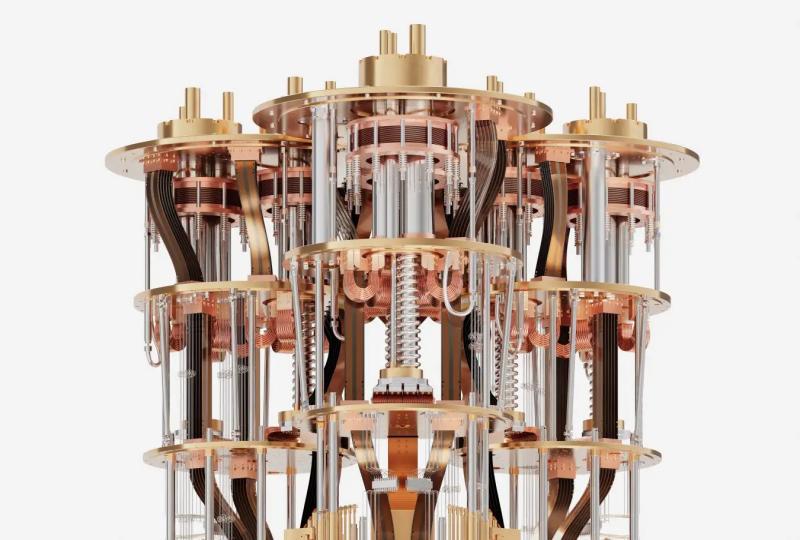
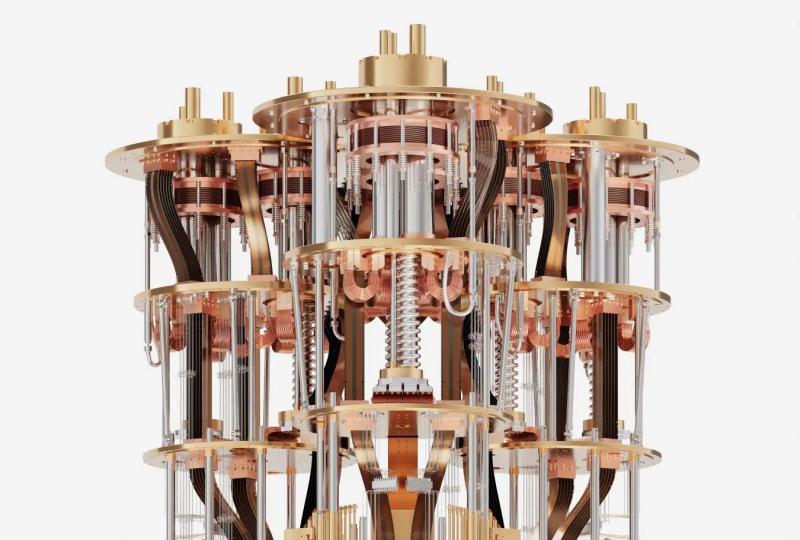
Another non-negotiable cost for most quantum systems is cooling. Superconducting qubits, for example, require temperatures as low as 10 millikelvin—near absolute zero—to maintain their quantum state. This requires specialized dilution refrigerators, which are among the most expensive components of a quantum computer. IBM’s “Golden Eye” dilution refrigerator, designed for large-scale superconducting systems, costs over $800,000, with annual electricity costs exceeding $100,000. For even larger systems, like Rigetti’s 500-qubit-compatible refrigeration units, costs can top $2 million per unit. Ion systems, while not requiring extreme cooling, need expensive laser systems to trap and control ions, adding hundreds of thousands of dollars to the total cost.
Control Systems and Auxiliary Hardware
Beyond qubits and cooling, quantum computers require advanced systems to interact with and control qubits. Each qubit needs its own microwave control, including amplifiers and coaxial cables. A 10,000-qubit system, for example, would require over 500 kilometers of microwave, costing more than $5 million. Low-temperature electronic components, such as filters and isolators, add another 15% to hardware costs, further driving up the total investment.
Software and Operational Expenses
Software and algorithm development are often overlooked but critical cost drivers. Quantum algorithms must be designed specifically for quantum systems, with development costs ranging from $200,000 to over $1 million, depending on complexity. Error correction, a key challenge in quantum computing, requires millions of auxiliary qubits and specialized software, accounting for up to 35% of total equipment costs. Microsoft’s topological quantum computer, for example, has an error correction system that alone costs $20 million. Ongoing software updates and maintenance add tens of thousands of dollars annually to operational costs.
Quantum Computer Pricing Tiers in 2026
Now that we’ve broken down the key cost drivers, let’s explore the three main pricing tiers for quantum computers in 2026, tailored to different use cases:
1. Educational and Desktop Models ($5,000 – $50,000)
These compact, room-temperature systems are designed for teaching, training, and basic experiments. They typically have 2–5 qubits and use NMR (nuclear magnetic resonance) technology, eliminating the need for expensive cooling systems. SpinQ’s Gemini Mini, a 2-qubit educational model, costs around $5,000, making it accessible to universities and bootcamps. These systems are ideal for learning quantum programming basics without the need for specialized lab infrastructure.
2. Mid-Range Research Systems ($1 Million – $15 Million)
Geared toward universities, corporate R&D labs, and small-scale pilots, these systems have 20–200 qubits and offer higher fidelity than educational models. They may use superconducting or ion technology and require basic cooling or laser systems. SpinQ’s SQC 20-qubit superconducting computer, for example, falls in this range, costing around $2 million–$5 million. These systems are used for quantum algorithm research, proof-of-concept projects, and graduate-level training.
3. Industrial-Grade Quantum Computers ($15 Million – $500 Million+)
These flagship systems, used by large enterprises, national labs, and tech giants, have 500+ qubits and deliver maximum performance. IBM’s 1,000-qubit system, for instance, has a total cost of over $100 million, with hardware accounting for 75% of the expense. China’s “Jiuzhang-3” photonic quantum computer, one of the most advanced in the world, costs over $400 million, primarily due to its complex photon control system. These systems are used for large-scale quantum chemistry simulations, financial risk modeling, and AI acceleration.
Affordable Alternatives: Cloud-Based Quantum Services
For most organizations, purchasing a quantum computer outright is impractical. Fortunately, there are more affordable ways to access quantum power: cloud-based quantum services. Platforms like IBM Quantum Cloud, Microsoft Azure Quantum, and Amazon Braket allow users to access quantum systems on a pay-as-you-go basis, with costs starting at $1–$10 for small experiments and scaling up to thousands of dollars per hour for heavy workloads. This model eliminates upfront hardware costs and is ideal for businesses testing quantum applications without a massive investment.
Conclusion
In conclusion, the cost of a quantum computer varies dramatically based on size, technology, and use case—from $5,000 for educational models to over $500 million for cutting-edge industrial systems. Qubit count, cooling systems, and software development are the primary cost drivers, but cloud services offer a cost-effective alternative for most organizations. As quantum technology matures, costs will continue to fall, opening up new opportunities for innovation across industries. Whether you’re a student, researcher, or business leader, understanding quantum computer costs is the first step toward leveraging this transformative technology.
Featured Content